
 Analysis byWeUseApps
TikTok is built around a simple social impulse: open the app, find a video worth sharing, and let it start a conversation. That exchange doesn’t look much like a traditional chat. Instead of composing a long message, I can send a clip that captures a mood, a joke, or an idea, then see where the discussion goes. It makes everyday communication feel quick and expressive, though the same fast pace can make it easy to spend longer watching than I meant to.
When a video says it better
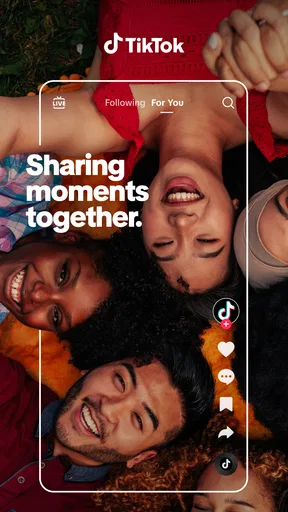
Some things are awkward to explain in a text. A funny moment, a song stuck in your head, or a reaction to something happening in the world can be easier to share as a short video. TikTok gives that kind of exchange a natural home: I can discover videos I enjoy and bring friends into the moment by sharing something that feels relevant to them.
The app’s social appeal is less about having one fixed way to communicate and more about having a stream of material to respond to. A video can prompt a laugh, a debate, a recommendation, or a string of follow-up clips. That creates a conversational rhythm based on reactions rather than carefully planned messages. For friends who already share a sense of humor or overlapping interests, it can feel lively and easy to join.
It also works as a way to stay connected when nobody has a particular update to report. Sending a clip can be a small gesture: “This made me think of you.” I like that low-pressure quality. It gives people something to respond to without demanding a long catch-up, and it can help a quiet group conversation find a new topic.
A social feed with its own rhythm
Opening TikTok puts video discovery at the center of the experience. That emphasis shapes how social interaction feels: rather than starting with a blank message box, I’m responding to things that are already unfolding on screen. It’s an inviting setup when I want entertainment or inspiration, and it can make sharing feel spontaneous instead of like another task on a to-do list.
There’s a trade-off, though. A feed can keep offering new things to watch, while a conversation usually needs a pause for someone to answer. The result is a communication style that can be energetic but uneven. One person may share several clips in a row; another may watch them later and respond when they have time. That’s not necessarily a problem, but it helps to treat shared videos as invitations rather than urgent messages.
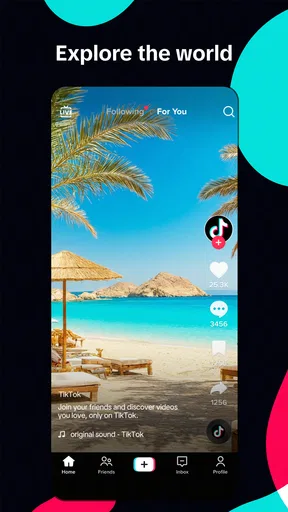
For a casual social app, the format is easy to understand. The store summary puts the central idea plainly: join friends and discover videos you love. I find that description fits the experience’s broad purpose. Discovery supplies the material, and sharing gives it a personal layer. The app can be social without every visit turning into a direct conversation.
From private jokes to wider interests
Video sharing can make interests visible in a way that a short status update often cannot. A clip may show a technique, a performance, a point of view, or a moment that is simply entertaining. When friends exchange these finds, they’re not only passing time; they’re also giving each other small clues about what they enjoy. That can make the app a useful source of conversation starters.
The same openness means a shared clip may not land with everyone. Humor and opinions are personal, and a video that feels obvious to one person may need context for another. I’d use a little judgment before sending something sensitive or potentially misunderstood. A brief note alongside a clip can help clarify why I’m sharing it, especially when the topic matters more than the joke.
As a social experience, TikTok can complement direct conversation rather than replace it. A video might begin an exchange, but it cannot always carry the nuance of a real discussion. If a topic needs care, a clearer message or a proper conversation is often the better choice. The app is strongest when its quick, visual communication suits the moment.
The attention cost of “one more video”
The biggest tension I notice in a video-first app is that communication and entertainment can blur together. I may open it to reply to a friend, then become absorbed in discovery and forget what I meant to do. That shift is part of the format’s appeal: there is always another item that might be funny, useful, or unexpectedly interesting. It is also why a short check-in can stretch into a much longer session.
For everyday use, it helps to decide why I’m opening the app. If I’m there to answer someone, I can focus on that before browsing. If I want a break, I can treat watching as the activity instead of pretending I’ll only glance at a few clips. Those small choices make the experience feel more intentional and help keep a social visit from quietly taking over a free moment.
Attention is also a shared resource in conversation. When a group sends clips faster than anyone can watch them, the exchange can become a backlog rather than a real-time chat. I wouldn’t assume that every share requires an immediate reaction. Letting people respond on their own schedule keeps the interaction relaxed and avoids turning entertainment into an obligation.
This balance matters because short-form video is easy to consume in fragments. A quick look between other tasks feels convenient, but it can also split attention. I find the app more satisfying when I give it a deliberate window rather than repeatedly checking it whenever there’s a pause. That approach leaves room for discovery without letting every spare second become feed time.
Keeping social boundaries comfortable
Healthy use depends on boundaries as much as on what a platform offers. I try to separate “I’d enjoy watching this” from “I need to watch this now,” and I avoid treating a delayed response as a sign that someone is ignoring me. A video may be easy to send, but the recipient still has their own schedule, mood, and attention to manage.
It’s worth being thoughtful about what I share, too. A clip can travel through a conversation and reach people beyond the person I had in mind, so a little care around private details and sensitive subjects goes a long way. When a post or video touches on something personal, I prefer to pause before sending it and consider whether the person on the other end will understand the context.
Boundaries also include deciding when to stop browsing. The feed’s continuous flow can make a natural stopping point hard to notice, so I find it useful to close the app when I’ve finished the social task that brought me there. That doesn’t need to be a strict rule; it’s simply a way to keep the app in its place as one part of a wider day.
What the app costs, and who it suits
TikTok is free to download, with in-app purchases offered at different price points. It is developed by TikTok Pte. Ltd. and is rated Teen, a useful detail for families deciding whether it fits their household. The service has a broad audience, with over one billion installs and an average rating of 4.0 from around seventy million ratings. Those figures point to a widely used app, but the right fit still depends on personal habits and expectations.
Its scale is part of what makes discovery feel varied: users arrive with different interests, and video sharing can support everything from casual entertainment to conversations about hobbies and current topics. At the same time, popularity alone doesn’t make the app suitable for every person or every situation. Anyone choosing it for a younger user should think about screen habits, social boundaries, and how the family wants digital communication to fit into daily life.
With roughly 2.3 million written reviews, TikTok has prompted plenty of user feedback over time. I take that as a sign that people have strong, varied experiences with it, not as a guarantee that every person will enjoy the same kind of feed or social routine. The app’s value depends on whether its video-centered style matches what someone wants from a social platform.
My take on TikTok as a social app
I see TikTok as a lively way to trade moments and discover things with friends, especially when a clip communicates more naturally than a typed message. Its strongest social quality is immediacy: a video can make someone laugh or give a group a shared topic without much setup. That makes it approachable for casual connection and easy to weave into everyday exchanges.
The main challenge is managing the shift from conversation to consumption. A social visit can become a long stretch of watching, and fast sharing can make it unclear whether a response is expected. I’d get the most from the app by using it deliberately, giving friends room to reply, and choosing another way to talk when a subject needs more nuance.
Overall, TikTok makes social discovery feel visual, informal, and spontaneous. It suits people who enjoy passing along entertaining or interesting clips and don’t mind a communication style built around quick reactions. With reasonable attention boundaries, it can be a fun part of staying connected; without them, the feed can easily become the main event instead of a way to share one.
What we like
- A personalized feed makes it easy to discover videos matched to your interests.
- Built-in editing tools help create clips without a separate editing app.
- Captions and text overlays can make videos easier to follow without sound.
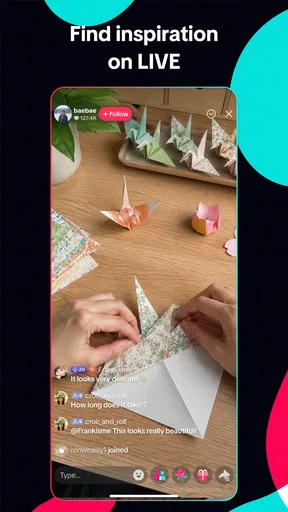
- LIVE streams offer real-time interaction with creators.
- Shopping links let viewers browse products without leaving the app.
What could be better
- The endless feed can make it easy to spend more time than intended.
- Recommendations may become repetitive after watching similar videos.
- Some editing effects and features require a stable internet connection.
- LIVE content can include comments or material unsuitable for younger viewers.
- Product quality and seller reliability can vary across the in-app shop.