Posh Event Recovery: What Happens When Plans Go Wrong
 Analysis byWeUseApps
Event apps are easy to admire while every detail is correct. The harder question is what happens when a host mistypes a time, a guest loses signal at the door, or setup gets abandoned halfway through. Posh – Create & Find Events is built around the social momentum of finding and running gatherings, and that promise depends on more than attractive event pages. It depends on clear states and dependable recovery. Posh’s purpose is appealing; its weak point, from a resilience perspective, is how much confidence a user may have to supply when the app does not make the next step obvious.
This is a failure-mode review, not a claim that every interruption or account configuration has been independently stress-tested. Posh’s basic role is clear: people can discover events and organizers can create and promote them. But public-facing product information does not establish exactly how every draft, payment, invitation, or check-in behaves after a failure. I’ll separate the app’s practical strengths from those unanswered recovery questions rather than treating a smooth-looking flow as proof of resilience.
The reliability promise
Posh sits at the point where browsing turns into commitment. A guest may be looking for something to do tonight, while an organizer may be trying to fill a room, coordinate a guest list, and keep event details current. That combination gives the app real utility: it is not merely a calendar, and it is not just a directory. It connects discovery with the business of getting people through the door.
That connection also raises the cost of confusion. A stale time or an unclear ticket state can affect real plans, not just a screen. Posh’s reliability promise should therefore be judged by whether it makes essential facts easy to verify and whether it explains what has and has not been saved. The product concept earns attention; the trust test is whether the app keeps the social transaction legible when something slips.
First setup failure points
Getting started with any event platform asks users to make decisions before they know how much work the event will involve. Hosts may need to supply a title, location, timing, access details, and promotional material. Guests may need to move from browsing to an account or a ticket action. Each extra field is a possible stopping point, especially on a small screen or while someone is planning between other tasks.
Posh’s event-first design gives a host a useful mental model: create an event, make it discoverable, and bring people together. But the resilience question is whether a half-finished event is retained and clearly marked as incomplete. I cannot verify from the available evidence exactly what happens to every unfinished draft after closing the app, signing out, or switching devices. Hosts should treat a long setup as work in progress and confirm the event is actually published before sharing a link or assuming guests can find it.
For guests, setup friction can arrive at the least convenient moment: after finding an event that looks interesting but before confirming attendance. The app needs to distinguish browsing from a completed reservation or purchase in plain language. Without verified details for every entry path, my advice is simple: do not infer that a tap succeeded just because the screen changed. Look for an explicit confirmation and retain any ticket or event information the app makes available.
Mistakes and reversibility
Event details change. Organizers correct a venue, adjust a start time, or realize that a description promised something they cannot deliver. A resilient service should make edits understandable and show which details changed, while avoiding the more dangerous ambiguity of an old event page lingering beside a new plan. The app’s central value is that event information can be gathered in one place; that value weakens if users cannot tell whether an edit has taken effect.
I cannot confirm the full undo and revision behavior for Posh’s event-management tools, so I would not promise that a deleted, unpublished, or modified item can always be restored. Before making a consequential change, a host should check the current event view and, where practical, keep a copy of the original details. That is not elegant advice, but it is the right precaution when the product’s recovery path is not independently established.
Guests face a different kind of mistake: choosing the wrong event, date, or ticket option. The interface should make the selected option unmistakable before a commitment and provide a clear route to support or correction afterward. Until those flows are confirmed in the exact version and region being used, users should read the final confirmation rather than assuming that a prior selection carries through unchanged.
Interruption and return
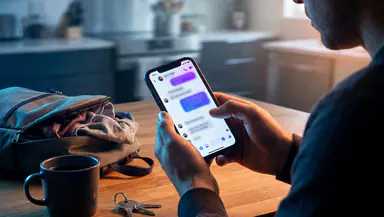
Mobile use is full of interruptions. A message arrives during setup; the screen locks while someone checks directions; an incoming call breaks the ticket flow. A good event app should let a person return to the same task without making them reconstruct every detail. Posh is built for quick, socially timed actions, which makes that continuity especially important: people often browse while coordinating with friends, not while sitting down for a formal admin session.
There is not enough verified evidence here to claim that every flow resumes exactly where it stopped. The practical test is to return deliberately after an interruption and inspect the state before repeating an action. If you were editing an event, check the saved details. If you were completing a guest action, check the ticket or confirmation area before tapping again. That small pause can prevent duplicate effort or false confidence.
Connectivity pressure
Event discovery often happens on the move, where reception can be poor and Wi-Fi unreliable. The crucial question is whether Posh clearly distinguishes a loaded event from a stale view, and a submitted action from one still waiting for a network response. I cannot verify its offline behavior, queueing, or retry rules across the app’s features, so I would not rely on it to finish a critical action without a visible success state.
For guests, the safest habit is to open important ticket or event information before arriving somewhere with uncertain signal and use any available saved access option. For hosts, do essential publishing and edits while connected, then revisit the event page to confirm the result. These are workarounds, not proof of a product defect; they reflect the evidence gap around what happens when the network disappears at the wrong moment.
Unclear states and recovery guidance
The most frustrating failure is not always a crash. It is a screen that leaves the user unable to tell whether an action worked. Event apps have several states that should never blur together: draft versus published, interested versus attending, and ticket request versus confirmed access. Posh’s usefulness depends on those distinctions being visible, because a guest may make travel plans based on them and a host may promote an event based on its status.
When the state is unclear, resist the instinct to tap repeatedly. Reopen the event, check the relevant account or ticket area, and look for a confirmation before trying again. If the app provides a support route, include the event name, approximate time, and the action you attempted. That is more useful than a vague report that “it did not work,” and it avoids escalating a possibly successful action into a duplicate.
Good recovery guidance should be close to the point of failure, not hidden behind generic help. The available evidence does not let me verify how comprehensive Posh’s in-app instructions are for each error, so this is an area where prospective users should test with a low-stakes action before depending on the app for a large event. A small practice run can reveal whether the interface explains what to do when a detail is missing or a submission stalls.
Where evidence is missing
Some claims require direct testing of a particular app version, operating system, account type, and location. I cannot responsibly state that Posh always preserves drafts, supports a particular offline mode, makes every edit reversible, or resolves every payment and ticket issue in a set way. Those details may differ by flow or change with updates. The absence of confirmation is not evidence that a feature fails; it is a reason not to promise that it will rescue a user in a high-pressure moment.
That distinction matters because event software is judged in public. A minor uncertainty for a casual night out can become a serious operational problem for an organizer managing capacity, paid entry, or last-minute venue changes. Posh’s discovery and hosting premise is easy to understand, but confidence in its failure handling needs more than the promise of convenience.
Who needs more certainty
Casual guests who use Posh to browse and make flexible plans are likely to find the core idea most compelling. They can weigh an event’s details, coordinate with friends, and keep the plan in one social context. If a listing needs checking, a quick message to the organizer may be enough. The app is less suitable as a sole source of truth when missing a confirmation would mean a missed trip, a lost booking, or a difficult dispute.
Organizers should be more cautious in proportion to the stakes. For a small gathering, Posh can help put an event in front of people without turning promotion into a separate project. For an event with tight capacity, paid access, or complex changes, hosts should verify the live listing, keep an independent record of critical details, and make sure guests have a reliable way to reach them. That is sensible event practice, but it also exposes where the app’s recovery assurances are not yet clear.
Resilience verdict
Posh – Create & Find Events has a focused and genuinely useful role: it brings event discovery and hosting into a mobile, social setting where people already make plans. Its appeal is the short distance between seeing something worth doing and gathering people around it. Yet the failure-mode case is less settled than the happy path. Publicly verifiable evidence does not answer enough about draft recovery, interrupted actions, offline behavior, and reversibility to treat the app as a guaranteed safety net.
My verdict is cautiously positive for ordinary discovery and lightweight event organizing, but reserved for situations where a mistaken state or lost connection carries real cost. Use Posh to make plans easier to find and share; verify important changes, confirmations, and access before relying on them. The app earns a place in the event toolkit, but hosts and guests should keep a backup plan until its recovery behavior is clearer.