


 Analysis byWeUseApps
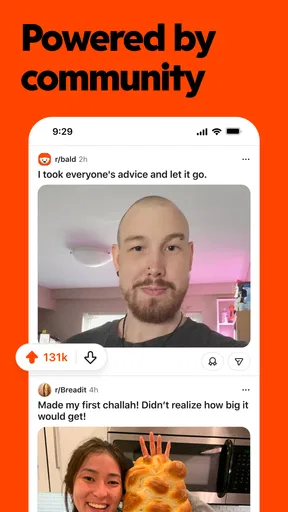
Reddit makes the most sense to me as a place to follow interests rather than as a household’s shared social feed. One person might use it to compare notes on a hobby, another to read local discussions, and a third to ask a practical question. The app brings those conversations into a single mobile experience, but what you see depends heavily on the communities you choose and the people posting in them.
I find that flexibility useful, with an important caveat: a shared phone or tablet can blur the line between people’s interests and accounts. Reddit is built around individual participation, so it works best when each person has a clear understanding of which account they are using and what they want to read. It is less suited to a device passed around casually with no boundaries.
One app, many different corners of the internet
As a social app from reddit Inc., Reddit differs from the usual friend-centered networks. Rather than making personal updates the main event, it organizes discussion around communities. That can make it surprisingly practical: I can look for first-hand experiences about a product, follow a topic over time, or read a range of responses to a question without needing to know the people posting.
The app is free to download, and its broad appeal is reflected in a 4.6 average from around 4.9 million ratings. It has been installed over 100 million times. Those figures suggest a large, active audience, but they don’t guarantee that every community will be welcoming or useful. The quality of a visit is often more about the particular group and its moderation than the app as a whole.
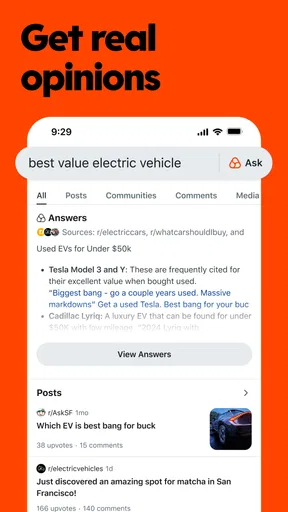
A useful everyday example: if I am trying to decide whether a repair is worth attempting, I can search for discussions from people who have dealt with the same problem. I treat those replies as viewpoints, not expert instructions. Reddit can surface details that a polished product page leaves out, but confident-sounding advice still deserves a second check, especially when health, money, or safety is involved.
Make the first session intentional
For a new user, the best first step is not to join everything that looks interesting. I would start with a small set of communities tied to real questions or hobbies, then spend time reading before posting. That gives you a feel for each group’s tone, rules, and standards for useful contributions. A community about the same subject can be very different from another one, so the name alone is not enough to judge it.
Reddit is also easier to manage when you treat it as a collection of separate rooms instead of one endless feed. If the front page starts feeling noisy, narrow your attention to the communities you actually want to follow. When a discussion is not helping, move on rather than assuming the whole platform has the same atmosphere. This small habit makes browsing feel more deliberate and less like letting an algorithm choose the afternoon for you.
One trade-off is that a community’s strongest posts can make its viewpoint look more universal than it is. Popular comments are not automatically representative, and a lively thread may reward wit or certainty more than careful evidence. I read high-engagement discussions as a starting point for understanding what people think, not as a vote that settles the question.
Keep shared devices from becoming shared identities
On a household tablet, I would make account boundaries part of the setup conversation. Reddit is personal enough that one person’s subscriptions, saved material, and participation should not be mistaken for another person’s. If a device changes hands, it is worth checking which account is open before browsing or posting. That simple pause can prevent an accidental comment from appearing under the wrong identity.
I would also agree on a basic handoff routine: close the app or sign out when someone else is about to use the device, and avoid saving passwords in a way that makes account switching invisible to everyone. This is practical advice, not a special family feature. The app should be approached as an individual account experience, even when the hardware belongs to the whole household.
There is a privacy trade-off in using one account together. A shared profile may seem convenient for keeping a common list of interests, but it also mixes reading habits and public participation. That can make recommendations and community choices feel less personal, while making it harder to tell who wrote a comment. For most households, separate accounts and an agreed device routine are clearer than trying to turn one profile into a communal one.
Coordinate without turning every discussion into a group project
Reddit can still be useful for household coordination when people use it as a source of ideas rather than as the family’s main messaging tool. Someone researching a recipe, a neighborhood question, or a repair might bring a helpful thread to the table and summarize what seems credible. I would not rely on a public discussion as the place to settle schedules or share private details; a direct messaging or calendar app is usually a better fit for that job.
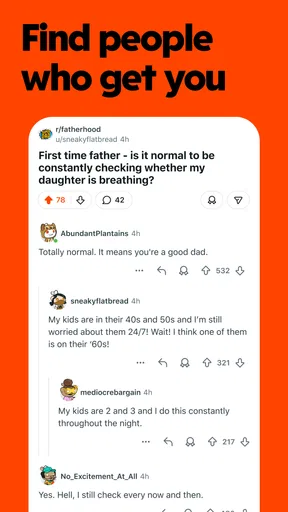
A less obvious benefit is the ability to learn from disagreement in one place. When I compare several replies, I can see where people’s situations differ: a suggestion that works for a renter may not fit a homeowner, and a recommendation from an experienced hobbyist may assume tools a beginner does not have. The practical move is to note the conditions behind advice, not just copy the most upvoted answer.
For a shared decision, I would bring back a short summary with the source community and the reasons people gave, then discuss it offline. That keeps Reddit’s useful detail while avoiding the assumption that everyone at home needs the same feed or should participate in the same thread. It is a modest workflow, but it makes the app more helpful and keeps household conversation from being swallowed by scrolling.
Age context and trust matter
Reddit is rated Mature 17+, so I would not treat it as an all-ages family app. That age context matters even if a particular community looks harmless: the platform contains many kinds of discussion, and a person can encounter material or conversation that is not appropriate for younger users. Parents and caregivers should make their own decision about access rather than assuming that a general-interest topic makes the whole experience suitable.
Trust also needs to be earned thread by thread. People may be speaking from personal experience, repeating something they heard, or making a joke that reads as serious out of context. I look for explanations, relevant details, and thoughtful replies, and I check important claims elsewhere. When a post asks for sensitive personal information, I would be cautious about sharing it in public.
The app is free, with in-app purchases ranging from $1.99 to $199.99 per item. If several people share a device, it is sensible to know which account is active before making any purchase and to keep expectations clear about optional spending. I would not hand a shared device to someone without discussing how purchases are handled; that is a household boundary, not a reason to assume every user will want to buy anything.
Where Reddit beats familiar alternatives—and where it does not
Compared with a conventional social network centered on friends and personal updates, Reddit is stronger when I want topic-based conversation from people I do not know. It can be more useful for niche interests, troubleshooting, and seeing different experiences side by side. Compared with a search engine, it adds human context and follow-up discussion, though that context can be inconsistent and should not replace reliable reference material for important decisions.
It is not my first choice for keeping up with close friends, organizing a family calendar, or sending a private update to a specific person. A messaging app handles direct coordination more cleanly, while a search tool or specialist reference may be better for fast, authoritative answers. Reddit earns its place when I want to explore how a community talks about a subject, not when I need a guaranteed answer or a tidy one-to-one conversation.
Some friction comes from the sheer variety of communities. A good discussion can be thoughtful and generous, while another can be repetitive, combative, or difficult for a newcomer to read. I would not judge the app by one bad thread, but I also would not expect every corner to be worth my time. Choosing communities carefully and leaving ones that consistently disappoint is part of using Reddit well.
My household verdict
Reddit is a worthwhile social app for curious readers who like learning from conversations organized around specific interests. I especially recommend it to someone willing to browse selectively, check claims, and contribute with care. The experience is less appealing if you want a calm, tightly controlled feed, a private family hub, or social contact limited to people you already know.
For household use, my recommendation is conditional: use it as an individual app on a shared device, keep accounts distinct, and take the Mature 17+ rating seriously. Do not confuse a popular comment with a dependable source, and do not use a public community as a substitute for private coordination. With those boundaries in place, Reddit can be a genuinely useful window into how people approach the same questions from different angles.
Reddit was released on April 6, 2016, and it remains a distinctive option in social apps because its center of gravity is community discussion rather than a circle of personal contacts. My strongest advice is to begin with a few relevant groups, read their norms before joining in, and keep the app’s role clear at home. Used thoughtfully, it is a rich place to explore shared interests; used as an unfiltered communal account, it can quickly become confusing.
What we like
- A wide range of communities makes it easy to find niche interests.
- Voting helps surface useful posts and interesting discussions.
- Saved posts make it simple to revisit content later.
- Users can customize feeds by joining or leaving communities.
- Built-in chat supports direct conversations with other users.
What could be better
- Content quality varies widely between communities.
- Popular discussions can be difficult to follow as comments grow.
- The app may show frequent prompts to sign in or create an account.
- Some communities enforce strict posting rules that newcomers may miss.
- Personalized feeds may repeatedly surface similar topics.