PBS KIDS Games Shows What Playful Learning Gets Right—and What It Misses
 Analysis byWeUseApps
Children’s game apps have spent years treating learning as a coat of paint: add a number puzzle, sprinkle in a friendly animal, and call the result educational. PBS KIDS Games makes a more convincing case for a different standard. Its best idea is not that every activity teaches a lesson, but that familiar characters and small, understandable goals can make exploration feel worthwhile without turning play into a test. That distinction is becoming central to the category—and it also exposes how much children’s apps still rely on shallow repetition.
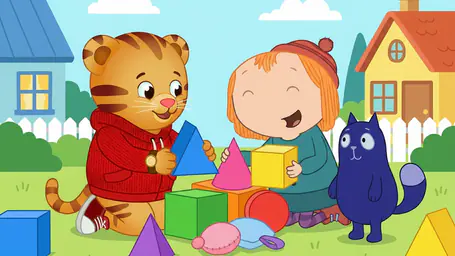
The app is a broad collection rather than one tightly designed game. Its activities draw on PBS children’s programs, placing recognizable characters in short challenges built around matching, counting, sorting, problem-solving, and creative play. Children can move between activities instead of committing to a long campaign, and the variety gives the app the feel of a small playroom. That structure suits the way many young players actually use a tablet: in short visits, with an adult nearby at first and more independent exploration as the controls become familiar.
The category is moving from lessons to play systems
The baseline expectation for a children’s game has changed. Parents increasingly expect a clear interface, forgiving controls, safe content, and enough variety to make an app useful beyond one afternoon. Children expect something less abstract: a goal they can understand at a glance, a response they can see immediately, and characters or settings that make the activity feel like play rather than assigned practice. An educational label alone no longer earns trust. The game has to show how its learning fits into the action.
That is where the collection’s strongest signal lies. Activities are generally organized around concrete tasks, and feedback arrives in a way a young player can follow. A child does not need to understand a points economy or a complicated set of menus before beginning. The appealing rhythm is simple: spot the goal, try an action, see what happened, and take another turn. When a challenge connects that rhythm to a character or a recognizable world, the child has a reason to return beyond the promise of being “good at learning.”
The structure also keeps failure small. A wrong choice is usually a prompt to try again, not a public score or a dramatic loss. That gentleness is more than a nicety for preschool and early elementary players; it changes who can participate. A child still learning to read can often understand a visual task, while a more confident player can move quickly through familiar steps. The strongest children’s apps make that range feel natural instead of presenting a single pace as the correct one.
Still, breadth comes with a trade-off. A collection of short activities can offer a lot to sample without creating a particularly strong reason to master any one of them. The hook is easy entry, and the loop is quick feedback; the rhythm can be pleasant, but not every activity develops into a deeper challenge. Replay value depends on whether a child enjoys revisiting a familiar task, discovering another activity, or simply spending time with a favorite character. That is a lighter form of progression than a carefully layered game provides.
What it keeps, and what it questions
In one important respect, PBS KIDS Games follows the established children’s-app playbook: recognizable characters, bright presentation, bite-sized activities, and a low barrier to entry. These conventions work because they help children understand where they are and what kind of action is expected. A familiar character can make a new task less intimidating; a short activity makes it easier to stop when playtime ends. There is nothing stale about clarity or warmth themselves.
The convention it quietly challenges is the assumption that a children’s app needs a single, sticky reward loop to justify its place on a device. Many mobile games lean on streaks, unlocks, escalating collections, or repeated prompts to draw players back. A child-focused educational product can make a different choice: let the activity be brief, let the player leave, and make the content itself the reason to return. That approach feels healthier than an endless reward ladder, though it risks making the collection feel less cohesive or memorable over time.
Related apps help clarify the divide. Baby Games: Piano & Baby Phone is built around immediate cause and effect: tap, hear a sound, see a response. That directness is useful for very young children, but it can become a narrow loop if the novelty of each button wears off. Toca Boca World makes a different bet, giving children open-ended settings and objects to combine into their own stories. It treats imagination, rather than a correct answer, as the activity. Toca Boca Jr: Fun Kids Games similarly shows the appeal of putting several child-friendly experiences under one roof, while Coloring Games: Color & Paint offers an accessible creative task with a clear, calming payoff.
These are not interchangeable products, and the comparison is not a contest. They show that parents and children now encounter several credible definitions of educational play: sensory exploration, storytelling, creative expression, and structured problem-solving. The emerging standard is not more lessons packed into a screen; it is meaningful choice about how to play. PBS KIDS Games fits that standard best when an activity gives the child room to act and notice the result, rather than simply presenting a question and dispensing approval.
There is a useful distinction here between variety and agency. A large menu may let a child choose among activities, but choice at the doorway does not guarantee freedom inside the game. Open-ended play can invite a child to make a story; a guided challenge can still offer agency if different approaches feel possible and the feedback helps the player understand what changed. The category is advancing as designers learn to balance these modes instead of assuming every child wants the same kind of task.
Where children’s apps still fall short
The category has not solved the problem of meaningful progression. A game can be safe, colorful, and easy to navigate yet still repeat the same cognitive move with only a new coat of scenery. Younger players may be content with repetition, and repetition can help build confidence, but parents need more than a familiar cast to judge whether an app continues to offer something useful. A stronger design makes its learning legible through the play itself, without resorting to scores or turning every session into a lesson report.
Collections also face a practical challenge: consistency. When activities vary in depth, control, or pacing, the overall app can feel like a directory rather than a unified experience. That can be a reasonable trade for breadth, especially for families looking for a safe place to browse, but it makes curation matter. The best collection would help a child discover a suitable next activity without requiring an adult to inspect each option first. It would also make clear what kinds of play are available, rather than relying on a long list to signal abundance.
There is a broader issue of adult trust, too. “Educational” can mean anything from a thoughtful puzzle to a colorful distraction with a counting prompt attached. Parents should not have to assume that a familiar brand guarantees depth. The most persuasive evidence is visible in the interaction: does the child make decisions, notice consequences, and get chances to try again? On those terms, PBS KIDS Games is most convincing when it puts the activity ahead of the label, and less so when short-form variety stands in for a sustained sense of development.
The consequence for families
For children, the difference between a gentle retry and a nagging reward loop is tangible. One lets them set the pace; the other quietly teaches them to keep tapping because something may be waiting. For parents, a collection of varied activities can reduce the pressure to find a perfect single game, but it also makes it harder to know which parts deserve repeat visits. The practical value of PBS KIDS Games is its accessible mix of familiar worlds and quick play sessions, not a promise that every minute will produce measurable progress.
That is a sensible bargain for a shared family device. An adult can introduce the app, help a child choose an activity, and then let the child take over once the goal makes sense. But the app is not a substitute for conversation, hands-on play, or the many ways children learn away from screens. Its best role is as one option in a wider play routine: a brief, approachable activity that gives a child something to do, think about, or revisit.
The category’s next step should be less about adding more activities and more about making each one purposeful. That means clearer differences between open-ended and goal-driven play, thoughtful ways to build on a child’s confidence, and fewer designs that confuse time spent with learning achieved. It also means treating a child’s ability to stop as part of good design, not a failure to retain attention. A children’s game should be inviting, not difficult to put down.
PBS KIDS Games points toward that future without fully arriving there. It respects short attention spans without leaning entirely on compulsion, and it makes educational play approachable through familiar characters and simple actions. Its limitations are equally instructive: a collection can be broad yet uneven, and friendly presentation cannot make every activity profound. The better standard for children’s apps is now clear. Give young players understandable goals, real room to act, and feedback that helps them make sense of what happened. If the category can keep those promises while letting play remain play, it will have earned its place on the family screen.