 Analysis byWeUseApps
Toca Boca World is an open-ended children’s game built around exploring places, customizing characters, and making up stories. I see its main appeal in how little it asks players to do in a fixed order: rather than chasing a score or following a long set of missions, children can decide what happens next. That makes it a relaxed choice for imaginative play, though it is less suitable for someone looking for clear goals or a fast, competitive challenge.
How it feels to play, and what to expect from its pace
Made by Toca Boca, this educational game gives younger players room to experiment with a playful world and its characters. The age rating is Everyone, and the basic idea is easy to grasp: look around, personalize, and invent a scene. I like that the experience leaves space for children to lead rather than constantly telling them what to do. A child can turn a brief visit into a continuing story, or simply explore without needing to understand complicated rules first.
The game has been available since November 21, 2018, and its current version is 1.141. Its audience is substantial: it has over 100 million installs, an average rating of 4.4 from around 6.9 million ratings, and about 219,000 written reviews. Those numbers suggest a widely used game, but they are not a promise that every child will enjoy its open-ended style. In my view, the best test is whether the player likes inventing their own purpose rather than being handed one.
For speed expectations, I would approach it as a game to explore at a child’s own pace, not as an action title where rapid responses matter. A short session can be satisfying if the player has a small idea in mind, such as setting up a pretend visit or changing a character’s look. A longer session can drift into trying different combinations and building a story. That flexibility is a strength, but it also means a child who asks “What do I do now?” may need an adult to suggest a starting point.
Why open-ended play works—and where it can stall
Compared with many educational games that teach through repeated quizzes, puzzles, or timed tasks, Toca Boca World leans on imaginative role-play. I find that distinction important for parents choosing an app: it is more about self-directed storytelling than practicing a clearly defined school skill. It may suit a child who enjoys arranging scenes, giving characters roles, and narrating what is happening. If the goal is structured reading, math practice, or a sequence of lessons, a dedicated learning app is likely a better match.
One useful way to make the open format work is to offer a tiny prompt rather than take over. Ask the child to create a scene with a beginning and an ending, or to decide what a character wants before they start moving things around. This gives play a little shape while preserving the child’s control. I would avoid turning every session into an adult-led assignment: the app’s strongest quality is that the player gets to make the decisions.
A realistic everyday use case is a quiet stretch at home when a child wants something more creative than passive video watching. I would set a simple time boundary and let the child choose a story idea before opening the game. That small routine can make it easier to stop later, because there is a natural point at which the story feels complete. It also helps avoid aimless tapping when the player is tired or unsure what to explore.
Busy sessions, attention, and practical friction
The more a player experiments, the more decisions the experience can involve: which character to change, where to go next, or how to connect one invented moment to another. That kind of activity is not necessarily demanding in the way a hectic action game is, but it can become mentally busy for a young child. I would watch whether the player is still enjoying the choices or simply hopping around without settling into a story. A brief pause or a specific new prompt can be more helpful than encouraging an ever-longer session.
One non-obvious trade-off is that freedom can make the game feel less immediately rewarding than a title with levels and frequent goals. There may be no obvious “next step” to celebrate, because the child supplies the objective. For a player who likes to finish tasks and see progress, that can feel vague. For a player who enjoys pretend play, the same lack of pressure can be exactly what makes it appealing.
Another practical point is the in-app purchase range: items are offered from $0.49 to $199.99 each. The game itself is free, but I would treat the purchase options as something to review with a child before handing over a device. Explain that not everything visible in a game is automatically part of the free experience, and decide together whether purchases are allowed. This simple conversation can prevent a child from assuming that every appealing addition is included at no cost.
Because this is a broad play world rather than a narrow lesson, it can also be harder for adults to judge a session by a simple result. A child may spend time changing a scene without producing anything that looks like a finished task. I would evaluate it by whether the player is making choices, telling a story, or enjoying the act of arranging things—not by whether they completed a checklist.
Reliability and the value of a calm recovery routine
When I think about reliability for a child-facing game, I care as much about the experience around a session as about whether play feels smooth: can the child settle back in, and does an interruption turn into frustration? I would not assume that every device handles the game identically. If a session is interrupted, a useful habit is to pause, explain what happened in simple terms, and let the child decide whether to continue or start a fresh story. That keeps a technical hiccup from becoming the whole activity.
I also recommend agreeing on a stopping point before play begins. In an open-ended game, “one more thing” can easily become several more things, because there is always another possibility to imagine. A natural boundary—finishing the current scene, for instance—makes ending feel less arbitrary. This is especially useful when the game is being used during a short break rather than as a longer play session.
For caregivers, the simplest reliability check is a quick test on the intended device before relying on the game during a busy moment. The minimum operating system is Android 7.0, so older Android devices below that requirement are not a fit. Even with a compatible operating system, I would give a child a little time to explore before expecting the app to serve as an instant distraction during travel or an appointment.
Device fit, family expectations, and alternatives
On Android, the minimum requirement is version 7.0. That gives families a clear starting point, but compatibility is only one part of choosing a device for a young player. A child needs to be able to see and interact comfortably with the screen, and the device should be available for a session without competing demands such as urgent calls or schoolwork. I would test the experience on the actual device the child will use rather than assume that a game that works well on one family device will feel identical on another.
As for resource demands, I would avoid making assumptions based on the game’s playful appearance. A world with many things to explore may feel different across devices, and the safest practical approach is to try it on the intended hardware before promising uninterrupted play. If the device is older or already struggles with games, a simpler, more focused activity may be the less frustrating choice. This is a sensible precaution, not a claim that the game is inherently demanding.
Compared with traditional educational apps, this one gives up the clarity of lesson plans in favor of self-directed creativity. Compared with simple drawing or dress-up apps, it offers a broader setting for connecting characters and imagined events. That breadth is appealing for children who enjoy carrying a story from one idea to another, but it can be unnecessary for someone who just wants a quick coloring activity. I would choose a more focused app when a child needs a very short, clearly bounded task.
The game is free to download, while optional in-app purchases range from $0.49 to $199.99 per item. That makes it worth checking the purchase settings and talking through expectations before a child plays independently. The age rating is Everyone, but a rating does not replace family judgment: an adult may still want to decide how long the child plays and whether spending is permitted.
Who I would recommend it to
I would recommend Toca Boca World to children who like making up characters and situations, and to adults looking for a creative alternative to games built around scores, timers, or repeated drills. It is particularly appealing when the child can enjoy an activity without needing an adult to provide constant instructions. A parent can join in by offering a prompt, then step back and let the child steer the scene.
I would skip it for a child who becomes frustrated without explicit goals, or for a family specifically seeking a curriculum-based educational tool. I would also choose something more contained if the main need is a quick, predictable activity with an obvious finish. The open format is not a flaw, but it does ask the player to supply some of the direction themselves.
Overall, I see Toca Boca World as a generous space for imaginative play rather than a conventional lesson game. Its free entry point makes it easy to try, while the optional purchases call for a little adult planning. My practical advice is to start with a simple story prompt, test it on the child’s usual device, and set a stopping point before play begins. If your child enjoys inventing the rules as they go, this can be a very satisfying choice; if they want clear objectives and measurable progress, another kind of educational game will probably serve them better.
What we like
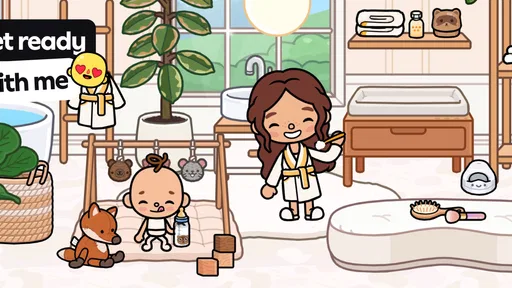
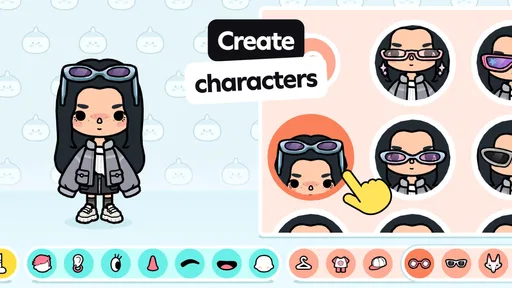
- Create custom characters with a wide range of outfits and hairstyles.
- Decorate homes with furniture and accessories.
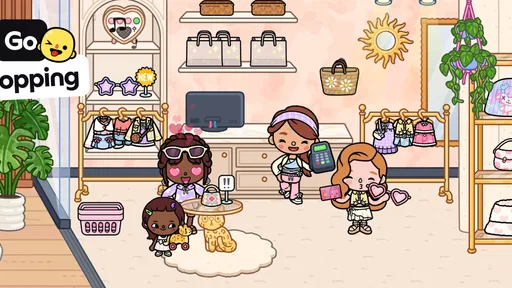
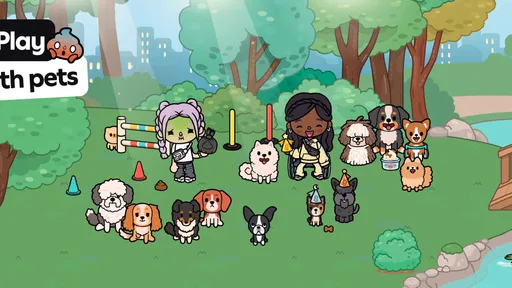
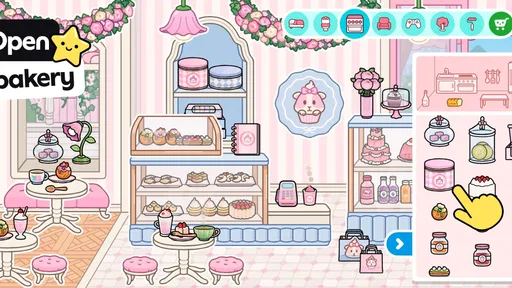
- Explore locations inspired by everyday places and activities.
- Play at your own pace without timed challenges.
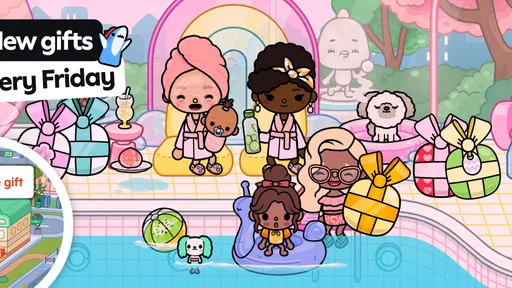
- Receive regular content updates and seasonal items.
What could be better
- Many locations and item packs require separate purchases.
- The large world can feel overwhelming for new players.
- Some activities rely on imagination rather than set objectives.
- Progress and purchases may not transfer easily across platforms.
- The app requires substantial device storage as content grows.