
 Analysis byWeUseApps
I’m drawn to casual puzzle games that let me make progress in a spare moment without demanding a long setup. Royal Smash! looks aimed at that kind of play, but its appeal depends on how much you enjoy pausing to think rather than simply tapping through a sequence. I’d recommend it to someone who wants a free puzzle game to dip into, while keeping in mind that optional purchases and the limits of a mobile screen can affect the experience.
Quick sessions, with room to think
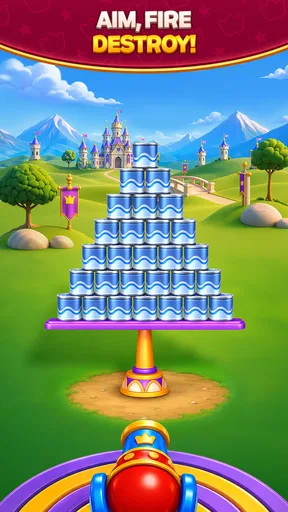
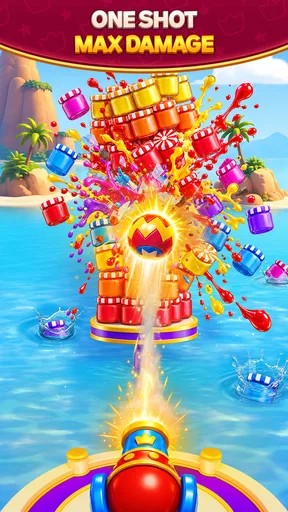
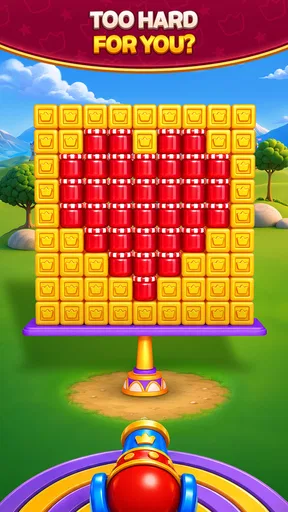
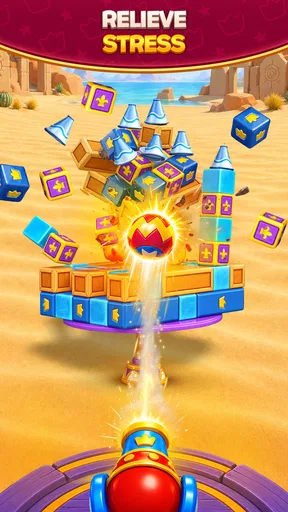
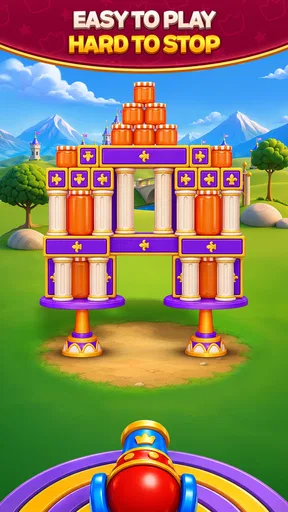
Royal Smash! is a casual game from Cypher Games, and the central attraction is puzzle-solving rather than an elaborate simulation or a lengthy story. The title suggests a brisk, playful mood, but I wouldn’t treat that as a promise that every level is effortless or that every session will feel equally quick. Puzzle games naturally vary: a familiar challenge can take seconds, while a less obvious one may hold your attention longer.
That makes it a reasonable choice for small gaps in the day. I can picture opening it while waiting for a kettle, taking a short break between tasks, or settling in for a few puzzles before bed. The useful distinction is that a “quick game” can still ask for concentration. If you tend to resent being interrupted halfway through a thought, it’s worth playing when you have a little breathing room rather than assuming every round will fit into a minute.
The game is free to download, which makes trying it a low-commitment decision. Its broad audience is reflected in an Everyone age rating. That does not mean every player will find the puzzles easy, only that the content is positioned for a general audience. With a 4.6 average from around 454,000 ratings, it has attracted a substantial player base, though those numbers can’t tell me whether its particular style suits your taste.
What the pace feels like in practice
The best way to judge the pace is to separate the time spent playing from the time spent deciding. A puzzle can be compact while still encouraging you to examine the screen, consider a move, and change your mind. I find that an appealing rhythm when I’m alert enough to focus. It is less satisfying when I want a game that supplies constant action without asking me to stop and reason.
For a practical first session, I’d try a handful of puzzles and notice whether I’m enjoying the decision-making itself. If I’m already impatient after a short stretch, the game’s casual label probably won’t fix that mismatch. If I like testing an idea and adjusting when it doesn’t work, a small amount of play is a better signal than judging it by its name or by the promise of a quick distraction.
One useful habit with any puzzle game is to take a brief pause before repeating a move that has not helped. That is especially relevant on a phone, where hurried taps can make it harder to tell whether I misunderstood the puzzle or simply acted too quickly. I’d treat a frustrating level as a cue to reset my attention, not as evidence that the whole game is unfair.
When a short session turns into a longer one
Casual games often become most demanding not because they require a marathon, but because a player keeps going after a puzzle proves stubborn. That is the moment when I’d pay attention to comfort: am I still making deliberate choices, or am I tapping just to get past the screen? If the latter, stepping away is likely more useful than extending the session in the hope that the next attempt will suddenly feel better.
Royal Smash! may work well as a small part of a routine, but I would not choose it as my only option for every kind of downtime. A quick-action game is a better fit when I want immediate movement and little deliberation. A word puzzle may suit me better when I want to work with language. Here, the deciding question is whether I’m in the mood to engage with a puzzle directly, rather than seeking passive entertainment.
There’s also a practical difference between playing at home and playing in transit. In a quiet room, I can take my time and keep track of what I’m considering. On a crowded commute, interruptions and limited attention may make even a short challenge feel more demanding. I’d save a tricky stretch for a calmer moment instead of expecting it to be equally enjoyable in every setting.
Purchases and the value of the free version
The game is free, but it offers in-app purchases ranging from $0.99 to $399.99 per item. That is a wide range, so I would make the choice to spend separately from the choice to install. The existence of purchases does not mean they are necessary to enjoy a puzzle game, and I wouldn’t assume any particular item is required without seeing what the app presents in context.
If you share a device or let a child play, I’d check the purchase controls on the device before handing it over. That is a sensible precaution for any free game with optional spending. For my own use, I’d start without buying anything and see whether the puzzles provide enough enjoyment on their own. If the experience feels incomplete unless I spend, that would be a reason to reconsider rather than to make an impulse purchase.
This also affects how I compare it with other casual games. Some alternatives are built around rapid rounds and frequent rewards; others make their challenge more explicit through wordplay, number patterns, or spatial reasoning. Royal Smash! is worth considering if its puzzle style catches your interest, but a free download alone is not a reason to keep it installed. The better test is whether I return because I like solving its challenges, not because I feel pushed to buy something or maintain a routine.
Reliability and the moments that test it
I can’t responsibly promise a particular loading speed, battery draw, or level of stability across every device. Those details depend on the phone or tablet, its available resources, and the way it is being used. My practical expectation for a casual puzzle game is modest: it should feel comfortable for short play, but I’d judge responsiveness on my own device rather than treating another player’s experience as a guarantee.
For a more useful first check, I’d open the game on a stable connection if one is available, play a few levels, then return to it later and see whether it behaves consistently. If I’m using an older device, I’d close unusually demanding apps first and avoid drawing conclusions from a single slow launch. Those steps help distinguish a temporary device slowdown from a problem that happens repeatedly.
Interruptions are another sensible test. If a call, message, or app switch pulls me away, I’d check whether I can comfortably resume before starting a session when I know I may be interrupted. I wouldn’t assume a specific recovery system or automatic saving behavior. The practical advice is simple: don’t begin a difficult puzzle at a moment when losing your place would be especially annoying.
During heavier use, such as playing through several puzzles in one sitting, I’d pay attention to the device rather than relying on a blanket claim about performance. Screen brightness, background activity, and a worn battery can all affect how long a phone feels comfortable to use. If the device warms up or the battery is already low, shorter sessions are the sensible choice, regardless of the game.
Device fit and who should skip it
The listed minimum operating-system requirement is Android 7.0, so anyone on Android should check that their device meets it before expecting to install the game. The current version is 1.18.737. As with any mobile release, an eligible operating system is only one part of the experience; available storage and the age of the device can also matter in everyday use.
I would skip Royal Smash! if I want a game that is all reflexes, a detailed narrative, or a guaranteed distraction requiring no thought. I’d also look elsewhere if I know that in-app purchase prompts tend to make free games frustrating for me. A different casual puzzle may be a better match if I specifically want word challenges or number-based problems, rather than an unfamiliar puzzle format.
On the other hand, it makes sense for someone who enjoys testing solutions in short bursts and is happy to decide for themselves whether the game deserves more time. It has over 10 million installs, which shows that many people have tried it, but popularity should be a starting point, not a substitute for personal fit. The useful question is whether its style keeps you curious after the first few puzzles.
My verdict after weighing the trade-offs
Royal Smash! is an easy game to consider if you want a free, general-audience puzzle experience from Cypher Games and are comfortable with a little mental effort in your downtime. I like the idea of using it as a short break when I can give a puzzle my attention, rather than expecting it to work equally well during a rushed or distracted moment.
Its main trade-offs are worth keeping clear: the pace may depend on how quickly you solve each challenge, purchases are available at a broad range of prices, and performance or recovery can’t be assumed identical across devices. I’d begin with a brief trial, avoid spending until I know I enjoy the core play, and return to it in settings where interruptions are less likely to spoil a train of thought.
In short, Royal Smash! is most appealing when you want a focused puzzle break, not an automatic burst of action. I’d recommend giving it a try if that distinction sounds right for you. If what you want is instant, low-effort entertainment or a very specific puzzle genre, another casual game may be the better choice.
What we like
- Physics-based puzzles make each shot feel satisfying.
- The simple controls are easy to learn.
- Short levels suit quick play sessions.
- Creative layouts reward careful planning.
- The playful presentation gives the game a light tone.
What could be better
- Some solutions may depend on trial and error.
- Later puzzles can feel challenging without hints.
- Repeated mechanics may become familiar over time.
- The experience may feel limited for long sessions.
- Accurate shots can take several attempts to master.