 Analysis byWeUseApps
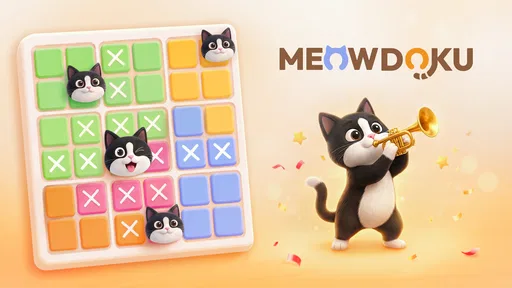
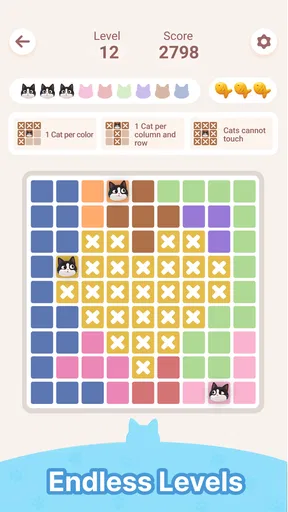
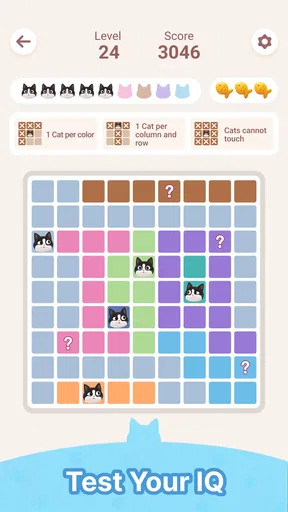
Some puzzle games grab my attention with a busy screen and a rush of effects; Meowdoku takes a quieter route. Its central idea is a blend of Sudoku and Minesweeper, wrapped around a charming cat theme: work out where each cat’s territory belongs by using logic. That premise gives this free puzzle game a clear identity before a board is even solved. I like that it sounds approachable without promising that every puzzle will be effortless. The appeal is in slowing down, reading the clues, and enjoying the small satisfaction of a deduction that clicks into place.
A gentle first impression, with a real puzzle at its heart
Meowdoku: Brain Puzzle Games is a puzzle title from Oakever Games, designed for players who enjoy familiar logic challenges presented in a fresh combination. Sudoku brings its structured way of narrowing possibilities, while Minesweeper contributes the pleasure of inferring what is hidden from the information around it. The cat-territory theme gives those ideas a playful frame rather than leaving them as abstract marks on a grid.
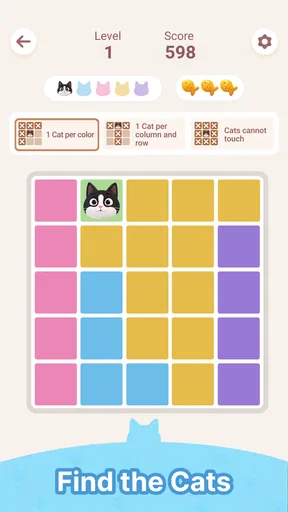
That combination is the game’s strongest introduction. I can understand the broad goal immediately: use the available logic to find every cat’s territory. At the same time, combining two recognizable puzzle traditions gives the board room to ask for careful attention instead of relying on reflexes. The experience is therefore well suited to a short break, but it can also reward a longer spell of focused play when I want to keep testing possibilities.
The game has a notably warm premise for a logic puzzler. Cats bring an inviting personality to an activity that might otherwise feel clinical, and the territory idea makes the objective easy to picture. That doesn’t replace the thinking; it gives the thinking a more memorable context. For me, that balance is important. A theme should make a puzzle feel welcoming without obscuring what the player is actually trying to figure out.
Small-scale charm rather than spectacle
The first impression is more about mood than drama. This is not a premise that needs a sprawling story to make sense. Its focus is the board, the clues, and the gradual process of determining where things fit. The cat motif supplies the personality, while the logic supplies the lasting reason to keep playing. I find that a good match for a game meant to be picked up whenever curiosity strikes.
Its audience is broad, too. The content rating is Everyone, and the game is free to download. It has passed ten million installs and holds a 4.7 average from around 546,000 ratings, with roughly 15,000 written reviews. Those figures suggest that the concept has found a substantial audience, though the experience itself is what matters most: a friendly presentation paired with a puzzle that asks me to think rather than tap at random.
A visual language built around cats and clues
Meowdoku’s theme works best when it stays connected to the act of solving. “Every cat’s territory” is not just a cute slogan; it gives the logic a simple story. Each deduction contributes to a clearer picture of the board, and the player’s job is to make sense of how the pieces of information relate. That framing gives a familiar grid puzzle an identity of its own, even when the underlying pleasure remains the classic one of spotting a useful constraint.
There is a satisfying contrast in the concept: a soft, playful subject placed alongside disciplined reasoning. I enjoy that kind of contrast because it can make concentration feel less stern. The game’s world language is easy to read at a glance, but the challenge still comes from interpreting the puzzle. The theme invites me in; it does not ask me to ignore the clues.
That distinction matters for a puzzle game. A decorative theme can become forgettable if it sits entirely apart from the activity, while a mechanical idea can feel dry if it has no personality around it. The territory concept provides a bridge between the two. It lets the player imagine the goal in concrete terms while keeping the focus on logical relationships. Even without a complicated setting, that is enough to make the game feel cohesive rather than generic.
Why the theme supports the thinking
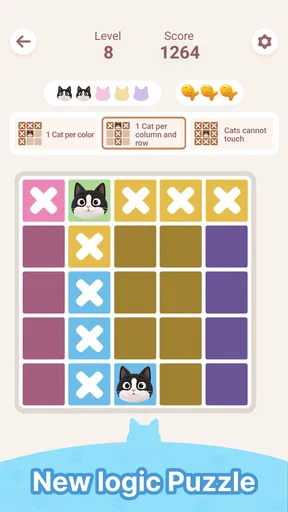
Sudoku and Minesweeper are both familiar touchstones, but they create different expectations. Sudoku suggests orderly constraints and elimination; Minesweeper suggests reading nearby information to reason about concealed possibilities. By bringing them together under one cat-themed idea, the game sets up a pleasant mental rhythm: observe, compare, rule out, and make a considered choice. The result is a premise that is easy to explain and still has room for satisfying thought.
I also appreciate that the theme is not at odds with the game’s basic promise. A player comes for a logic puzzle, not a long detour away from one. The cats make the setting approachable, and the territories make the objective legible. That is a useful foundation for both experienced puzzle fans and newcomers who might be curious about a blend of two well-known formats.
As a search-friendly recommendation, Meowdoku puzzle game is a natural fit for anyone looking for a relaxing logic game with cats, or for a fresh spin on Sudoku and Minesweeper. That description captures the hook without overstating what the game is. Its appeal rests on a clear combination of theme and reasoning, rather than on a complicated premise that needs lengthy explanation before play can begin.
Sound, pacing, and the pleasure of taking your time
The overall mood implied by the game’s concept is calm and deliberate. Logic puzzles work best when the player has room to pause, inspect a clue, and reconsider an assumption. A cat-focused setting reinforces that easygoing feel: it suggests a playful place to spend a few thoughtful minutes rather than a high-pressure contest. I see that relaxed tone as part of the game’s identity, not just a layer of decoration.
Sound and pacing matter in this kind of experience because they can either support concentration or compete with it. The central draw here is the reasoning itself, so the most coherent approach is one that lets the board remain the focus. I’m not looking for a puzzle game to turn every move into a spectacle. I want the moment of understanding to feel rewarding, and I want enough breathing room to reach it on my own terms.
The puzzle format naturally supports flexible sessions. I can approach it as a brief mental reset or settle in for a longer stretch of clue-reading, depending on my mood. That makes the game easy to imagine as part of an everyday routine: something to open when I want a little structure and a clear goal. The cat theme softens the mood, while the logic keeps the activity engaging.
A rhythm shaped by deduction
The most satisfying pacing for a logic puzzle comes from moving between uncertainty and clarity. At first, several possibilities may seem plausible. Then a clue narrows the field, another relationship becomes apparent, and the board starts to make sense. That gradual change is the natural source of momentum in Sudoku and Minesweeper-style play. The game’s premise fits that rhythm because finding territories is inherently about making reasoned discoveries.
This is also why I would recommend it to players who enjoy a calm challenge more than frantic action. The reward is not a burst of speed but the feeling of having worked something out. A good puzzle can make a quiet session feel absorbing, and a friendly theme can make that focus more inviting. The game’s identity sits in that combination: relaxed in presentation, attentive in play.
There is a practical note for anyone considering a download: the current version is 1.22.0, and it requires Android 7.0 or later. The game is free, with in-app purchases ranging from $3.99 to $69.99 per item. Those purchases are worth keeping in mind, but they do not change the central pitch: the core attraction is a cat-themed logic puzzle that blends two familiar styles of reasoning.
How well the mechanics fit the atmosphere
For a theme to feel convincing, the mechanics have to belong in the same world. Here, the link is straightforward. Cats need territories; the player uses logic to identify them. That gives the puzzle a reason to exist within its own playful framing. The Sudoku and Minesweeper influence then shapes how the player thinks, providing familiar mental tools for tackling a new presentation.
I find the blend appealing because it promises more than a reskin without asking players to learn an entirely unfamiliar genre. Sudoku fans can recognize the pleasure of applying constraints, while Minesweeper fans may enjoy the process of interpreting clues to narrow down hidden possibilities. The cat motif acts as a friendly point of connection, making the puzzle feel distinct while keeping the basic appeal easy to grasp.
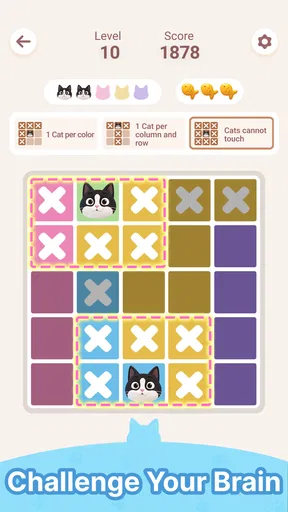
The best way to approach a game like this is patiently. Rather than guessing, I would take each clue as a piece of a larger argument: what does it establish, what possibilities does it remove, and what follows from that? That mindset is where the game’s “pure logic” promise becomes meaningful. The theme may be cute, but the solving experience asks for attention and careful reasoning.
Who is likely to enjoy it?
Meowdoku is a natural choice for fans of brain puzzles, grid-based logic, and lighthearted cat themes. It may also suit players who already enjoy Sudoku or Minesweeper and want to see those familiar ideas combined in a different setting. Since the objective is easy to summarize, it is also approachable for someone who wants to try a logic game without committing to a sprawling narrative or an elaborate fictional world.
On the other hand, its appeal depends on enjoying thought-driven play. Someone looking for constant action or a story-led adventure may not find the same kind of excitement here. This is a game for players who like to stop, inspect the board, and feel a solution emerge through their own deductions. That focus gives it a clear audience and helps the overall mood remain consistent.
Oakever Games has positioned the experience around a simple, memorable hook, and that clarity is a strength. The title is easy to recall, the cat-territory idea is easy to explain, and the connection to Sudoku and Minesweeper tells puzzle fans what sort of thinking to expect. With a 4.7 average and an audience measured in millions of installs, it has earned plenty of attention, but its lasting appeal comes down to whether this particular blend matches the way you like to solve puzzles.
A cozy logic game with a clear identity
My overall impression is that Meowdoku brings together an inviting theme and a focused puzzle premise in a way that feels coherent. The cats provide the warmth; the Sudoku and Minesweeper blend provides the challenge; and the territory goal connects those elements. It is a pleasing formula for a game that wants to be both approachable and mentally engaging.
What stands out most is the restraint of the concept. It does not need an elaborate story to give the player a reason to care about the board. The setting is conveyed through the cats and their territories, while the mechanics remain at the center of the experience. That makes the atmosphere feel purposeful: it welcomes me into the puzzle without distracting from the process of solving it.
If you like logic games that reward patience, or simply want a cat-themed puzzle with a recognizable but refreshed foundation, this is an easy game to consider. It is free, rated Everyone, and developed by Oakever Games. The title released on April 24, 2026, and its current version is 1.22.0. Those details help set expectations, but the key attraction is still its combination of careful deduction and a cheerful presentation.
In the end, Meowdoku feels like a strong fit for quiet puzzle sessions. Its personality comes from a charming setting, while its substance comes from the work of piecing together clues. I would recommend it to anyone who enjoys Sudoku, Minesweeper, or a relaxed brain teaser with a little feline character. It offers a clear goal, a distinctive theme, and the simple pleasure of seeing a tricky board gradually make sense.
What we like
- Rules are simple to learn for players new to block puzzles.
- Short rounds make it easy to fit in a quick play session.
- Cat-themed visuals give the puzzle a cheerful feel.
- Increasing challenges can keep experienced players engaged.
- No special gaming skills are needed to get started.
What could be better
- Some puzzle layouts may feel repetitive over time.
- Later stages can be frustrating when a placement mistake limits options.
- The cute theme may not appeal to players who prefer minimal visuals.
- Progress may depend on completing many similar puzzle rounds.
- Small board spaces can make careful block placement harder on phones.