 Analysis byWeUseApps
I like trivia games that make knowledge feel slightly risky rather than turning every question into a quiet multiple-choice exercise. Text or Die builds its challenge around a simple demand: respond to a prompt with a long word, then try to stay ahead of the danger closing in. That twist changes the way I approach familiar topics. I’m not only asking what answer is correct; I’m also searching my memory for an answer with enough letters to give me a better chance.
Why the longest answer changes the game
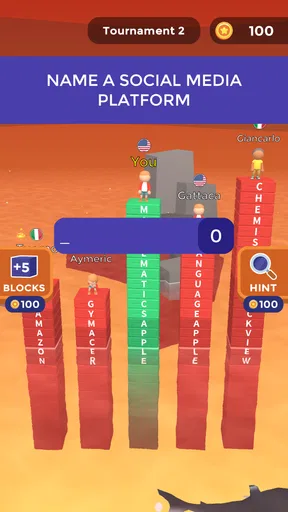
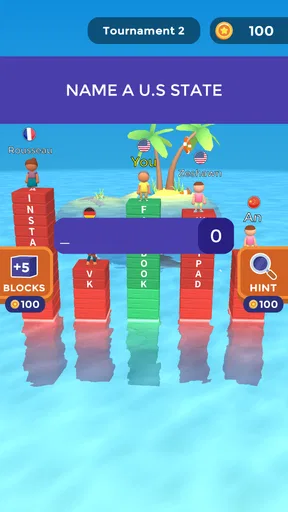
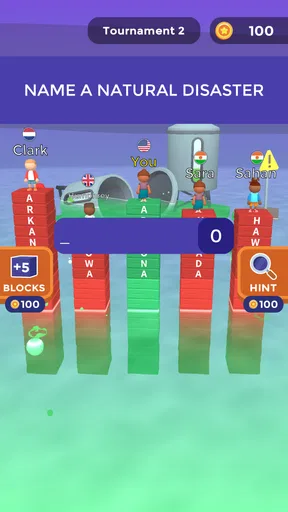
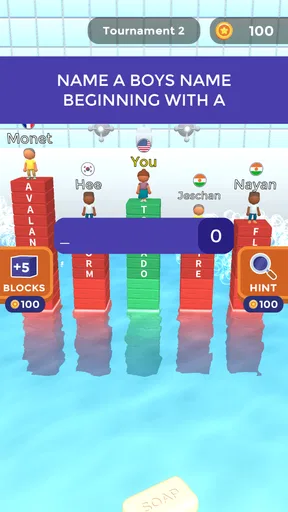
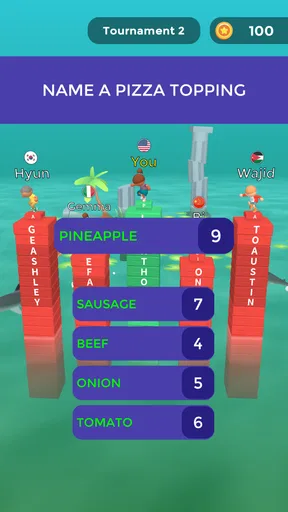
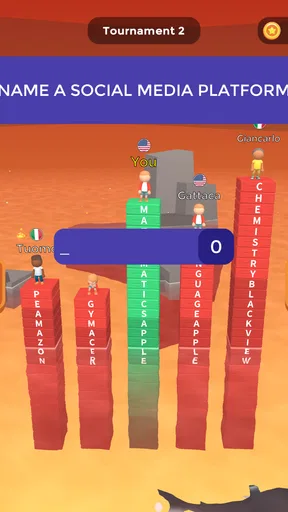
This is a trivia word game from Rollic Games, and its central idea is easy to grasp even if you have only a few minutes to play. A prompt asks for a kind of answer, and I type a word that fits. The longer response is the strategic one: short, obvious answers may be valid, but they can leave me at a disadvantage when survival depends on building upward. The shark threat gives that choice a clear consequence rather than making word length feel like an arbitrary bonus.
That design creates a useful tension between knowing something and expressing it well. If I’m asked for an animal, “cat” comes quickly, but a longer valid answer may be the smarter play. The catch is that reaching for length can also lead me toward an answer I’m less certain about. The game therefore rewards vocabulary and recall, but it also asks me to judge when an ambitious answer is worth the risk.
I find that more engaging than trivia formats where speed alone dominates. A quick response is not automatically the best response here; taking a moment to think through several possibilities can matter. It also differs from a conventional word puzzle, where the goal is usually to find one exact solution. Here, the open-ended prompt invites me to compare answers and choose one that balances confidence with length.
From prompt to a better answer
In practice, I try to treat each question as a tiny brainstorming task. Before typing, I mentally list a few answers that fit, then compare their lengths. That extra beat is useful because the first word I think of is often the shortest, not the strongest. When the subject is familiar, I can reach for a more specific example; when it is unfamiliar, a shorter answer I trust may be preferable to a long guess.
This is one of the game’s less obvious skills: keeping a small reserve of categories and examples in mind. Thinking in groups—foods, animals, places, or other likely subjects—can help me move beyond the first answer without freezing. I wouldn’t recommend trying to manufacture an elaborate word every time. A long response only helps if it actually fits the prompt, so a reliable answer can be a better choice than a stretch.
Typing is part of the experience, not just a way to submit trivia knowledge. I need to balance thought with the pressure of getting an answer down, especially when I’m tempted to reconsider a word after already spotting a stronger option. On a phone, that makes the game feel more hands-on than tapping a choice from a list. It also means the experience is less comfortable if I dislike typing during games or want to play while giving my attention to something else.
The shark premise supplies a memorable reason to care about answer length, but I wouldn’t mistake the game for a deep quiz course. Its appeal is the quick decision loop: read a prompt, retrieve possibilities, choose a word, and see how that choice affects the round. For me, that makes it a light challenge in recall and word selection rather than a way to study a subject systematically.
Where it fits into an ordinary day
A natural time to play is during a short wait: perhaps I’m sitting down before an appointment or have a few spare minutes between tasks. The prompts give me something to think about without requiring the sustained concentration of a long puzzle session. I can focus on the immediate question, try to find a stronger answer, and stop when I’m ready to move on. That makes the format approachable for casual play, even if a close round can make me want another attempt.
It can also work as a low-key conversation starter when someone nearby is interested in word games. Rather than debating obscure facts, we can compare which answer seems both appropriate and longer. The useful part is that the discussion naturally exposes different kinds of knowledge: one person may remember specific examples while another spots a category they had overlooked. I would treat that as an informal way to share the challenge, not assume the game is designed around a particular group mode.
For someone who often reaches for ordinary trivia apps, the distinction is substantial. Multiple-choice quizzes ask me to recognize the right option among choices; this game asks me to generate an answer myself and consider its length. Crosswords and word searches lean on clues and letter patterns, while this experience starts with a topic and relies more on recall. If I want a quiet, exact-answer puzzle or a structured learning tool, those alternatives may suit me better. If I enjoy producing words under a playful survival premise, this is the more distinctive pick.
The tradeoffs behind the pressure
The same rule that makes a round interesting can make it uneven. Some prompts naturally lead to longer answers than others, and a player with broad vocabulary may have an advantage over someone who knows the topic but defaults to common terms. I see that as part of the game’s word-selection challenge, but it may frustrate anyone who expects a pure test of factual knowledge. The best result is not simply proof that I know more; it can also reflect how quickly I can retrieve a fitting, lengthy example.
There is another tradeoff in choosing between safety and ambition. I sometimes know a short answer immediately but hesitate because I can imagine a longer one. That hesitation is part of the fun when I have time to think, but it can become irritating if I prefer games that reward a single confident fact. My practical approach is to use the longer answer when I can defend its relevance, not just because it has more letters.
Because the core loop depends on reading, thinking, and typing, it is not my first choice when I want a game that works well with minimal attention. Nor would I recommend it as a substitute for a traditional quiz if the point is to check precise knowledge across topics. Its playful premise is stronger than its usefulness as a formal test. I’d pick another option for careful study, and this one for casual mental competition.
It is free to download, though optional in-app purchases are listed from $0.99 to $24.99 per item. That is worth keeping in mind if I’m choosing a game for someone who prefers an entirely purchase-free experience. The existence of purchases does not change what I find appealing about the central mechanic, but I would check the app store details before handing a device to a child or setting expectations about spending.
Who will enjoy building the longest answer
Text or Die makes the most sense for players who like trivia but want more than selecting an option, and for word-game fans who enjoy finding several possible answers to one prompt. I’d especially recommend it to someone who likes a small strategic decision inside a fast round: answer with the familiar word, or take a moment to search for a longer one that still fits. That decision is specific enough to give the game its identity without making its basic premise hard to understand.
It may be a weaker fit for players who dislike typing, feel stressed by timed or high-pressure choices, or want every question to have one precise answer. People seeking a calm crossword-style session may prefer a puzzle built around clues and a fixed solution. And anyone who wants a comprehensive educational trivia experience should look elsewhere; this is designed around a playful word-length contest, not a lesson plan.
The game has an average rating of 4.1 from around 285,000 ratings, with about 22,000 written reviews, and has passed 10 million installs. It is rated Everyone 10+, is free, and was released on August 14, 2021. Version 30.2.2 lists a minimum operating system of 7.0. Those details make it easy to judge whether it fits a device and audience, while the purchase range is a reminder to review spending options before letting a younger player use it.
My overall recommendation is simple: try it if you enjoy the moment when an obvious answer gives way to a better one. The shark setup gives that choice a playful edge, and the typed-response format makes each round feel more personal than ticking a box. Just go in expecting a light, sometimes uneven mix of recall and word strategy—not a serious knowledge test. When I want a short game that nudges me to think past my first response, that is exactly the appeal.
What we like
- The simple controls make it easy to start playing.
- Quick rounds work well for short breaks.
- Unusual prompts reward broad general knowledge.
- The survival format adds tension to each answer.
- Its colorful presentation is easy to follow.
What could be better
- Some prompts can feel vague or open to interpretation.
- Popular answers may be harder to predict than obscure ones.
- Ads can interrupt the flow between rounds.
- Later rounds may become repetitive.
- The game is less enjoyable without an internet connection.