 Analysis byWeUseApps
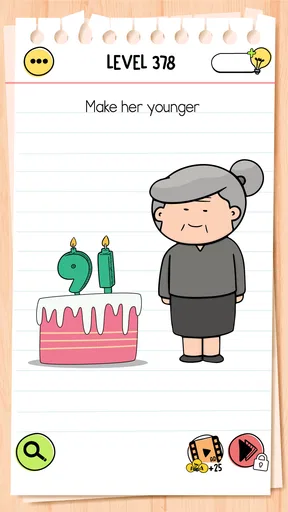
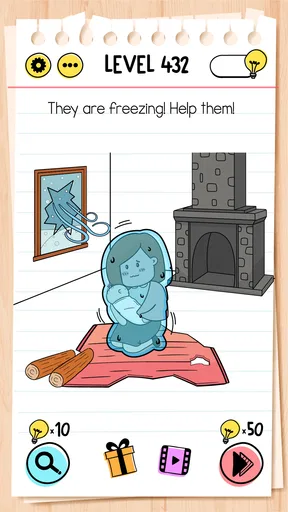
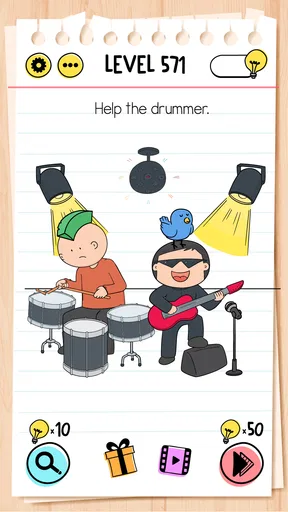
I tap an answer, watch the puzzle react, and almost immediately start wondering what I missed. That quick cycle is what makes Brain Test: Tricky Puzzles such an easy game to pick up: it invites me to think, surprises me when my first instinct is wrong, and gives me a reason to try again. It is a free trivia game from Unico Studio, built around funny, tricky brain puzzles rather than a conventional quiz format.
One tap, one unexpected puzzle
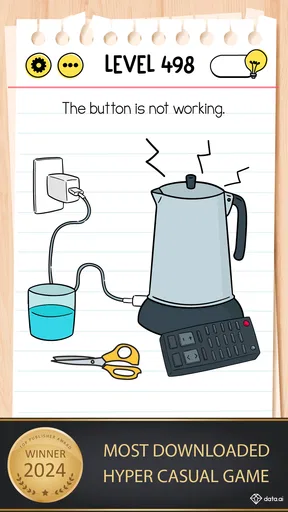
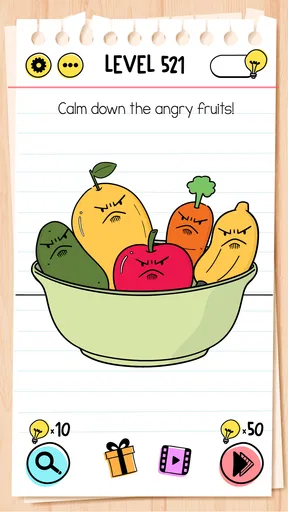
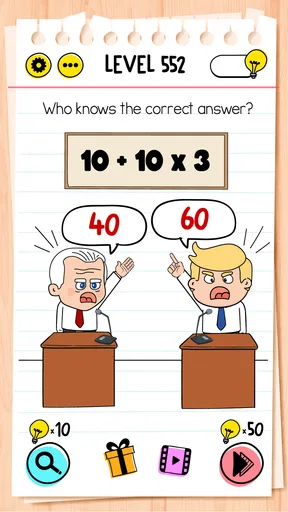
The first thing I like about Brain Test is how simple it feels to begin. A puzzle presents a situation, and I make a choice or interact with what is on screen. The challenge is not always to recall a fact; often, it is to look at the problem differently. That change of approach is the game’s main appeal. I can arrive with the usual assumptions, make what seems like the sensible move, and discover that the puzzle was nudging me toward a less obvious answer.
That makes the opening action feel more like a small experiment than a formal test. I decide what to try, see what happens, then adjust my thinking. The store’s promise of a funny and tricky brain puzzle is a good description of that tone: the game aims to entertain as it challenges, rather than make every question feel like an exam. When a solution catches me off guard, the surprise is part of the fun.
The title also sets expectations clearly. Brain Test is about puzzles that test how I interpret a prompt, not simply how quickly I can recite facts. If I enjoy lateral thinking and playful challenges, that distinction matters. It makes the game suitable for short moments when I want something interactive but do not feel like committing to a long story or a complicated ruleset.
Learning the game’s way of thinking
At the start, I naturally look for a straightforward answer. The game’s trickier moments encourage me to question that instinct: is the wording important, am I overlooking something on the screen, or am I treating the puzzle too literally? I find that this habit of reconsidering the problem is more satisfying than simply tapping through a string of obvious answers.
It also means my experience depends on how much I enjoy being fooled. A clever puzzle can make me laugh at my own assumption, while a particularly puzzling one can leave me pausing to inspect the prompt again. That tension is central to the appeal. I am not only asking, “What is the answer?” but also, “What is this question trying to make me assume?”
For anyone searching for a brain puzzle game that can be approached in small bursts, this style works well. Each attempt has a clear point: make a choice, observe the result, and decide whether to rethink it. The learning curve comes from getting accustomed to the game’s playful logic, not from mastering a complicated control scheme.
Feedback that keeps the puzzle moving
After I act, the game’s response gives the moment its rhythm. A correct solution brings a sense of progress; a wrong guess tells me that my interpretation needs another look. That immediate feedback keeps the interaction easy to follow. I do not have to wonder whether my tap registered or whether I understood the basic task. Instead, I can focus on the puzzle itself and the reasoning behind my next attempt.
This rhythm is especially useful for a casual trivia game. The feedback turns each question into a compact exchange: I propose an answer, the game responds, and I either move forward or reconsider. When I am close to the solution, that loop can feel like a playful conversation. When I am not, it gives me a clear nudge to stop repeating the same thought and look for another interpretation.
The comedy helps soften the frustration that can come with a tricky answer. Brain Test is designed to surprise, so being caught out is not necessarily a failure of skill. Sometimes the best part is realizing that I overcomplicated a simple detail or trusted the obvious reading too quickly. I enjoy that kind of reversal because it makes the feedback feel like part of the joke, not just a scorecard.
When a guess does not work
Not every puzzle clicks right away, and that is where patience matters. If my first idea fails, I can inspect the wording again, take another look at the situation, and try a different line of thought. The key is to treat a wrong answer as information. Repeating the same tap without reconsidering the puzzle is less satisfying than asking what assumption led me there.
This approach also makes the game approachable across different moods. I can give a puzzle a thoughtful try when I have time, or make a quick attempt during a spare moment. If I get stuck, I can pause rather than turn the experience into a demanding session. The lighthearted presentation and simple interaction keep the challenge from feeling too heavy, even when a solution takes longer than expected.
As a result, the tricky puzzle gameplay has a nice balance between confidence and uncertainty. I usually understand what the game wants me to do, but I cannot always predict which answer will work. That small gap between understanding the task and solving it is what makes the next attempt tempting.
The little reward of getting it right
Solving a puzzle brings a modest but satisfying reward: the uncertainty ends, I see that my reasoning worked, and I can move on. The best moments are the ones where the answer makes sense after the reveal, even if I did not spot it at first. I get the pleasure of being right, but also the extra amusement of recognizing the twist that had been sitting in front of me.
That reward is not only about reaching the next question. It is also about refining how I look at a problem. Over time, I become more willing to challenge the first interpretation that comes to mind. I start checking the details instead of assuming every puzzle follows the most familiar rules. That shift gives the game a sense of progress even when the individual challenges are brief.
Brain Test has a broad audience, with an Everyone content rating, and its casual format makes it easy to share the idea of a puzzle with someone nearby. One person can suggest an answer, another can argue for a different reading, and the reveal becomes a little group moment. Even when I play alone, I can imagine the same friendly back-and-forth: “That should work,” followed by a surprised rethink.
The game is free to play, with in-app purchases ranging from $0.99 to $7.99 per item. That gives players a way to try the core experience without an upfront price, while optional purchases are part of the app’s commercial model. It is worth keeping in mind if I prefer to manage spending carefully, especially in a game designed for casual play and repeated short visits.
A familiar loop with a fresh question
The structure is straightforward: face a puzzle, choose an action, receive feedback, and enjoy the answer when the trick becomes clear. Then the next challenge offers a new reason to test my instincts. Because the appeal comes from interpreting each situation, the loop does not rely on complicated controls. It relies on curiosity and the hope that the next puzzle will catch me in a different way.
That makes the game easy to return to. I do not need to remember a long chain of events before I can enjoy a puzzle. I can focus on the one in front of me, work it out, and stop when I have had enough. The simple structure is a strength for players who want a casual trivia game that fits around other activities, rather than one that asks for a long uninterrupted commitment.
The same simplicity can be a limitation for someone looking for deep strategy or a detailed adventure. Brain Test is focused on bite-sized mental challenges and playful surprises. I would choose it when I want a quick change of pace, not when I am looking for a sprawling game world or a complex system to master. Knowing that helps set the right expectations and makes its strengths easier to appreciate.
Why another session begins
Once I finish a puzzle, the natural reset is simple: the solved question is behind me, and a new one gives me another chance to be surprised. I do not need a grand reason to begin again. Curiosity is enough. I want to see whether the next challenge rewards careful reading, a fresh perspective, or a willingness to abandon the answer that first seemed obvious.
That reset is what makes the game work in short sessions. A single puzzle can be a complete little activity, while several in a row can turn into a longer stretch if I am enjoying the rhythm. The action and feedback remain easy to understand, and the reward of solving something tricky keeps the loop moving. When I get stuck, I can step away and return later without losing the basic pleasure of the format.
Brain Test has reached a wide audience, with over 100 million installs, an average rating of 4.7, and around 10 million ratings. Those figures suggest that its accessible take on brain teasers has found plenty of fans. The game was released on November 21, 2019, and Android support starts at version 7.0. Together, those details make it a familiar option for players looking for a light puzzle game on a compatible device.
My overall take is that Brain Test succeeds when I let it be what it is: a funny, accessible collection of brain puzzles that encourages me to question the obvious. I enjoy the quick attempt-and-response rhythm, the satisfaction of spotting a trick, and the easy reset that makes another round feel inviting. If you want a demanding strategy game, this is not the place to look; if you want a playful way to test your assumptions in short bursts, it is an entertaining pick.
In the end, the loop verdict is simple: make a move, see how the puzzle responds, learn from the result, and decide whether you are ready for one more. That pattern gives Brain Test: Tricky Puzzles its charm. It does not need elaborate setup to make me curious; it only needs one more question and the possibility that my first answer is not the right one.
What we like
- The game works offline for convenient play anywhere.
- Short levels make it easy to play in spare moments.
- Unexpected solutions reward creative thinking.
- Hints can help when a puzzle feels too difficult.
- Its playful artwork gives the puzzles a lighthearted feel.
What could be better
- Some answers rely on wordplay rather than clear logic.
- Hints may be limited or tied to rewarded ads.
- Repeated ad breaks can interrupt the flow.
- Later puzzles can feel much harder than early levels.
- The game offers little guidance on its unusual rules.