 Analysis byWeUseApps
When I’m trying to turn a vague “we should go to something” into an actual plan, I want a ticket app that makes browsing and buying feel like one continuous task. StubHub is built around that simple idea: it’s an events app from StubHub where I can look for tickets and handle the purchase in the same place. That focus is useful, though it doesn’t mean every event or ticket choice will suit every budget or plan.
Finding an event is the central experience
The most important thing to understand about StubHub is its role as a ticket marketplace, not as a general entertainment guide. I would open it with a particular goal in mind—finding a live event, checking whether tickets are available, or comparing options for a date—and use it to move from browsing toward a decision. That makes it especially practical when plans are already taking shape.
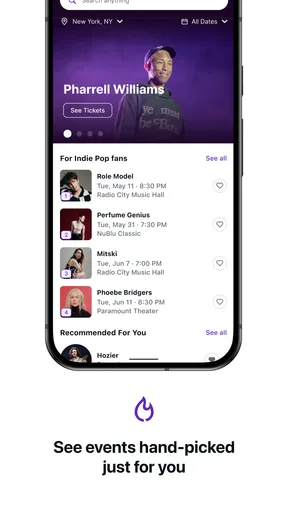
As an events app, it is aimed at people who want to attend rather than simply read about what is happening. The app’s appeal is the chance to bring event discovery and ticket shopping into one workflow. Instead of treating “what should we do?” and “how do we get in?” as entirely separate tasks, I can use the same service to explore possibilities and pursue tickets.
That convenience matters most when a group is deciding between alternatives. I might have a free evening but no firm choice of event; looking through ticket options can help turn that open-ended discussion into a concrete plan. The useful habit is to decide what matters before browsing—such as the event itself, the date, or the amount I’m comfortable spending—so an appealing listing doesn’t become the only factor in the decision.
From browsing to a confident choice
In practice, I would use the app in stages. First, I’d narrow down the kind of event and occasion I have in mind. Next, I’d compare the available choices with the people I’m going with. Only after agreeing on the plan would I move toward buying. This sounds ordinary, but separating discovery from commitment helps avoid the familiar group-chat problem: everyone likes the idea, yet nobody has checked whether the option works for the whole group.
A useful tip is to settle the less exciting details before purchase. Confirm the event and date with your companions, agree on a spending limit, and make sure everyone understands which ticket option the group is considering. A ticket purchase is a poor moment to discover that one person meant a different date or had a much lower budget. StubHub can support the search, but the group still needs to make the decision together.
I also wouldn’t treat the first appealing result as an automatic recommendation. Ticket marketplaces can present choices that differ in ways that matter to a buyer, so I’d pause to read the option details shown in the app and check that they match my needs. If I’m buying for several people, I’d be especially deliberate: keeping the group’s choice consistent is more useful than rushing to secure something before everyone has agreed.
A realistic use: making a weekday plan
Imagine a friend suggests going to an event after work, but the group has not settled on what to see. I could open StubHub while we discuss the date, browse possible events, and bring a few concrete ticket choices back to the conversation. That is a better use than scrolling aimlessly: each person can react to actual options, and we can decide whether the plan fits before anyone commits.
If the group can’t agree, I’d use the app as a way to clarify the disagreement rather than force a purchase. Perhaps the event is right but the ticket choice doesn’t suit everyone, or perhaps the date is the sticking point. Establishing that early can save time and frustration. For a spontaneous outing, this quick path from idea to ticket search is the app’s strongest practical advantage.
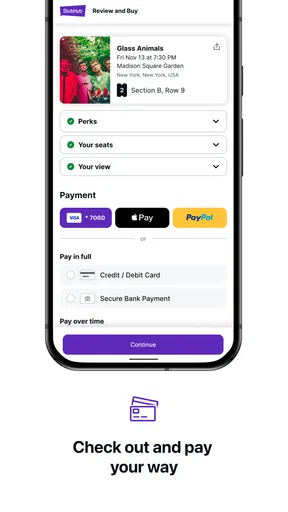
For a more carefully planned occasion, I’d be less casual. When the date is important or several people are coordinating travel and schedules, I’d verify the details on the selected option and make sure the group is ready before completing the transaction. The app may streamline ticket shopping, but it cannot remove the need to double-check what you’re buying or make a complicated group plan uncomplicated.
Where convenience has limits
The main tradeoff is that putting ticket shopping at the centre can make the experience feel transactional. If I’m still deciding what kind of outing I want, a broader local-events guide may be a better starting point. Such a guide may be more useful for inspiration, while StubHub makes more sense once I’m ready to look for tickets to an event that interests me.
It is also not a substitute for careful comparison. An app can put choices within reach, but the buyer still has to decide whether the event, date, and ticket option are right. I would not assume that a convenient purchase flow means every option is equally suitable. For a budget-sensitive outing, I’d set a limit before browsing and stick to it; otherwise, the excitement of finding a possible plan can overshadow the question of whether the choice makes sense.
Another limitation is that the app’s usefulness depends on what I’m trying to do. If I already have a preferred place to buy a particular event’s tickets, using another marketplace may add an unnecessary step. If I want editorial recommendations, venue information, or a broad calendar before I know what to attend, a dedicated discovery service may better fit that early stage. I see StubHub as a focused option for ticket searching, not an all-purpose answer to every event-planning question.
That distinction helps set expectations. I’d use it when the next action is “let’s find tickets,” not necessarily when the first question is “what is happening near me?” It is a small difference in wording, but it changes whether the app feels convenient or like one more place to search.
Who is likely to get the most from it?
StubHub is a good fit for people who already enjoy attending live events and want a direct way to look for tickets. It can also help friends coordinating an outing, especially when one person is willing to gather options and share the decision with the group. The practical benefit is not that it makes planning effortless; it gives the planner a focused place to turn interest into a ticket search.
Someone who attends events only occasionally can still find it useful, particularly when a specific occasion is approaching. I’d install it when I had a real event in mind rather than expecting it to be a regular source of inspiration. That keeps the app’s role clear and avoids confusing a ticket marketplace with a calendar or recommendation tool.
I’d be less likely to recommend it as the first choice for someone who wants to browse local activities without a ticket purchase in mind, or for a buyer who has already settled on another trusted way to obtain tickets. In those cases, a discovery-focused app or the preferred seller may be more efficient. The best app is the one that matches the stage of planning you’re actually in.
What its track record tells me
The app is free to download, is rated for Everyone, and is listed with a minimum operating-system requirement of version 10. It has been available since March 9, 2011, and its current version is 106.9.7. Those details make it a long-running option rather than a new experiment, though they don’t guarantee that every individual ticket search will be smooth.
Its average rating is 4.3 from around 104,000 ratings, with roughly 25,000 written reviews and over 10 million installs. I take that as a sign that many people use the app, not as proof that it will be the right fit for every event or buyer. The developer is StubHub, which makes the app’s purpose easy to understand: it is focused on the ticket-shopping side of attending events.
My overall view is that StubHub earns its place when I know I want to go somewhere and need a focused way to pursue tickets. Its strength is the practical bridge between an event idea and a purchase, especially for a group making plans around a specific evening. I’d still compare the choices carefully, agree on the details with anyone joining me, and use a broader discovery tool when I’m not sure what I want to attend. If you’re already at the ticket-search stage, it’s a sensible app to try; if you’re still looking for inspiration, start elsewhere and come back when the plan is clearer.
What we like
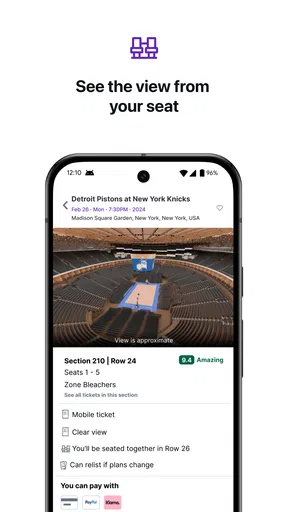
- Interactive seat maps help you compare views before choosing tickets.
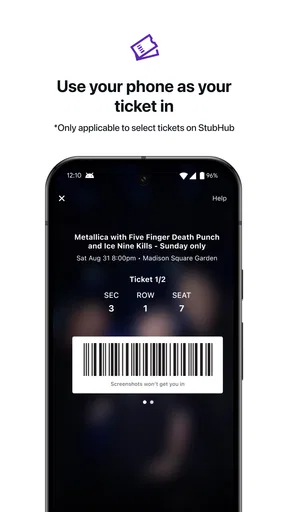
- Mobile ticket access makes entry convenient at supported venues.
- Price alerts can help you track changes for selected events.
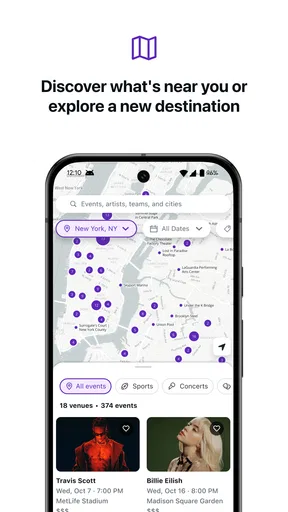
- Event filters make it easier to find tickets by date or location.
- The app supports ticket resale for eligible listings.
What could be better
- Ticket prices may include fees that appear during checkout.
- Resale listings can vary widely in price and seat quality.
- Some tickets may not be delivered until close to event time.
- Refunds depend on the event and StubHub's applicable policies.
- Availability and app features can vary by country and venue.