 Analysis byWeUseApps
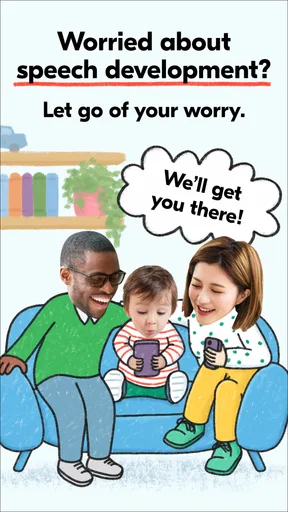
For a child who is reluctant to practise sounds on request, a phone can sometimes make the first step feel less like a lesson. That is the idea I find most useful in Speech Blubs: it turns speech practice into short, guided activities a parent and child can try together. I’d treat it as a way to encourage playful repetition at home, not as a substitute for a speech-language professional or a promise of rapid progress.
Why imitation is the app’s central strength
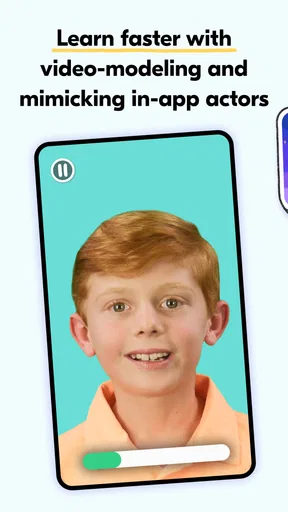
Speech Blubs is a free parenting app from Blub Blub Inc., built around speech therapy exercises for children. Its defining approach is to invite children to watch and imitate spoken sounds and words. That focus matters because a child who tunes out a parent’s repeated “say this” may respond differently when practice feels like copying and play rather than correction.
In my view, imitation is most helpful when adults keep expectations modest. A child might try a sound, approximate a word, or simply pay attention to how someone says it. Those small moments can make a practice routine easier to start. They should not be mistaken for a diagnosis or proof that a particular speech difficulty has been addressed.
The app’s format also gives a parent something concrete to do alongside a child. Instead of having to invent a game or decide which word to practise, you can use an activity as a starting point, then repeat the sound naturally in conversation. The strongest value is making shared practice easier to begin, especially on days when neither adult nor child has much patience for a formal exercise.
It has an average rating of 4.6 from around 31,000 ratings, and more than 5 million installs. Those figures suggest that many families have tried it, but they do not tell me whether it will suit a particular child. Temperament, developmental needs, and the way a family uses screens all matter more than popularity when deciding whether to try a speech practice app.
What the imitation approach can—and cannot—do
Watching and copying can give a child a low-pressure model to respond to. That can be a useful contrast with flashcards or worksheets, which often ask a child to produce an answer on demand. A parent can also use the moment to notice what draws the child in: a particular sound, a familiar word, or simply the chance to take turns.
But imitation is not the same as a tailored therapy plan. Children can have very different reasons for finding speech difficult, and an app cannot replace assessment or individualized guidance. If a clinician has recommended particular targets, I would follow that advice rather than assume the app’s general exercises match it. The app works best as a practice companion when its use fits the child’s needs and any professional guidance they already receive.
Making practice work in ordinary family life
I would use the activities in a short, predictable window rather than leaving the phone available as open-ended entertainment. For example, a parent could choose a calm moment after breakfast, sit with the child, try one activity, and then put the device away. The point is not to complete a long session; it is to make attention and participation more likely.
A useful follow-through is to carry one sound or word into a real-life routine. If the child has just practised a word for an everyday object, the parent can use that word naturally when the object comes up later. This connects screen-based imitation with conversation without turning the rest of the day into a test. I would avoid asking for repeated performances in front of other people, which can make practice feel like a public evaluation.
Another practical tip is to let the child’s response guide the next step. If they lose interest, stop rather than bargaining for “one more.” If they enjoy repeating a sound, take turns and respond warmly, but do not insist on a perfect version. This keeps the activity collaborative and reduces the risk that a helpful routine becomes a source of pressure.
For families who share a device, it helps to agree on when the app is used and who will sit with the child. A parent can be present to make the activity social, notice signs of frustration, and connect the exercise to everyday speech. Handing over the phone without context may still entertain a child, but it misses much of the practical value of doing the imitation together.
A realistic use case: the reluctant after-school practiser
Imagine a child who comes home tired and resists sitting down for a speech exercise. I would not open the app as a reward for compliance or present it as another task they have to finish. Instead, a parent might offer one brief activity while sitting nearby, let the child decide whether to join in, and end while the mood is still positive.
If the child participates, the parent can later repeat a relevant word during play or a routine such as getting ready for dinner. If the child does not engage, that is useful information too: perhaps the timing is poor, the activity is not appealing, or a screen is not the right format for that child. Trying another moment or a non-screen activity is more sensible than interpreting reluctance as a failure.
This is where I see the app fitting best: as one option in a parent’s toolkit, not the entire toolkit. A family might combine it with talking during daily routines, reading together, and activities suggested by a speech-language professional. The app can make it easier to create a shared practice moment, while real conversation gives the child opportunities to use speech for an actual purpose.
How it compares with other ways to practise
Compared with parent-led repetition, an app can provide a more structured prompt when an adult is unsure how to start. Compared with cards or printed exercises, its imitation-centered format may feel more interactive to a child who likes watching and copying. Those are format advantages, not evidence that it is more effective for every child.
Ordinary conversation has a different strength: it happens in context, with genuine reasons to communicate, and does not require a device. A therapist, meanwhile, can adapt goals and feedback to a child in a way a general app cannot. If your child needs individualized assessment, targeted treatment, or help with a concern that is affecting daily communication, professional support is the better choice. Speech Blubs may sit alongside that support, but should not displace it.
For a child who becomes overstimulated by screens, dislikes copying on cue, or needs a quieter and more personal approach, books, toys, face-to-face games, or clinician-guided practice may be a better fit. The same is true if a family is trying to reduce screen use. There is no need to force an app into a routine simply because it is designed for speech practice.
Costs, access, and points to weigh
The app is free to download, with in-app purchases ranging from about $10 to $100 per item. I would check the purchase details in the app store before committing to anything and decide in advance whether paid content fits the family budget. A free starting point is useful, but families should not assume that every activity or option is included without charge.
Its content rating is Everyone, which makes it broadly suitable by age classification, but that does not decide whether a particular activity is right for a particular child. Parents should still participate, especially when a young child is using a phone or tablet. The app’s current version is 18.6.0, and it requires operating system version 7.0 or later; checking device compatibility before installing can save time.
The main friction I would watch for is the difference between screen engagement and meaningful practice. A child may enjoy an activity without using the target sound later, while another may be ready to imitate but prefer a parent’s voice or a toy-based game. I would judge the app by whether it helps your child take part calmly and whether it supports interaction beyond the screen—not by how long the child stays occupied.
Who is most likely to benefit
I would consider Speech Blubs for parents looking for a playful way to prompt speech practice at home, particularly when a child responds well to watching and imitating. It may also help an adult who wants a ready-made starting point for a short shared activity rather than improvising every time. The parenting category is apt: the parent’s role is not just to hand over the device, but to make the practice supportive and connect it with family life.
I would skip it, or keep it secondary, if you are expecting a diagnosis, individualized therapy, or guaranteed progress. It is also a poor match for a child who strongly dislikes screens or finds imitation stressful. In those situations, direct guidance from a qualified professional or a non-screen approach is more appropriate.
Overall, I see Speech Blubs as a potentially useful nudge toward playful repetition, with the best results likely when a parent joins in and keeps sessions short and low-pressure. Its 4.6 average rating and broad reach make it a familiar option, but neither settles the question of fit. I’d try it as one small part of a child’s communication routine, watch how they respond, and keep professional advice and everyday conversation at the center.
What we like
- Speech activities use videos of children to encourage imitation.
- The app offers activities for different speech and language skills.
- Progress tracking helps families follow a child’s practice.
- Short exercises can fit into everyday routines.
- Parents can explore content suited to their child’s age.
What could be better
- Most activities require a paid subscription.
- A stable internet connection may be needed for some content.
- The app is not a substitute for a speech-language professional.
- Children may need adult guidance to stay engaged.
- Speech recognition may not accurately assess every attempt.