 Analysis byWeUseApps
I judge a ride-hailing app less by how polished its screens look than by whether it helps me make a sensible plan when I need to get somewhere. Lyft is built around that simple job: connect a passenger with a nearby driver and arrange a ride. In my view, it is most useful when public transport is inconvenient, carrying bags makes walking awkward, or time matters more than finding the cheapest possible route. It is not a replacement for a map or a transit planner, and its usefulness depends on having drivers available where and when you need one.
Getting from request to ride
Lyft belongs to the maps and navigation space, though I think of it primarily as a way to arrange car travel rather than as a general-purpose navigation tool. Lyft, Inc. develops the app, which is free to download and rated for Everyone. Its role is straightforward: use it to request a ride, not to plan every part of a day’s travel.
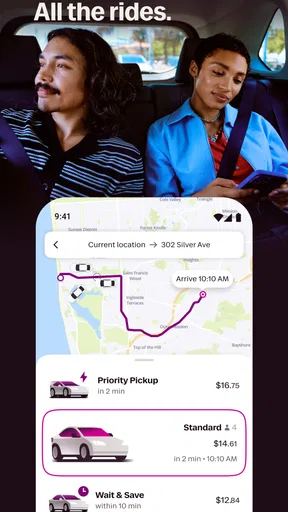
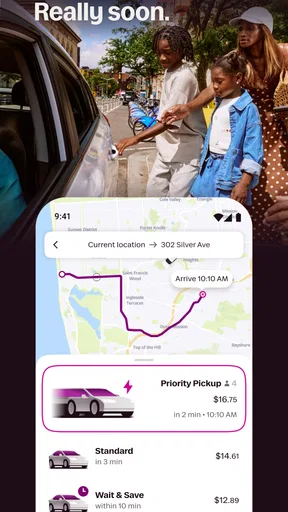
The promise of a quick match should be read as an expectation, not a guarantee. A nearby driver can make the wait feel short, but distance, local demand, traffic, and the time of day can all affect how quickly a ride comes together. I would open the app before I am already late, especially if I have a fixed appointment. That small buffer is more useful than assuming any ride request will be immediate.
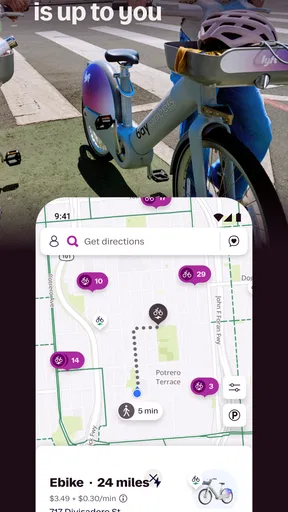
For an ordinary trip, the app makes most sense as one step in a larger decision. I might check whether walking or transit is practical first, then use Lyft if the remaining route is awkward or a direct ride saves enough hassle. A map app can be better for comparing road routes or understanding a neighborhood; a transit app is better when I need schedules and connections. Lyft fills the gap between those options by arranging a car ride.
Speed depends on the whole trip
There are two kinds of speed to consider: how long it takes to arrange a ride and how long the journey itself takes. The first depends on whether a driver is available nearby. The second is shaped by the road, traffic, and where the pickup and drop-off points are. A fast match does not necessarily mean a fast arrival, so I would avoid treating the initial wait as the full travel estimate.
One practical habit is to request from a pickup point that is easy for a driver to find. If I am leaving a busy venue, I would move to a clear, accessible meeting spot rather than pinning a crowded entrance. This can reduce confusion during the handoff, even when the ride itself is only a short distance. It is a simple improvement that matters more in real life than repeatedly checking the screen.
Lyft is also not automatically the best choice for a short journey. If the destination is a few blocks away and walking is comfortable, walking may be simpler. If a reliable transit connection is already close, taking it may avoid waiting for a car. I find the app most compelling when the route has a real friction point—late hours, luggage, poor connections, or a need to go directly—rather than for every trip by default.
Busy moments and practical trade-offs
Heavy-use situations expose the limits of any ride service. At a busy pickup area, many passengers may be trying to leave at once, and roads can be slow even after a ride is arranged. I would give myself extra time after a concert, during bad weather, or around a major event rather than expecting the same experience as a quiet midday trip. These are precisely the times when having a backup plan is sensible.
For an airport or station journey, I would check the pickup point carefully and allow room for finding the driver. A terminal or station can have several entrances and designated vehicle areas, so a vague meeting place can cost more time than the app’s initial matching process. If I am carrying luggage or travelling with someone who needs assistance, I would plan the handoff rather than making the request while rushing out the door.
When deciding between Lyft and a taxi, the distinction is not simply “app versus no app.” A taxi may be easier to take from a rank or hail in a place where that is customary. Lyft is more useful when I want to arrange a ride through the app and coordinate a pickup. Between Lyft and public transport, the trade-off is usually directness against cost and predictability: transit can be better on a well-served route, while a car can make sense when transfers or walking are the bigger burden.
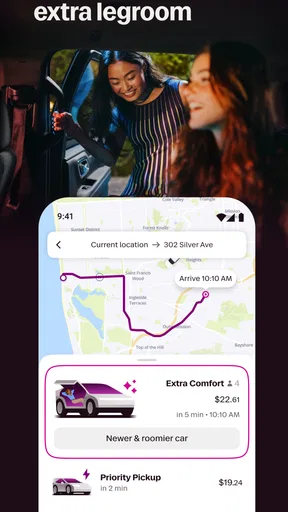
I would also avoid assuming that a ride-hailing app solves every accessibility or group-travel need. The right option depends on the passenger, the pickup location, and the kind of vehicle or assistance required. If a particular requirement is essential, I would check the choices available in the app before depending on it for a time-sensitive trip. For a journey where missing an appointment would have serious consequences, a confirmed alternative is worth considering.
Reliability is more than the app opening
Reliability has several parts: the app needs to be usable, a driver needs to be available, and the pickup needs to work as expected. Those are not the same thing. Even a smooth request cannot control traffic or guarantee that the nearest driver is positioned conveniently. I would judge the service by whether it gives me a workable way to arrange a trip in my area, not by expecting every request to have identical timing.
If a match or pickup takes longer than expected, the sensible response is to reassess the plan rather than keep waiting without a limit. For a flexible trip, I might give the request a little time. For a fixed departure, I would switch to a taxi, transit, or another suitable option early enough to preserve the schedule. That is a useful recovery approach because it treats the app as one travel option, not as the only one.
Lyft has an average rating of 4.8 from around 715,000 ratings, alongside roughly 151,000 written reviews. It has passed 50 million installs and has been available since August 28, 2012. Those figures suggest that it is a widely used service, but they cannot tell me whether drivers will be nearby on a particular street at a particular hour. For an individual rider, local availability remains the deciding factor.
Device fit and day-to-day use
The current version is 2026.40.3.1791962843, and the app requires Android 9 or later. Before relying on it for a trip, I would make sure my device meets that requirement and that I can use the app comfortably while travelling. On an older phone that falls below the minimum, this version is not a practical option; a taxi or transit alternative may be more dependable than trying to solve a device problem on the pavement.
I cannot responsibly infer exact battery use, storage needs, or performance on every handset from the version information alone. In everyday use, though, a ride app is most convenient when the phone is charged, available, and easy to check during pickup. If I am planning a long day out, I would keep enough battery for the rest of my navigation and communication too, rather than spending it all on travel planning.
One helpful workflow is to make the travel decision before reaching the curb: choose the general pickup area, consider whether another mode is better, and leave a little schedule margin. Another is to think about the entire journey, not just the ride request—especially if the destination has a difficult entrance or the trip begins in a crowded place. These habits make the app more useful without assuming that a particular interface setting or special feature will solve every complication.
Who I would recommend it to
I would recommend Lyft to someone who wants an app-based way to arrange car rides and has found that it serves their area. It can be a convenient choice for a late trip, a direct ride with bags, or a route where public transport would involve an inconvenient transfer. The free download also makes it easy to consider as one option, though the ride itself is a separate travel decision.
I would be more cautious about recommending it as a person’s only way to get around. Someone who depends on exact arrival times should keep a backup, and someone whose usual routes are already well served by transit may find a transit planner more useful for everyday commuting. A person with a strict accessibility requirement should verify that the available ride choices suit them before relying on the app. In those cases, a different transport service or a prearranged option may fit better.
The app is supported across a substantial range of use: it has a 4.8 average and more than 50 million installs. That scale is reassuring as a sign of broad adoption, but it should not be confused with a promise of equal coverage everywhere. My recommendation is therefore local and practical: check whether Lyft is useful on the routes you actually take, and keep walking, transit, or taxis in consideration when they offer a clearer or more dependable trip.
My performance verdict
For me, Lyft’s strength is its focused purpose: it helps turn a need for a car ride into a request without requiring me to treat a general map as a booking tool. Its perceived speed is best when a nearby driver and a straightforward pickup come together; its weak points show up when demand is high, meeting places are confusing, or the schedule leaves no room for delay. I would use it as a practical option, not a guarantee of instant travel.
If you have Android 9 or later and want a free app for arranging rides, it is worth considering, particularly if it is active in the places you travel. If you mainly need transit directions, a broad navigation tool, or certainty at a peak-time pickup, another option may serve you better. My advice is to use Lyft when the direct car journey solves a real problem, request with a little breathing room, and keep a backup for trips where timing matters most.
What we like
- Upfront fare estimates make it easier to compare ride costs.
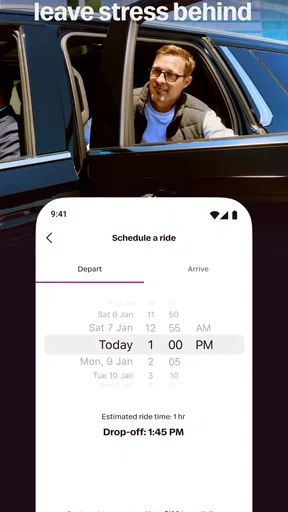
- Scheduled rides help with planning airport trips or appointments.
- Ride tracking lets you follow your driver’s approach in real time.
- In-app payment avoids handling cash at the end of a trip.
- Driver and vehicle details help you identify your pickup.
What could be better
- Availability can be limited outside major cities.
- Prices may rise during busy periods or bad weather.
- Pickup times can vary with traffic and local driver supply.
- Some rides may include extra fees such as tolls.
- Support issues can take time to resolve through the app.