 Analysis byWeUseApps
I see Kick & Break The Ragdoll as a deliberately simple kind of stress-break game: its appeal is the immediate, silly spectacle of a ragdoll taking a hit, not a long campaign or a demanding simulation. That focus can make it an easy choice when I want a brief distraction, but it also sets a clear limit. If you want strategy, a detailed physics sandbox, or a story that gives you a reason to keep playing, this is probably not the game to reach for.
What the game offers in a quick session
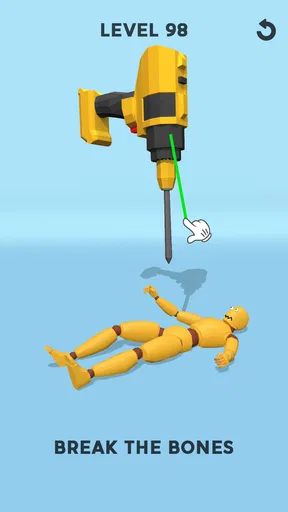
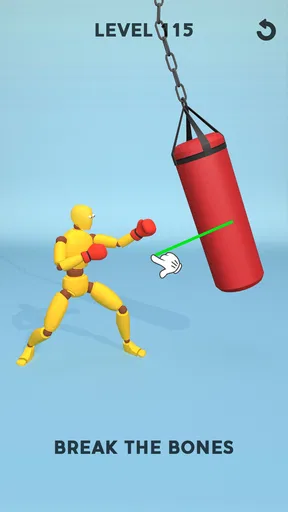
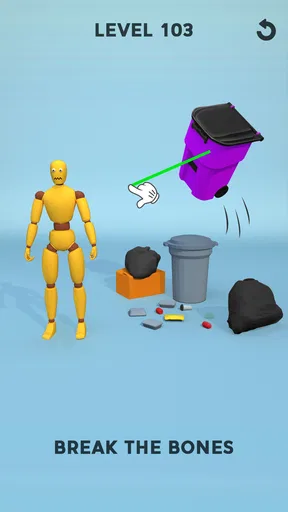
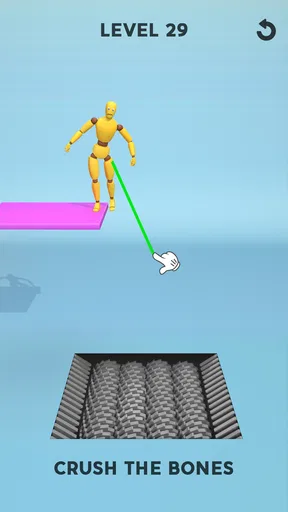
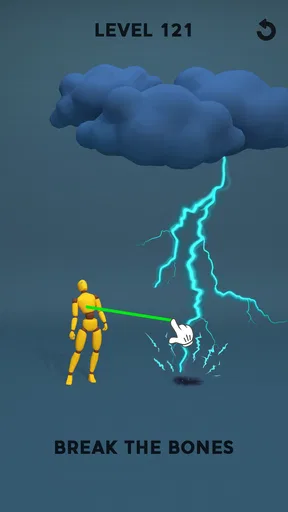
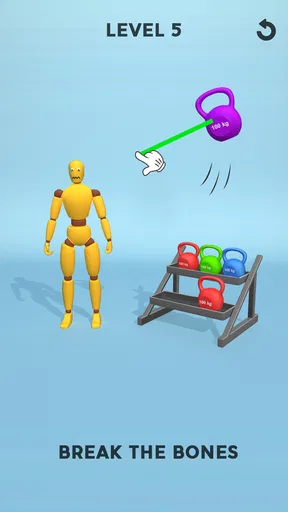
Made by Game District LLC, this free simulation game is built around kicking and breaking a ragdoll. The concept is easy to understand without a tutorial: you interact with a soft-looking character and enjoy the exaggerated physical result. In my view, that low barrier is its strongest practical advantage. You can pick it up without setting aside time to learn a complex control scheme or remember what you were doing in a previous session.
The game suits the small gaps in an ordinary day particularly well. Imagine waiting for a friend to arrive or needing a short change of pace after concentrating on work. A few moments of uncomplicated, cartoonish action can feel more approachable than opening a game that expects sustained attention. I would treat it as a light diversion, though, rather than a dependable way to address serious stress. Its entertainment comes from playful impact, not from relaxation techniques or meaningful emotional support.
The store description calls it a ragdoll stress-relief experience, but I would read that as an entertainment pitch, not a promise about how every player will feel. Some people may find the absurdity funny; others may tire of the same basic premise quickly. The appeal depends on whether you enjoy physical comedy and intentionally over-the-top damage. If that style is not for you, a calm puzzle or a more creative sandbox is likely to be a better fit.
A low-commitment game, not a deep simulator
Despite its simulation classification, I would not approach it expecting the sort of open-ended experimentation associated with a full physics playground. The ragdoll is the center of attention, and the fun is in the immediate reaction rather than in building elaborate contraptions or carefully tuning a model. That distinction matters: the label describes the broad kind of interaction, but the experience is better understood as a compact, comic action toy.
The game is free, and its age rating is Everyone, which makes it easy to consider as a casual download for a broad audience. Still, the visual premise involves hitting and breaking a character. I would use my own judgement when deciding whether that cartoon violence suits a particular child, rather than relying on the rating alone. The mild, slapstick framing may be acceptable in one household and unwelcome in another.
Its reach is substantial: it has passed 100 million installs, with an average rating of 4.6 from around 353,000 ratings. Those figures suggest that the simple premise has found a large audience, but they cannot tell me whether the pacing or style will suit you personally. I would give more weight to your preference for quick, physical comedy than to popularity alone.
How to get more out of brief play
One useful way to approach a game with such a focused premise is to set a small intention before opening it. I might play for a minute while waiting, then put it away once the novelty has done its job. That keeps the experience in its strongest lane: a quick burst of amusement. Expecting it to provide hours of fresh material is a tougher test, because the central joke is clear from the start.
I also recommend paying attention to how the interaction feels rather than tapping rapidly just to produce more action. In ragdoll games, the comedy often comes from watching an awkward reaction unfold, so a slower, more deliberate approach can be more satisfying than treating every moment as a race. This is a practical play tip, not a claim about hidden mechanics or a special mode; it simply helps you judge whether the basic physical comedy is working for you.
For a small everyday use case, I can imagine opening it during a short break from a repetitive task. I would keep the session separate from anything that needs sustained focus, because a quick-hit game can easily become a distraction if I keep reopening it without a reason. If I wanted to unwind for longer, I would choose something with more variety in its activities. If I only wanted a few silly moments, the direct premise is an advantage rather than a weakness.
Progress, pressure, and the reason to return
The main question I would ask before installing is whether the basic ragdoll interaction itself is enough to keep me entertained. A game built around one clear gag does not need a sprawling progression system to be enjoyable, but it does rely heavily on the player continuing to find that gag funny. If you usually need missions, story developments, or a clear skill curve to stay interested, this is a riskier choice than a simulation game with layered objectives.
I would also distinguish between moment-to-moment fun and long-term motivation. A short session can be amusing even if I have no particular reason to return tomorrow. That is not necessarily a flaw; plenty of casual games work best as occasional diversions. The trade-off is that players who like steadily unlocking goals or improving a score may feel that the experience has little direction once the novelty fades.
Because the game is free, trying it is a relatively low-commitment decision. But free does not automatically mean frictionless or entirely free of optional spending. The confirmed purchase information establishes that the game costs nothing to download; it does not establish what optional purchases exist, if any, or how they affect play. I would check the purchase details shown in the app store before handing a device to a child or deciding whether the game fits a strict no-spend preference.
Fairness and spending: what can be judged
For a casual single-player-style ragdoll toy, competitive fairness is not the first concern I would bring to the decision. I would not assume that rankings, multiplayer contests, or paid advantages are part of the experience without clear evidence. The available purchase facts only confirm a free download, so they are not enough to assess whether spending changes progression, gives an advantage, or is absent altogether.
That uncertainty is important if you are choosing a game for someone who is sensitive to prompts to buy or who needs firm spending boundaries. Before play, I would review the device’s purchase controls and inspect any in-game purchase information that appears. This is a sensible safeguard for any free mobile game, not a claim that this one uses a particular sales tactic. If your requirement is a confirmed, fully purchase-free experience, the download price alone does not answer that question.
In the same way, popularity should not be mistaken for proof of fair monetization. The game has around 933 written reviews, but a review count cannot settle how purchases work or whether players encounter pressure. My practical verdict is cautious rather than negative: the free entry point is clear, while the spending experience needs to be judged from the purchase information available on your device.
Where it sits among casual alternatives
Compared with a conventional puzzle game, this ragdoll title asks less of your planning and offers less of a mental challenge. Compared with a broad physics sandbox, it is more focused and easier to understand, but it should not be expected to offer the same sense of creative freedom. Its strongest alternative use is as a quick, absurd interaction when you do not want to learn rules or commit to a lengthy session.
If you want a calmer break, a gentle puzzle or an ambient game would be a better match. If you want to experiment with objects and construct your own scenarios, look for a sandbox designed around creation. If you enjoy slapstick, exaggerated ragdoll motion, and short bursts of play, this game has a more specific appeal that those alternatives may not provide. Choosing it comes down to whether the central joke is the kind you want to revisit.
That comparison also helps set expectations for replay value. I would not judge it by the same standard as a story-driven game, where new chapters can change the experience, or a competitive title, where opponents create variety. Here, replay depends more on your appetite for the core physical gag. That makes it easy to recommend to the right person, but difficult to recommend universally.
Compatibility and a sensible first check
The current version is 11.2.0, and the stated minimum operating system is Android 7.0. Those details are useful if you are checking a device before downloading. I would still confirm compatibility in the app store on that device, since a minimum system requirement is only one part of whether an app will install and run comfortably.
The game was released on January 14, 2024, and its broad audience rating may make it seem like an effortless family pick. I would still preview the style yourself if you are choosing it for a younger player. A parent may be comfortable with cartoon ragdoll slapstick while another may prefer games without repeated impact. The rating helps frame the intended audience, but personal taste and household rules should guide the final call.
One more useful check is to decide what you want from the game before downloading: a short laugh, an open-ended creative tool, or a substantial progression loop. The first expectation fits its premise well; the other two are harder to justify from the game’s central concept. That simple check can prevent disappointment and makes the choice less about popularity and more about the kind of break you actually want.
My recommendation
I would recommend Kick & Break The Ragdoll to someone who enjoys cartoonish physical comedy and wants an uncomplicated mobile distraction. Its free entry point, recognizable premise, and broad age rating make it easy to try, while its huge install base shows that the idea has wide appeal. I would not recommend it as a serious stress-management tool, a deep simulation, or a game with guaranteed long-term progression.
My trust verdict is measured: the basic proposition is clear, but the free download should not be treated as proof that every aspect of play is cost-free or pressure-free. Check purchase information if spending matters, and make sure the slapstick style suits the person who will play. If you go in expecting a brief, silly ragdoll diversion rather than a complete sandbox, you are much more likely to get the experience you came for.
What we like
- Simple controls make it easy to start playing.
- Short levels suit quick gaming sessions.
- Ragdoll reactions add a playful feel to combat.
- Varied attacks help keep encounters from feeling repetitive.
- The casual premise works well for stress-free play.
What could be better
- Gameplay may feel repetitive after extended play.
- Physics can make attacks feel unpredictable.
- Progress may rely on repeated level play.
- Ads may interrupt the experience.
- The simple gameplay may not satisfy players seeking depth.