 Analysis byWeUseApps
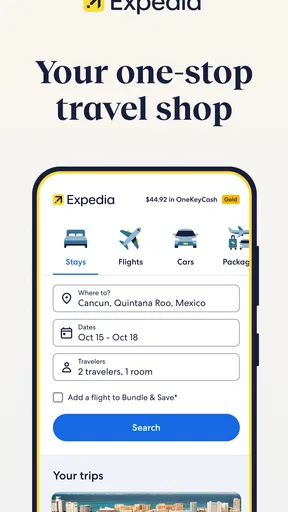
When I plan a trip, I often start with one practical question: would booking several parts together make the overall plan simpler, or am I better off arranging each piece separately? Expedia: Hotels, Flights, Cars is built around making that first option easy to explore. It is a free travel app from Expedia, and its most useful idea is the ability to bring trip components into one search and consider them as a package rather than treating every booking as an isolated task.
One trip search, several moving parts
That bundled approach is the capability I would focus on if you are deciding whether to install it. The app sits in the travel and local category, but its appeal is broader than finding a place to stay: it is intended to help people plan a trip across accommodation, transport and activities. The practical benefit is not simply having more choices on one screen. It is being able to think about the trip as a whole while comparing possible combinations.
I find that framing useful because travel decisions affect one another. A hotel that looks attractive on its own may be less appealing once you account for where it sits in relation to your plans. A flight time can change which arrival day makes sense, while a car may be useful for one itinerary and unnecessary for another. Looking at these choices together can help you notice those trade-offs before you commit.
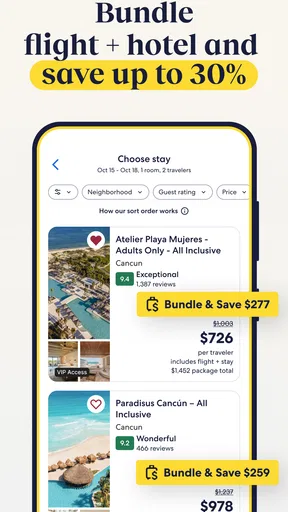
Expedia’s store summary emphasizes booking packages and activities, with savings as the reason to consider bundling. I would treat a package as a starting point for comparison, not an automatic bargain. A combined option is only helpful if the dates, location and included components fit your actual trip. The strongest reason to use this app is the chance to explore that combination without first having to assemble the whole plan across separate services.
How I would use the package flow
I would begin with the fixed parts of a trip: where I need to go and which dates are realistic. Then I would compare a package against the same broad plan arranged separately. That simple check matters. A lower-looking package total does not tell you whether the hotel location suits your itinerary or whether the travel times leave you with a comfortable schedule.
For a city break, for instance, I would look closely at whether a hotel choice makes the trip easier rather than just cheaper. If I expect to spend most of my time in the center, a distant stay could add daily travel and reduce the value of a bundle. If I am visiting several places beyond the city, a car might be worth considering; if I plan to stay on foot or use local transport, it may add cost and hassle without improving the trip. These are the kinds of comparisons a combined planning approach encourages, even though the final decision still depends on the details of each itinerary.
A useful habit is to change one element at a time while comparing options. Keep the dates and destination steady, then consider how a different stay or transport choice affects the plan. If you change everything at once, it becomes difficult to tell which adjustment made the package more suitable. I also recommend checking the complete trip details before booking: confirm that the chosen dates line up, that the stay covers the nights you need, and that any activity fits the days when you will actually be there.
Activities deserve particular attention because they can turn a workable itinerary into a rushed one. I would not add an activity just because it appears alongside a package. First decide how much free time you want, then check whether the activity’s timing makes sense alongside arrival, departure and the rest of your plans. The convenience of seeing trip components together is most valuable when it helps you make deliberate choices, rather than encouraging you to fill every open slot.
A realistic use case: planning a short break
Imagine I am organizing a few days away with a friend. We know the destination and dates, but we have not decided whether to stay near the main sights or choose a quieter area. We also do not yet know whether renting a car would help. I can use Expedia to explore a trip assembled around those choices, then compare the package idea with the separate arrangement I would otherwise make.
In that situation, the app’s value is partly about reducing the number of decisions I have to hold in my head. I can evaluate the stay and transport in relation to the same trip, rather than treating a hotel search, travel booking and car search as unrelated projects. If the trip is mostly based in one walkable area, that comparison may show me why adding a car is not worthwhile. If our plans include places outside the center, considering transport as part of the itinerary can prompt a better question: does a car genuinely make the visit easier, or would it merely be another booking to manage?
I would still write down the details that matter to both travelers before choosing: preferred area, acceptable travel times, and how much of the schedule should remain flexible. That prevents a package from becoming the decision-maker. The app can help surface combinations; it cannot know which compromises we are willing to make. Used this way, it is a planning aid, not a substitute for deciding what kind of trip we want.
Where the convenience has limits
Bundling is not automatically the best choice for every traveler. If you already have a flight, a hotel or a car arranged, you may get less from a search centered on combining trip components. You might prefer a service focused only on the part you still need. Likewise, travelers with unusual schedules or very specific accommodation requirements may find it more useful to compare each element independently before deciding whether a package fits.
There is also a comparison trap: putting options together can make the overall plan feel coherent before you have checked the details that matter. A package needs scrutiny just like separate bookings. I would review each included choice on its own merits and compare the trip total against a reasonable alternative. Do not assume that the word “bundle” settles the question of value; the right measure is whether the combination meets your needs at a worthwhile overall cost.
Another trade-off is attention. An app that brings several parts of travel planning into one place can make the initial search feel more orderly, but it also gives you more decisions to make at once. If you are already certain about your hotel and only need to compare one remaining item, a broad package search may be more than you need. I would use the combined approach early, when the plan is still flexible, and narrow the search once the main choices are settled.
Trip planning can also involve changing preferences. If your dates shift or your itinerary changes, revisit the entire combination rather than assuming that one adjustment leaves the rest suitable. A different arrival day can affect the useful length of a stay, and a revised schedule can change whether a car or activity still belongs in the plan. I would keep a clear record of what I have selected and verify the final details before completing a booking.
Who is most likely to benefit
I think Expedia is a particularly good fit for people who are still shaping a trip and want to consider multiple pieces together. It makes sense for a traveler comparing a stay and transport, for friends coordinating a short break, or for someone who wants to see whether a package is more convenient than piecing everything together. The app is also worth considering if activities are part of the planning process and you want to think about them alongside the wider itinerary.
It is less compelling if you prefer to book every component through a specialist service, already have most of your travel arranged, or want to make one narrow comparison without considering a wider package. A traveler who values complete control over each individual selection may prefer to search separately and assemble the itinerary manually. That can take more effort, but it may make the comparison clearer when the requirements are highly specific.
The app has a 4.8 average from around 1.7 million ratings, and it has passed 50 million installs. Those figures suggest that it has broad reach, but they do not tell me whether a particular package suits your dates or priorities. I would use them as context, then judge the actual choices against your own trip. Expedia is rated for Everyone, is listed as free, and is developed by Expedia.
Everyday usability and the final decision
Expedia is a travel app rather than a one-purpose booking tool, so I would install it when I have enough trip details to make comparisons meaningful. It was released in May 2011, and its current version is 2026.42.0, with Android 10 as the minimum operating system. If your device meets that requirement, the more important question is whether you want a place to explore combined travel choices or only need a single booking task.
My practical recommendation is to use the app to test a complete trip idea, then pause and inspect each component before deciding. Start with dates and destination, compare the package with a separate plan, and check whether the accommodation, transport and activities support the way you actually intend to travel. That workflow makes the bundled capability useful without letting convenience replace judgment.
My overall view: Expedia is most worthwhile when a trip is still flexible and you want to see how its parts might work together. The package-first approach can make planning feel more connected and help you weigh choices that are easy to overlook when searching separately. It is not a guarantee of the best deal, and it will not be the right fit for every narrow or already-set itinerary. But if you are comparing several travel decisions at once, I would give it a try and use its combined view as a starting point for a careful, realistic plan.
What we like
- Compare hotel prices and amenities in one place
- Bundle flights and hotels to find potential savings
- Manage bookings and trip details from the app
- Save travel plans for convenient access
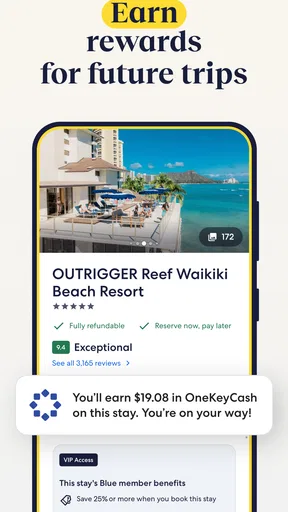
- Earn rewards on eligible bookings through One Key
What could be better
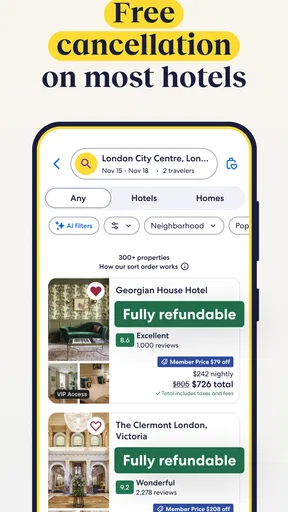
- Some bookings may have limited cancellation options
- Prices and availability can change before checkout
- Customer support experiences may vary
- Not every hotel offers member pricing
- Car rental terms and fees depend on the provider