 Analysis byWeUseApps
Finding time to learn something useful every day can be harder than it sounds. Long books and full-length courses ask for a real commitment, while a quick scroll through social media can leave me with plenty of content and very little to remember. Deepstash takes a middle path: it presents book summaries and big ideas in short, approachable pieces designed to fit into a few spare minutes. For anyone weighing a bite-sized learning app against reading, podcasts, or a more structured course, the key question is simple: does a small daily dose of knowledge match the way you like to learn?
Choosing a learning format that fits your day
I’d start by thinking about what I actually want from an education app. If my goal is to explore ideas during a short break, brief reading is a natural fit. If I want a deep understanding of a complex subject, though, a compact summary may work better as a starting point than as a complete substitute for a book, class, or specialist resource. That distinction matters with Deepstash: its central promise is not to turn every spare minute into an intensive lesson, but to make useful ideas easier to encounter in small portions.
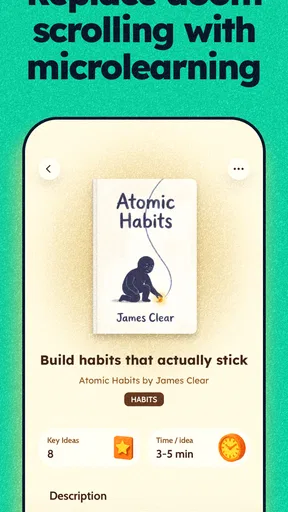
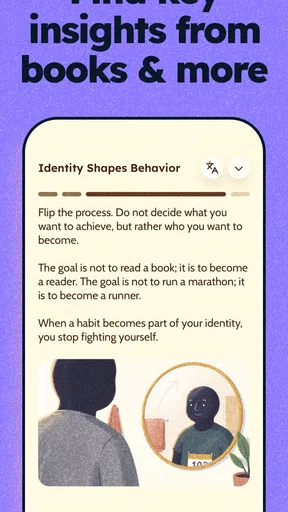
The app’s store summary describes its focus as “Bite-sized knowledge & books,” with book summaries and big ideas intended for five minutes a day. I find that positioning appealing because it gives a clear sense of the experience before I settle into a routine. Rather than asking me to block out a long study session, it makes learning feel like something I can return to in the gaps around a busy day. That can lower the barrier to getting started, especially when a large reading list feels intimidating.
There are several kinds of alternatives, and each serves a different purpose. Full-length books offer room for detailed arguments and examples. Podcasts can make learning fit into time spent away from a screen. Online courses often suit people who want a planned sequence of lessons. General article feeds offer breadth, but may require more effort to find material that feels worthwhile. Deepstash belongs in the short-form learning category, where convenience and discoverability are part of the appeal.
That category is especially useful when I’m curious but not ready to commit to a whole course or book. A short idea can give me a sense of whether a topic is worth exploring further. It may also help me build a habit of reading regularly, since a small session feels more manageable than an ambitious daily target. The trade-off is that brevity naturally leaves less room for nuance. I would treat a summary as an introduction or reminder, not automatically as a replacement for an original source.
What makes the format appealing
The strongest reason to consider Deepstash is its clear focus on condensed knowledge. The app is designed around short encounters with ideas and book summaries, so it is aimed at people who want learning to feel accessible rather than like another large task on their schedule. I appreciate that kind of focus: when an app knows the kind of moment it is trying to serve, it is easier for me to decide whether it belongs in my daily routine.
Its education focus also gives it a different role from an app built mainly for entertainment. The short-description field is simply “Deepstash,” so the more useful sense of the product comes from its broader promise of bite-sized knowledge. That promise may appeal to readers who enjoy collecting ideas, revisiting concepts, or getting a quick overview before deciding what to explore in greater depth.
Another point in its favor is that the concept does not demand a single, uninterrupted block of attention. A few minutes can be enough to engage with a piece of content, which makes the format easy to imagine using during a quiet moment. That doesn’t mean every session will lead to lasting learning—retention still depends on interest, attention, and whether I return to an idea—but it does make the first step feel approachable.
The app is free to download, with in-app purchases available. That gives new users a way to try the basic experience before deciding whether paid options are relevant to them. I’d approach any optional purchase as a personal value decision: first see whether the short-form format suits your habits, then consider whether spending more would meaningfully improve your own use. There’s no reason to pay simply because an app is intended for learning; the routine has to work for you first.
Where another format may suit you better
Short summaries are not the best match for every learner. If I’m studying a subject where details, evidence, or a carefully built argument matter, I’d want a more substantial source alongside any condensed explanation. A summary can help orient me, but it may omit context that becomes important once I start asking harder questions. For academic work, professional decisions, or a topic I need to understand thoroughly, I would use short-form content as a supplement rather than my only source.
Readers who love the style and depth of complete books may also prefer to spend their time with the original text. A condensed version can introduce a central idea, but it cannot preserve every illustration, qualification, and progression of thought. That is not a flaw unique to Deepstash; it is an inherent trade-off of summarizing. If the pleasure of reading for you comes from following a full argument, a summary-first app might feel too compressed.
Likewise, learners who benefit from a fixed syllabus may be happier with a course or structured study plan. A collection of short ideas can be convenient for exploration, but a planned program is often easier to follow when the objective is to build knowledge step by step. And if listening is your preferred way to learn, audio-first options may fit your day more naturally than reading on a screen. The best alternative depends less on which format is universally superior and more on the kind of attention you can give it.
I’d also distinguish casual curiosity from a specific learning goal. If I want to discover concepts and keep my mind engaged, brief content can be a satisfying choice. If I need to prepare for an exam, master a technical skill, or develop a detailed understanding, I would look for materials built around that outcome. Deepstash can still play a supporting role in those situations, but I wouldn’t expect a short daily reading habit alone to replace deliberate practice or comprehensive instruction.
Making the switch without overhauling your habits
Trying Deepstash does not have to mean abandoning books, articles, podcasts, or courses. I’d think of it as adding another option to my learning toolkit, rather than choosing one format for everything. A short idea can spark interest; a longer source can then provide the detail. That combination makes sense to me because it allows quick exploration without confusing an overview with complete coverage.
The main cost of switching is less about changing platforms and more about changing expectations. If I open a bite-sized learning app expecting the depth of a full book, I may come away disappointed. If I expect a brief encounter with a useful idea, the same format can feel like a practical addition to the day. Setting that expectation early is a simple way to decide whether the experience is delivering what I wanted from it.
It also helps to notice how learning fits into your ordinary routine. Some people prefer a few quiet minutes of reading; others can give more attention to listening while doing something else. I would test whether a short reading session feels natural rather than forcing it into a schedule that already feels crowded. A habit is more likely to last when it has a comfortable place in the day and a clear purpose.
For a first-time user, I’d keep the evaluation straightforward: does the content format make me curious, do I enjoy spending a few minutes with it, and do I ever want to follow an idea beyond the summary? Those questions are more useful than trying to compare every learning app feature by feature. The right choice should support the way you already like to learn—or make it easier to begin—not simply add another obligation.
Who is likely to enjoy Deepstash?
Deepstash looks like a sensible option for people who want a low-friction way to encounter book ideas and other knowledge in short sessions. It may suit busy readers, casual learners, and anyone who likes sampling concepts before committing to a longer resource. The emphasis on a few minutes a day makes the app easy to understand as a habit-building companion, particularly if you find large reading goals difficult to maintain.
It may be less satisfying as a standalone learning solution for someone who needs exhaustive explanations, guided progression, or sustained practice. That doesn’t rule it out; it simply clarifies its best role. I’d use it to broaden curiosity, refresh an idea, or decide what deserves a deeper look, while turning to books, courses, or other substantial sources when a subject calls for more.
The app has an average rating of 4.6 from around 201,000 ratings, and it has been installed over 5 million times. Those figures suggest a sizable audience, although popularity alone cannot tell me whether a particular learning style will suit you. Its content rating is Everyone, which also makes its intended audience broad. What matters most is whether you enjoy learning through concise reading and can treat summaries with the right level of perspective.
My recommendation
I’d recommend Deepstash to anyone who wants short, approachable learning sessions and is comfortable using summaries as a gateway to bigger ideas. Its focused concept is easy to grasp, and the five-minute framing makes it feel realistic for days when a full chapter or lesson is not going to happen. The free starting point is useful for judging the format for yourself before considering any optional in-app purchases.
I would not choose it as a replacement for every book, course, or trusted source. Instead, I’d put it alongside those options: use short-form content to explore, then go deeper when an idea matters. That balance avoids expecting a condensed read to do a full-length resource’s job, while still making room for useful learning in small pockets of time.
In short, Deepstash is worth considering if you want book summaries and big ideas in a compact daily format. If you value depth above convenience, a longer resource may be a better primary choice; if you want an easy entry point into new ideas, this app’s approach is much more appealing. For my money, its best value is as a curiosity starter and everyday learning companion, not a one-app solution to every educational goal.
What we like
- Offers bite-sized ideas that are easy to read during a short break.
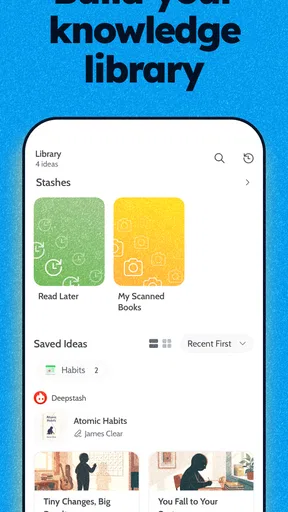
- Lets you save useful insights to revisit later.
- Personalized recommendations help surface topics you may enjoy.
- Audio playback provides an alternative to reading.
- A clean interface makes browsing ideas feel straightforward.
What could be better
- Some features require a paid subscription.
- The free experience may include frequent prompts to upgrade.
- Short summaries can leave out important context.
- Recommendations may become repetitive over time.
- An internet connection may be needed to access some content.