 Analysis byWeUseApps
I like a word game best when it gives me something to puzzle over without turning a quiet break into a chore. Word Connect Association is built for that middle ground: it asks you to link related words, with an emphasis on relaxed play rather than speed or competition. My overall take is that it suits people who enjoy noticing connections between words and want a light mental workout. Its appeal is also its boundary: if you want a deep vocabulary course, a demanding crossword, or a tightly structured story, this is probably not the word game I’d choose.
What the word-linking idea does well
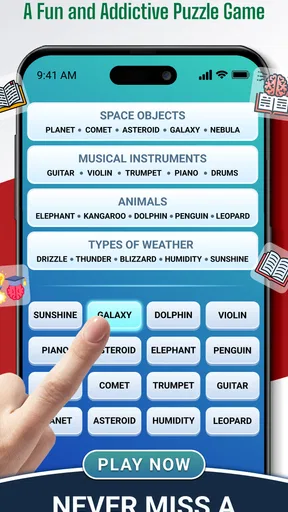
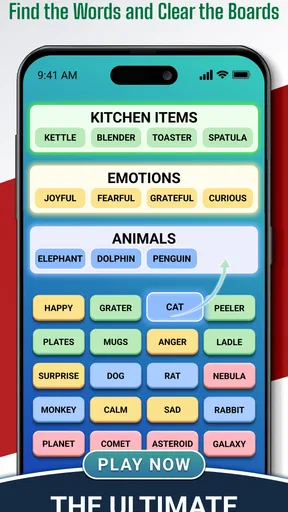
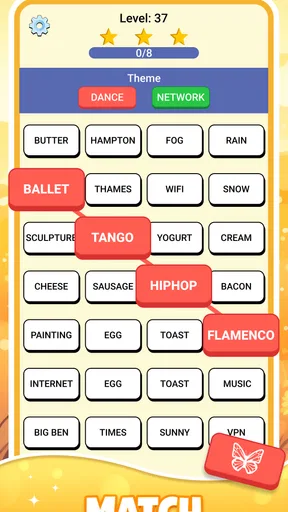
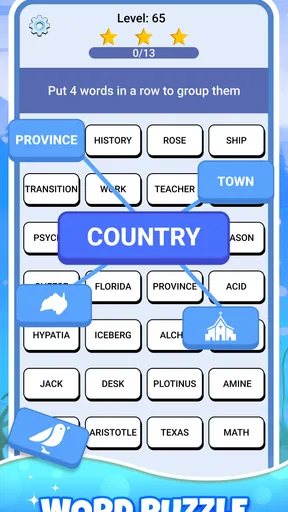
At its heart, this is a word puzzle game from PlaySimple Games. The central pleasure is seeing how words might belong together, then testing whether the connection you spotted is the one the puzzle expects. That small act of recognition can make a short session feel satisfying without requiring a long setup or an uninterrupted stretch of attention.
The association angle gives it a different feel from a standard anagram game. An anagram puzzle usually asks me to rearrange letters until a word appears; a conventional crossword relies on clues and intersecting answers. Here, the useful skill is looking for relationships between words. That can make a puzzle feel more intuitive than a clue-heavy crossword, while still asking for more thought than simply tapping letters to spell a familiar word.
That distinction matters when choosing a game for a particular moment. If I have a few minutes between errands, I’m more likely to reach for a compact word-linking puzzle than a crossword that I may need to keep in mind until I can return. The format also gives me a reason to pause and reconsider a first impression: two words may seem connected, but another shared idea may fit the puzzle better.
The store summary’s promise of a calming experience is a useful guide to the intended mood, but I would not treat “relaxing” as meaning every puzzle is effortless. Word associations depend on how I interpret language, and a connection that seems obvious to one player may not occur to another. The best moments come when I recognize a link after a brief rethink; the less smooth ones are when I feel I’m searching for the puzzle’s intended framing rather than learning a new word.
A small, practical way to approach each puzzle
When I get stuck, I find it more useful to change the kind of connection I’m considering than to keep repeating the same guess. I might look for a shared use, a broader theme, or a familiar phrase, rather than only searching for synonyms. This is a simple habit, but it helps make association puzzles feel like reasoning instead of random trial and error.
Another good approach is to notice which words feel unusually specific. They can act as anchors: once I understand what makes one of them distinctive, nearby words may fall into place. I would not assume every puzzle follows the same pattern, but stepping back to look for an anchor is a sensible way to avoid getting bogged down in one tempting interpretation.
It also helps to stop briefly when a puzzle starts to feel circular. A short break can reset the associations I’m making, especially if I have been forcing one theme onto every word. This is where a relaxed word game can work well as a pause in the day: there is no need to turn a single stubborn puzzle into a test of patience.
How it fits into everyday downtime
A realistic use case is waiting for a friend who is running late. I can open a puzzle, spend a few minutes looking for links, and put the phone away when they arrive without having to remember a long sequence of story events. It also suits a quiet break after work, when I want something more engaging than scrolling but do not feel up for a timed challenge.
For a shared moment, it can be fun to compare interpretations with someone nearby. One person may spot a thematic link while another sees a connection based on how the words are used. That sort of informal back-and-forth suits association puzzles particularly well. I would not pitch it as a full multiplayer activity, though; the pleasure here is in thinking through the words, not in assuming a competitive or social mode.
It can also be a gentler option for someone returning to word games after a long break. Because the task is about making links, rather than displaying specialist knowledge, a player can approach it with everyday language instincts. Still, a person who wants lessons, definitions, or a clear path through progressively taught vocabulary should look for a dedicated learning tool instead.
Where the format can frustrate
The main limitation is built into word association itself: the intended connection may not be the connection I naturally see. That can make a puzzle feel less fair than a crossword with a precise clue, because several relationships between words can make sense in ordinary conversation. When that happens, I want the game to help me understand the logic, not merely accept that my interpretation was different.
This is also not the right choice for someone who wants every session to have a clear finish line or a strong sense of progression. The core activity is the word-linking, and players who need a narrative, a collection system, or a competitive ladder to stay interested may find that loop too spare. I would choose a story-led puzzle game for an evening of sustained play, or a classic crossword app when I want more explicit clues and a firmer structure.
There is a further trade-off between ease and depth. Familiar words and accessible associations can make a game welcoming, but they may not satisfy a player who wants obscure vocabulary or increasingly elaborate linguistic challenges. I see this as a casual brain teaser, not a substitute for serious study. The best expectation is a pleasant exercise in noticing connections, rather than a comprehensive workout in spelling, grammar, or word origins.
Who is likely to enjoy it
I’d recommend it to casual players who like word games but do not always want to solve a grid, race a clock, or manage a complicated set of rules. It should appeal especially to people who enjoy categorizing ideas and asking, “What do these words have in common?” That makes it a natural fit for short breaks and low-pressure play, provided the player is comfortable with answers that depend on interpretation.
It is less suitable for children who need structured reading practice, even though the game’s content rating is Everyone. An age rating describes suitability of content; it does not mean the game is designed as a teaching program. For a child who wants guided spelling exercises, I’d pick an educational app that explicitly teaches and explains language skills. For adults who want a demanding vocabulary challenge, I’d lean toward crosswords or word games with more exact clues.
The game is free to download, which makes it easy to try without paying upfront. It includes optional in-app purchases, with individual items ranging from $0.99 to $199.99, so I’d check purchase prompts carefully and set appropriate controls if a child will be using the device. The existence of purchases does not change the central question for me: whether the basic word-linking loop is enjoyable enough to return to.
How it compares with other word games
Compared with word searches, this asks for more interpretation and less visual scanning. Compared with anagrams, it puts the emphasis on meaning and association rather than letter manipulation. And beside a crossword, it feels less formal: I am looking for a relationship among words instead of working through numbered clues and crossing answers. None of those formats is automatically better; the right pick depends on whether I want to spot, rearrange, or reason.
That makes it a useful alternative when I am tired of games that reward speed or a large vocabulary but still want to engage with language. It is not the best replacement for a crossword fan who enjoys exact clues, nor for an anagram fan who wants the satisfying process of building words from a letter set. Its identity rests on making links, so that should be the part a prospective player finds enjoyable.
There is also a practical difference in how I would use it: I would treat a puzzle as a self-contained pause, not as something that needs to occupy a whole evening. If I want a longer session, I’d choose a game with a broader progression system or a richer set of puzzle types. If I only want a short moment of concentration, this format is more appealing precisely because the task stays focused.
Availability and my final take
Word Connect Association was released on July 7, 2025, and its current version is 1.70.0, with Android 8.0 or later required. It has a 4.8 average from around 43,000 ratings, while more than 1 million installs suggest it has reached a sizeable casual audience. Those figures make it a well-established choice for a newer word game, though they do not guarantee that its particular style will suit every player.
My verdict is positive but specific: I’d recommend it to someone who wants a calm, compact word puzzle built around connections and is happy to think flexibly about meaning. I would skip it if I wanted rigorous vocabulary teaching, precise crossword-style clues, or a highly varied game structure. Its strongest quality is also the clearest test for whether it is right for you: if spotting a surprising link between ordinary words sounds satisfying, this is worth trying; if ambiguous associations sound irritating, a more rule-bound word game will likely be a better fit.
What we like
- Quick rounds make it easy to play in short breaks.
- Word puzzles offer a relaxing alternative to action games.
- Simple controls are easy for new players to understand.
- Finding links between words can build vocabulary.
- Progressive puzzles provide a steady sense of achievement.
What could be better
- Some word links may feel subjective or unclear.
- Later puzzles can become repetitive for experienced players.
- Hints may reduce the challenge of solving puzzles unaided.
- A missed connection can interrupt the flow of a level.
- Players seeking a story may find the experience too minimal.