 Analysis byWeUseApps
I would describe Vinted as a second-hand shopping app with a practical twist: it is useful not only when I want to find something for myself, but also when I want to pass along things I no longer wear or use. That two-way purpose makes it feel different from a conventional retail app. Instead of browsing only new stock, I’m looking through items listed by other people, with the possibility of becoming a seller myself.
Vinted is a free shopping app developed by Vinted, and its large community is a major part of the appeal. It has a 4.5 average from around 2.4 million ratings and over 100 million installs. Those numbers suggest a well-established marketplace, but they don’t remove the need to judge each listing carefully. My overall impression is that the app is most rewarding when I treat it as a place to search thoughtfully, rather than as a guaranteed shortcut to the perfect bargain.
What to expect from a second-hand marketplace
The basic idea is straightforward: browse pre-owned listings, decide whether an item suits you, or list something of your own. The experience depends heavily on what other members have posted, so the selection can feel personal and varied rather than uniform. That variety is a strength if I’m open to different styles and conditions. It is less convenient if I need one exact item immediately and don’t want to spend time comparing options.
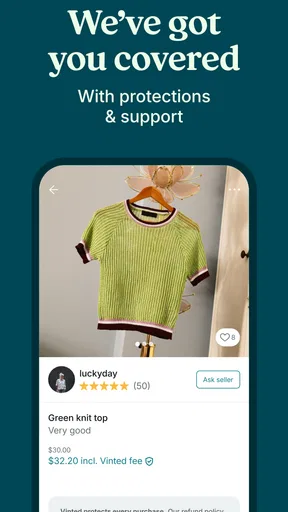
Because listings come from individual members, I approach each one as a small buying decision. I look closely at the photos, read the description, and check whether the stated condition matches what I can see. If a detail matters to me—such as fit, wear, or a particular feature—I ask about it before committing. This habit is more useful than assuming that a familiar brand name or a polished photo tells the whole story.
The app is rated Teen, so it is intended for a teen audience rather than being presented as an adults-only shopping service. I would still encourage younger users to involve a parent or guardian when they are learning how to buy or sell, especially when discussing transactions with strangers. A marketplace can be approachable while still requiring sensible judgement.
Why it feels different from ordinary shopping apps
Compared with a standard retailer, Vinted is less about choosing among identical products and more about finding a particular listing that happens to be available. That can make the search feel like browsing a changing collection: there may be several appealing alternatives, but the exact item, condition, and seller vary. For someone who enjoys discovering second-hand pieces, that is part of the fun. For someone who values predictable stock and a uniform return experience, a traditional shop may be the better fit.
It also differs from local classified marketplaces, where the experience may revolve around arranging a nearby handoff. Vinted is built around a community buying and selling pre-loved goods, so I would use it when I want to explore listings beyond what is immediately nearby. The trade-off is that I need to be patient and pay attention to the details of each transaction instead of treating every listing like a standard catalogue product.
Setting up with a clear first goal
On a first visit, I recommend deciding whether I’m there mainly to buy, sell, or do both. That small choice helps keep the experience manageable. If I’m shopping, I start with one specific need—perhaps a type of garment, a size, or a style I already know I wear. If I’m selling, I pick one item that is easy to describe and photograph, rather than trying to clear an entire wardrobe in one sitting.
Before browsing deeply, I also think about my own limits: what condition I’m comfortable with, how much time I’m willing to spend comparing listings, and which details I need to confirm. This prevents a common second-hand shopping mistake: getting carried away by an attractive find and only afterwards realizing that the item’s condition or fit is uncertain.
For a first purchase, I’d keep the search narrow enough to compare like with like. If I’m looking for a particular jacket, for example, I can consider several listings and weigh their photos and descriptions rather than judging each against a different standard. That is more reliable than simply sorting by what looks cheapest or clicking the first promising result.
Making the first purchase count
A realistic first success might be finding a pre-loved item that fills a gap in a wardrobe without buying new. I would save time by checking the listing’s condition and description before messaging, then ask one clear question if something important is missing. A concise question about a visible mark or a detail not shown in the photos is more likely to resolve uncertainty than a vague “Is this good?”
When I compare listings, I pay attention to the whole picture, not just the item itself. A lower asking price is not automatically the best choice if the description is thin or the photos leave important areas unclear. A listing with more useful detail can be the safer decision even when it is not the cheapest. This is one of the key habits that makes a peer-to-peer marketplace feel less like guesswork.
I also try not to rush because an item looks unique. Second-hand listings can change as members buy and sell, but urgency can lead to avoidable disappointment. If I can’t tell whether an item will work for me, I pause and seek clarification. The app is most useful when it helps me make a considered choice, not when I treat browsing as a race.
Listing one item without overcomplicating it
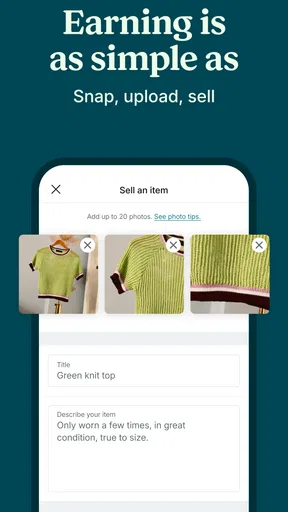
Selling can be a good first step for someone who wants to make room and give an unused item another life. I’d start with something clean, easy to photograph, and simple to explain. Before creating a listing, I would inspect it in good light and note any wear honestly. Clear photos and a description that addresses the item’s real condition help set expectations and reduce the chance of misunderstandings.
A useful practical tip is to photograph details that a buyer would naturally want to inspect, not only the most flattering angle. If there is a label, a distinctive feature, or a sign of wear, showing it clearly can make the listing more trustworthy. This is a better approach than relying on a short description and expecting buyers to infer everything from one image.
I would also keep the first listing simple. It is tempting to post several items at once, but a single well-prepared listing teaches me how the selling flow works without creating a pile of tasks to manage. Once I know what information buyers ask for and how I prefer to present an item, adding more listings becomes easier and more consistent.
Common points of confusion
The biggest adjustment for a first-time user is remembering that a listing represents a particular person’s item, not a standard product supplied from a warehouse. Condition can differ from what I expect, descriptions can be brief, and photos may not show every detail. I avoid assuming that “pre-loved” means a specific level of wear; I rely on the actual listing and ask when I need more certainty.
Another easy mistake is treating browsing as if every item will remain available. A marketplace changes as members make decisions, so I don’t build a whole plan around one listing until I’m ready to act. At the same time, I don’t let that uncertainty push me into buying without checking the details. A little patience and a little decisiveness need to go together.
New sellers may also wonder why an item does not attract immediate interest. I would not take that as proof that the app is failing or that the item is unwanted. A listing’s appeal depends on its presentation and whether the right person happens to be looking. Reviewing the photos and description, making them clearer, and being realistic about the item are sensible next steps before giving up.
Where the experience has limits
Vinted is not my first choice when I need a specific item on a fixed timetable, want a consistent product condition, or prefer buying directly from a retailer. Second-hand browsing requires more inspection and tolerance for variation. If I need a guaranteed fit or want the same item in several sizes, a conventional shop usually offers a more predictable path.
It may also frustrate people who dislike communicating about purchases. In a member-to-member setting, I may need to read carefully, ask a question, or wait for a response instead of relying on a standardized product page. That extra effort is reasonable for many shoppers, but it is still effort. I would skip the app if the thought of comparing individual listings feels more tiring than worthwhile.
As a seller, I would not expect every item to move quickly. The app gives me a place to list things for other members to discover, but it cannot make an item appealing to everyone. Taking honest photos and writing a useful description are within my control; whether a buyer is looking for that particular item is not. That distinction keeps expectations grounded.
Who will get the most from it
I think Vinted is a strong match for people who enjoy second-hand shopping, want to explore individual listings, or have good-quality items they would rather pass on than leave unused. It is especially convenient for someone who can be flexible about timing and enjoys comparing alternatives. The shopping side can help me find something with character, while selling gives me a practical reason to sort through what I no longer need.
It is a weaker fit for shoppers who want every purchase to feel identical, who do not want to inspect condition, or who need a dependable retail-style experience from start to finish. Those users may be happier with a regular store or a service focused on local, face-to-face exchanges. The right choice depends less on whether second-hand shopping is generally appealing and more on how much uncertainty and interaction I’m comfortable with.
A sensible next step after the first success
Once I have completed a first purchase or listing, I would use what I learned to refine the next one. As a buyer, I’d notice which listing details helped me decide and look for those same clues in future searches. As a seller, I’d pay attention to which questions revealed gaps in my description and make later listings clearer from the start.
The app is currently at version 26.41.1, with a minimum operating-system requirement of 8.0. Those details make it easier to check whether it suits an older device before getting started. Its scale and free price make trying it an accessible option, but I would judge its value by whether the second-hand marketplace fits my habits—not simply by how much there is to browse.
My recommendation is to begin with one modest goal: find one item you genuinely need, or list one thing you are ready to let go. That keeps the first experience focused and teaches you how the community side works without demanding a big commitment. For thoughtful second-hand shopping and straightforward decluttering, Vinted is worth trying; for speed, guaranteed uniformity, or minimal interaction, another option may suit you better.
What we like
- Clear item categories make browsing easy.
- Saved searches help you keep track of items you want.
- Seller ratings offer useful insight before you buy.
- In-app messaging lets buyers contact sellers directly.
- Offers can help buyers negotiate a lower price.
What could be better
- Item quality can vary from one seller to another.
- Some listings may have limited photos or descriptions.
- Popular items can sell before you decide to buy.
- Returns may depend on the seller's terms and platform rules.
- Shipping costs can make low-priced items less attractive.