




 Analysis byWeUseApps
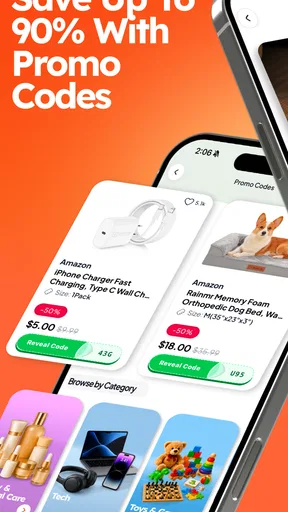
Finding a discount is only useful if it fits the item I actually want and is easy to apply before checkout. That’s the practical problem DealSeek: Coupons & Discounts is built around: bringing daily promo codes and savings into a shopping routine. I see it as a companion for the moment between choosing a product and paying for it, rather than a shopping destination in its own right.
From shopping idea to possible saving
The starting point is straightforward. I already have something in mind to buy, or I’m browsing and want to keep an eye out for a deal. The app’s focus is daily promotions and savings, so the natural first step is to open it and look for a relevant offer before committing to a purchase. That makes it most useful when I treat checking for a code as part of my usual checkout preparation.
That small change in habit matters. Many shoppers remember to compare products but only think about coupons at the last minute. With a dedicated coupon and discount app in the routine, I can make a deliberate pause: identify the purchase, check for an offer, then decide whether it is worth continuing. The potential benefit is not just finding a code; it is making savings part of the decision instead of an afterthought.
The app’s name signals the job clearly, and its short description is simply “DealSeek.” There is no need to approach it as a complicated financial tool. Its appeal is the familiar promise of a place to look for promotional savings, with the final decision still resting with me. I would use it alongside the retailer’s own checkout, rather than expect it to replace browsing or purchasing elsewhere.
Making the search part of the routine
My preferred workflow begins before I reach the payment screen. Once I know what I want, I can open DealSeek and look for a promotion that seems relevant to the purchase. If I find one, I can carry that information into the retailer’s shopping flow and see whether it helps at checkout. If nothing suitable turns up, I can move on without letting the search take over the entire shopping session.
That distinction is important because coupon hunting can become its own task. A long search for a marginal saving may not be worth the time, especially for a purchase I already planned to make. I like the idea of using a deals app with a clear stopping point: check, assess, and either use a fitting offer or continue without one. The app’s value depends on how smoothly that simple sequence fits into the way I shop.
For someone who shops online regularly, the habit can be easy to repeat. Before placing an order, pause and check for a promo code. For someone who shops less often, the app can still serve as a reminder that discounts may be worth looking for. Either way, I would keep my expectations practical: a promotion is useful only when it applies to the purchase and the conditions make sense.
Carrying an offer into checkout
The most important handoff happens when I leave the deal search and return to the store where I plan to buy. A code has to move from discovery into the retailer’s checkout process, where I can try it and judge the result. That is where a coupon app’s promise becomes tangible: not when I spot an offer, but when the checkout accepts it and the final amount reflects a saving.
I find it helpful to think of the process as two connected but separate stages. DealSeek is the place to look for daily promotions; the retailer is where I complete the purchase. Keeping those roles clear avoids the assumption that browsing a coupon automatically changes an order. I still need to pay attention to the offer, enter or apply it as required by the retailer, and confirm that the checkout has recognized it before finishing.
This handoff also gives me a natural chance to compare the offer with the purchase I had in mind. If the promotion fits, I can continue. If it does not, I can skip it rather than changing my order just to chase a discount. That keeps the app in a supporting role: it can help me look for savings, while I remain in control of what I buy and whether an offer is worthwhile.
What a good outcome looks like
A successful session does not have to involve a dramatic bargain. Sometimes the useful outcome is a code that works for the item I intended to purchase. Sometimes it is simply a quick check that lets me proceed with more confidence. And sometimes I find nothing relevant, but the process still has a clear endpoint: I stop searching and make the purchase decision on its own merits.
That practical measure is more helpful than expecting every visit to produce a discount. A daily savings app earns its place when it makes it convenient to check for promotions without turning shopping into a scavenger hunt. The best result is a relevant offer that carries cleanly into checkout; the next-best result is learning quickly that there is no reason to spend more time looking.
DealSeek has a sizable audience for a focused shopping app, with more than a million installs and an average rating of 4.8 from around nineteen thousand ratings. Those figures suggest that many shoppers find the concept appealing, though my own assessment comes down to the workflow: can I find a useful promotion, take it to checkout, and tell whether it helped? That is the standard I would use when deciding whether to keep it in my shopping toolkit.
Where the flow can feel less smooth
The main friction in any coupon routine is the gap between seeing an offer and using it. I may need to switch between the deals app and a retailer’s checkout, and that extra step can interrupt a quick purchase. Even when an offer looks promising, I still need to verify the result at checkout. That is not a flaw unique to DealSeek; it is a practical limitation of using promotions across separate shopping experiences.
Another challenge is relevance. A large collection of deals would not help me if the offers do not match the product or store I have in mind. I would approach each search with a specific purchase in mind and avoid assuming that every listed promotion will suit my needs. The more focused I am about what I want to buy, the easier it is to judge whether a deal is genuinely useful instead of merely tempting.
There is also a balance between persistence and time. It can be satisfying to find a discount, but I would not keep searching indefinitely for a small improvement. Setting a simple personal limit—check once, assess what appears, then move on—keeps the process efficient. That is especially helpful when I am already at checkout and want to finish rather than open several more shopping tabs.
Who may get the most from it
I can see DealSeek suiting shoppers who like to look for promo codes before placing an order and are comfortable moving between a deal search and a retailer’s checkout. It may be particularly appealing to people who want a dedicated place to check for daily savings instead of relying on memory or searching from scratch every time. The app is free, so trying it as part of that routine does not require an upfront purchase.
It may be less compelling for someone who rarely uses promotions or prefers to buy immediately without an extra check. If a shopper finds switching between apps distracting, even a potentially useful offer may not outweigh the interruption. The question is less whether discounts are attractive in theory and more whether checking for them feels natural within that person’s shopping habits.
The app is rated for everyone, and its current version is 1.63.29. It was released on July 1, 2025, and supports Android 7.0 or later. These details make it easier to judge basic compatibility and suitability, while the everyday experience will still depend on how often I shop and whether the available promotions fit the purchases I make.
A sensible place in a shopping toolkit
After following the workflow from purchase idea to checkout, I see DealSeek: Coupons & Discounts as a focused helper rather than a guarantee of lower totals. Its purpose is easy to understand: check for daily promo codes and savings, then decide whether an offer belongs in the purchase I was already considering. That simple role is its strength, provided I keep the extra handoff and the need to confirm a code in mind.
My recommendation is to use it with a specific shopping goal and a reasonable stopping point. Open it before paying, look for a relevant promotion, carry any promising offer into the retailer’s checkout, and confirm the outcome there. When those steps line up, the app can make coupon checking feel like a small, manageable part of shopping. When they do not, I can move on without forcing a deal into the decision.
Overall, DealSeek is worth considering if finding discounts is already part of how I shop or if I want to build that habit. It keeps the goal clear and encourages a practical sequence from search to application. I would judge it by the usefulness of the offers I encounter and how smoothly they fit into my checkout routine—not by the mere presence of a promotion. Used that way, it can be a handy stop before I complete an online purchase.
What we like
- Browse discounts from multiple retailers in one place
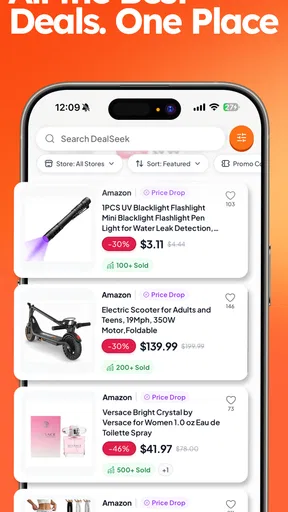
- Filter deals to find offers that match your interests
- A convenient way to discover savings before shopping
- Deal listings can help compare promotional offers
- Useful for shoppers who regularly look for coupons
What could be better
- Available offers may vary by location
- Some coupons may have expiration dates or restrictions
- Savings depend on participating retailers and products
- Deal details may change after they are posted
- You may need to visit a retailer's site to redeem offers




