 Analysis byWeUseApps
I’d consider TextNow when I want a separate number for everyday calls and messages without adding another conventional phone plan. It is a free communication app from TextNow, Inc., and its central appeal is practical: it brings calling, texting, and flexible data options into one place. That can be useful for keeping work, online accounts, or short-term plans apart from my main number. It is not automatically a replacement for every carrier plan, though. The right choice depends on how reliably I need to be reachable and how much I value having a number tied to my usual mobile service.
What to weigh before choosing a second number
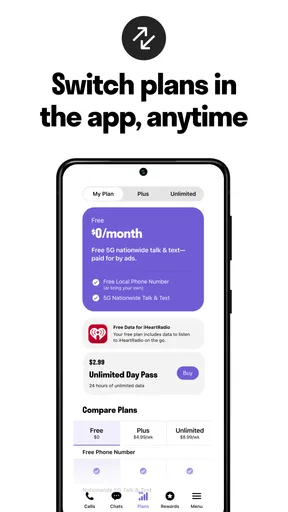
The first question I’d ask is what problem I’m trying to solve. If I mainly need another way to call and text, TextNow may be worth trying before committing to a separate paid line. If I need mobile data as well, its flexible 5G plans add another option, but that is a different decision from simply using the app for calls and messages. I’d think about those needs separately rather than assume that installing the app replaces every part of a phone plan.
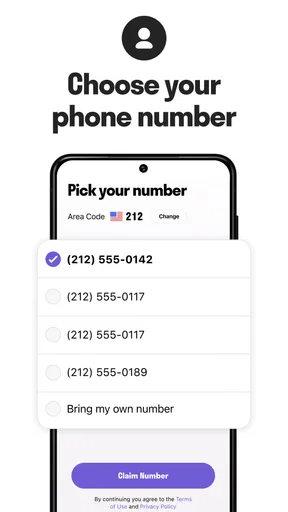
A second number can make daily life easier when I don’t want to share my primary one everywhere. For instance, I might use the TextNow number for a marketplace conversation, a volunteer project, or coordinating a short-term event. Once the interaction ends, I can stop using that number for the purpose without changing the number that friends and family already know. That separation is the app’s most useful idea, not just the possibility of avoiding a second standard line.
There is a trade-off: an app-based number depends on using the app and having a suitable connection. A conventional mobile line is usually the simpler choice when I need one familiar number to work as part of my regular phone service, especially if I don’t want to think about which app handles a call. I’d also avoid relying on a separate number as my only way to receive something time-critical until I’m comfortable with how it works in my own routine.
TextNow is free to install, and the app is rated for Everyone. It has a 4.6 average from around 1.7 million ratings, with more than 100 million installs. Those figures suggest that it has reached a broad audience, but they don’t tell me whether it suits my particular calling habits. I’d use the first few days to test the actual tasks I expect to do, rather than treat popularity as a promise of perfect fit.
How it fits into a normal phone routine
I find the idea easiest to evaluate by assigning the number a clear role. If I use it for calls with people I already know, I can tell them which number to save and make sure I check the right place for replies. If I use it for a one-off purchase or a local project, I can keep those conversations distinct from personal messages. The benefit comes from that intentional boundary; if I give out both numbers without a plan, I may simply create more places to check.
One practical habit is to put the purpose of the number in the contact name or a note in my own address book. That small step helps when a call arrives later and I can’t immediately remember whether the conversation was personal, work-related, or tied to a purchase. I’d also tell important contacts which number I’m actively monitoring. A second number is only useful if callers know where to reach me and I remember to look there.
Another useful approach is to keep the app for conversations that benefit from separation, rather than moving every existing contact at once. That lets me learn how TextNow fits my habits without disrupting the number everyone already uses. It also makes it easier to judge whether the added app is worth keeping: if the separate number solves a recurring problem, I’ll notice; if I rarely open it, I can reconsider before making it part of my routine.
Where TextNow earns its place
The strongest case for TextNow is convenience for someone who wants a distinct calling and texting option without immediately taking on the cost of a standard second line. I can see it helping a student managing group activities, a person selling items occasionally, or someone who wants to keep casual inquiries away from a primary number. In those situations, the app offers a straightforward reason to exist: one more communication channel, assigned to a specific kind of contact.
It is also appealing when my needs are mixed. Some people want an extra number but may also want to consider mobile data, and TextNow brings those possibilities together rather than making the app only about messages. I’d still compare the data option against my real usage before choosing it. If I mostly need messaging and already have dependable internet access, a data plan may not be necessary; if I expect to use mobile data regularly, I should assess that plan as a separate part of the decision.
There is a useful distinction between “free to start” and “everything I might want is free.” TextNow is free, but it includes in-app purchases ranging from twenty-nine cents to just under one hundred dollars per item. I would check what an optional purchase is for before paying and decide whether it addresses a need I actually have. The existence of purchases doesn’t erase the free starting point, but it does mean I should not assume every add-on or plan choice is included at no cost.
TextNow has been available since September 2012, and its current version is 26.42.0.0. It requires Android 9 or later, so I’d check my device’s operating system before planning to use it. That matters particularly if I’m setting it up for someone else or considering it on an older phone: the app is only a practical option if the device can run it comfortably.
Where a different kind of service may suit you better
If my priority is having one number that works seamlessly as my main mobile identity, a conventional carrier plan is likely the more natural fit. That category is designed around the regular phone line, while TextNow makes most sense when I intentionally want a separate app-based channel. I wouldn’t choose an additional app just to duplicate a service I already use reliably unless the second number solves a specific privacy, organization, or cost problem.
People who mainly message through a social or chat app may also find that a phone number is unnecessary for their usual conversations. A messaging service can be easier when everyone involved already uses it and calls to ordinary phone numbers are not central. TextNow is more relevant when I need the familiar phone-number format for reaching people or being reached, rather than simply another place to exchange messages with the same online contacts.
For frequent travel or for situations where a call must reach me regardless of which app I have open, I would compare the arrangement carefully with a standard mobile plan. I would not assume that an app-based number behaves exactly like a carrier line in every circumstance. The sensible test is to try ordinary incoming and outgoing calls with someone I trust, check that I notice replies, and decide whether the arrangement feels dependable enough for the role I have in mind.
TextNow also may not be ideal for anyone who dislikes managing multiple communication channels. A second number can create its own inbox, call history, and contact decisions. If I’m already missing messages in my main app, adding another one could make that worse instead of better. In that case, I’d either keep the app for a narrowly defined purpose or stick with the single number and service I already check consistently.
Making the switch without creating confusion
I would start by choosing a limited first use, such as a community group or casual sales conversations, and keep my primary number unchanged. Then I’d tell the people involved which number to use and watch how often I need to switch between the two. This is a low-friction way to learn whether the separation helps without asking every contact to update their details or making the new number responsible for important accounts straight away.
Before moving any essential contact, I’d verify that I can place and receive the kinds of calls I need and that I remember to check TextNow. I’d also decide how I will handle notifications: the point is not to be reachable everywhere at all times, but to avoid overlooking the conversations I have chosen to move. A clear purpose and a regular check-in habit make a second number much more useful than simply installing the app and waiting for it to organize things on its own.
Switching away later is easiest if I treat the number as a supplementary channel rather than the foundation of every account and relationship. For example, I would keep long-term contacts and critical services on the number I expect to maintain, while using TextNow for the limited situations where a separate number helps. This is not a claim about how any particular service will treat a number; it is simply a cautious way to avoid making a change that is harder to unwind than necessary.
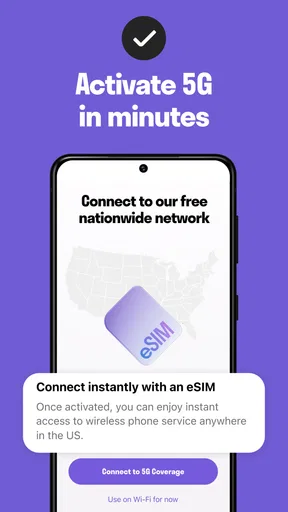
The same gradual approach helps me judge whether a data plan makes sense. I’d first identify when I actually need mobile data and what I already use, then decide whether TextNow’s flexible 5G plans address that gap. If my phone’s existing service already covers my needs, there may be no reason to add another option. If I want a combined communication setup, I can weigh the plan details and any in-app purchase against the convenience I expect to gain.
My recommendation
I’d recommend TextNow to someone who wants a separate number for calls and texts, has a clear use for it, and is comfortable checking an app as part of staying reachable. It is particularly compelling for occasional or purpose-specific communication, where keeping a personal number apart from casual contacts is more important than having everything under one traditional line. Its free starting point makes it reasonable to test, while the option of flexible data plans gives users another path to consider.
I’d skip it as a primary-line replacement if I need the least complicated possible phone setup, don’t want to monitor another app, or depend on a single familiar number for every important conversation. I’d also be cautious about moving essential contacts immediately. Try it with low-stakes calls and messages first; if the extra separation proves genuinely useful and the routine feels dependable, it can earn a larger role.
For me, the decision is less about replacing a carrier and more about whether a second communication identity would make life tidier. TextNow does that job best when I give the number a specific purpose and keep expectations realistic. With that boundary in place, TextNow is a practical option to test; without it, the extra inbox and number may be more work than the problem I meant to solve.
What we like
- A free US or Canadian number is available for calling and texting.
- The app supports voicemail and caller ID features.
- Messages and call history sync across supported devices.
- Wi-Fi calling can help reduce cellular plan usage.
- Number porting lets eligible users keep an existing number.
What could be better
- Free numbers may be reclaimed after a period of inactivity.
- Availability and features vary by country.
- Some numbers may not work for account verification texts.
- The free service includes ads.
- Calls and texts depend on a stable internet connection.