 Analysis byWeUseApps
Township brings together two easy-to-recognize pleasures: shaping a growing town and tackling match-3 puzzles. That combination gives the game a welcoming first impression. One moment you’re thinking about how your community is developing; the next, you’re focused on matching pieces and clearing a level. I like how that change of pace keeps the experience from feeling like a single task repeated endlessly. It has the relaxed appeal of a casual game, while still giving you small goals to work toward.
Developed by Playrix, this free-to-play casual game has been around since November 8, 2013, and its broad appeal is easy to understand. The premise—farm, build, and beat match-3 levels—sets expectations clearly without asking you to learn a complicated world before you can enjoy it. Its overall mood is cheerful and accessible, making it a natural pick for a quick session as well as a longer stretch of play. The game is rated for Everyone, and the central loop is simple to grasp even if you’re new to this style of mobile game.
A town with a cheerful visual language
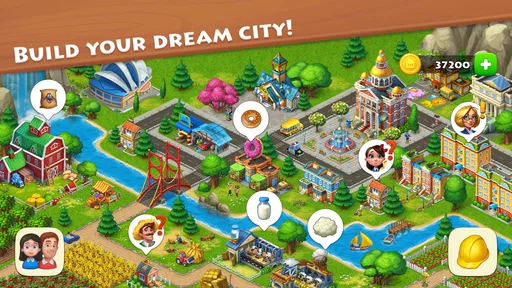
The setting gives the puzzle action a sense of place. Rather than presenting match-3 levels in isolation, Township frames them within the broader idea of a community that can grow through farming and building. That connection makes the town more than a decorative backdrop: it gives your puzzle progress a wider context. I find that this is an effective way to make short levels feel like part of a continuing journey, even when the immediate challenge is simply to plan a few moves carefully.
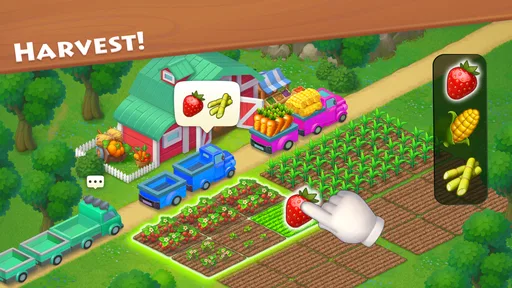
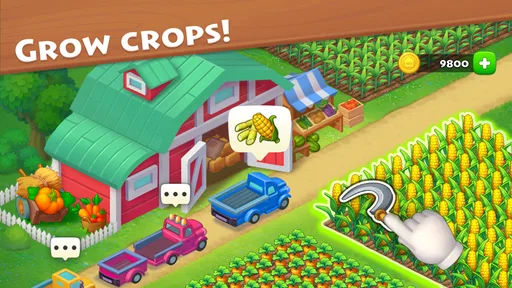
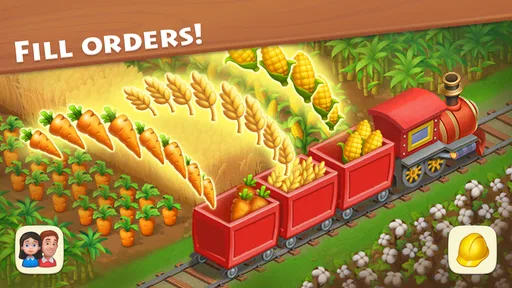
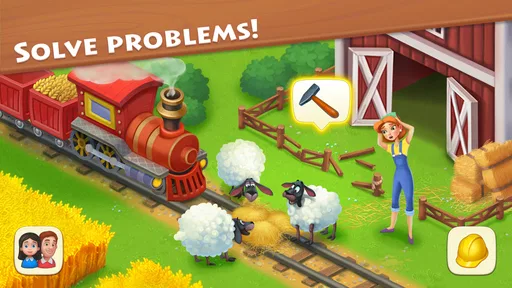
The art direction leans into an inviting, colorful look that suits the family-friendly premise. Its appeal is not about gritty realism or a dramatic plot; it’s about creating a pleasant place to return to. The farm-and-town theme gives the game a clear visual identity, while the match-3 boards provide a more focused space for each level. Moving between those two modes helps the experience feel varied without making the overall presentation seem disjointed.
That balance matters in a game built around repetition. A puzzle game needs its core activity to remain readable, while a town-building setting benefits from feeling warm and lively. Township’s premise naturally supports both: the community provides the broader mood, and the levels supply the moment-to-moment concentration. I enjoy that contrast because it lets the game alternate between a more relaxed sense of progress and the sharper attention a puzzle asks for.
Small goals, a larger sense of progress
One of the most appealing parts of the concept is the way it gives different kinds of players a reason to settle in. If you enjoy the satisfaction of watching a place take shape, the farming and building side gives the experience a cozy direction. If you prefer clear, bite-sized challenges, the match-3 levels offer a more immediate focus. Neither side has to carry the whole experience on its own; the two ideas reinforce one another and help the game maintain a consistent identity.
I also appreciate how approachable the premise sounds. You don’t need a lengthy explanation to understand the basic attraction: work on a town, engage with puzzles, and keep moving forward. That clarity is a real strength for a casual mobile game. It makes Township easy to recommend to someone who wants a colorful game to dip into, while the combination of activities offers enough variety to keep the routine from feeling quite so one-note.
Sound, pacing, and the feel of a session
Township’s overall mood depends on more than its setting. The pacing is an important part of its appeal: the match-3 levels deliver concentrated bursts of play, while the town-and-farm framing gives those bursts a softer context. That shift lets you move between focused puzzle thinking and a more leisurely feeling of building up a community. I find that this makes the game well suited to mobile play, where it’s useful to have activities that feel satisfying without requiring one uninterrupted, high-intensity session.
Sound contributes to the sense of a cohesive, lighthearted game, but the broader design is what makes the atmosphere work. The cheerful setting, accessible puzzle format, and gentle progression all point in the same direction. Township doesn’t present itself as a tense competition or a serious simulation. Instead, it aims for a comfortable rhythm, with enough activity to hold your attention and enough variety to break up the repetition.
That rhythm can be a good fit if you like games that are easy to revisit. A match-3 level gives you a clear immediate task; the larger town theme gives that task a place in the game’s world. The result is a loop that feels more purposeful than a succession of unrelated boards. I wouldn’t describe the mood as especially demanding or dramatic. Its strength is consistency: the game stays within its friendly lane and makes the most of the contrast between puzzle concentration and community-building atmosphere.
Where the mechanics meet the mood
The match-3 format is familiar, but Township’s broader premise gives it a distinctive frame. The puzzle side provides the hands-on challenge, while farming and building establish the longer-term fantasy of developing a place. That pairing is a sensible fit because each element answers a different player desire: one offers a clear challenge to solve, and the other supplies a welcoming reason to keep returning. The casual category is a natural match for this approach, as the game is designed around accessible activities rather than an elaborate barrier to entry.
For me, the strongest part of the design is this division of attention. The puzzles ask you to focus on the board in front of you; the town gives the experience a broader sense of direction. It keeps the main mechanics in view without letting the presentation become purely functional. The idea of progress is easy to understand, and the change between the two parts of the game helps the overall loop feel more varied than either activity might on its own.
There is still a familiar trade-off in games built around repeatable puzzles: the pleasure depends on whether you enjoy returning to the same basic type of challenge. Township’s town setting helps soften that repetition, but it doesn’t change the fact that match-3 is central to the experience. If you already enjoy matching puzzles and light simulation, the blend is likely to feel natural. If you are looking for a deep strategy game or a story-led adventure, the game’s cheerful, task-focused approach may not be what you want.
Township is free to play, with optional in-app purchases ranging from $0.99 to $149.99 per item. That range is worth keeping in mind when deciding how you prefer to play. You can approach the game for its casual puzzles and town-building theme, while treating purchases as optional choices rather than a defining part of the experience. As with any game that offers in-app purchases, it’s sensible to pay attention to spending, especially if the device is shared with younger players.
Who is likely to enjoy it?
I can see the appeal for players who want a family-friendly mobile game with a clear visual identity and more than one kind of activity. The Everyone rating reflects the accessible tone, while the mix of puzzles and town development gives different sessions a slightly different feel. It can suit someone who likes short challenges, someone drawn to farming and building themes, or someone who simply wants a bright game to return to between other activities.
The game’s reach is considerable: it has over 500 million installs, alongside a 4.7 average from around 13 million ratings. Those figures suggest that its blend of casual puzzles and town life has found a large audience. The current version is 39.1.2, and the game has also accumulated around 375,000 written reviews. For a prospective player, those figures are best read as context for its popularity, not as a guarantee that every part of the experience will suit every taste.
What matters more in day-to-day play is whether the central mood clicks for you. Township is at its best when the friendly presentation and the puzzle loop complement each other: the town offers a sense of continuity, and the levels bring a manageable challenge to each visit. I find that combination appealing because it gives the game an identity beyond simply being another match-3 title, while keeping the mechanics understandable and easy to approach.
A welcoming blend that knows its strengths
Township’s strongest quality is the way its setting and mechanics support the same relaxed, approachable mood. Farming and building establish a cozy context; match-3 levels provide focused moments of play. The art direction and sound help the experience feel consistent, while the pacing makes it comfortable to pick up for a short session or return to over time. It’s not trying to reinvent either side of its formula, but it brings them together in a way that feels clear and inviting.
My overall impression is that Township works best for players who enjoy light simulation alongside familiar puzzle challenges. Its presentation is cheerful without needing a complicated premise, and its different activities offer a welcome change of focus. The main caveat is a matter of preference: if you don’t enjoy match-3 games or gradual town development, the central loop may not hold your interest. But if that blend sounds appealing, this is an accessible, polished-feeling choice for casual play.
Township is an easy game to understand and a pleasant one to revisit, especially if you like a bright setting with clear, bite-sized goals. Its popularity is understandable: the game connects puzzles to a broader town-building fantasy and keeps its tone consistent along the way. I’d recommend giving it a try if you want a casual game that balances a cozy atmosphere with active matching challenges, while keeping in mind that optional purchases are part of its free-to-play model.
What we like
- Combines town building with farm management.
- Offers a wide range of buildings and decorations.
- Regular events add fresh goals and rewards.
- Clubs make it easy to connect with other players.
- Progress is saved through account linking.
What could be better
- Construction timers can slow town expansion.
- Some upgrades require scarce materials.
- Energy limits how much you can do in match-3 levels.
- Optional purchases may speed up progress.
- Events can feel demanding for casual players.