 Analysis byWeUseApps
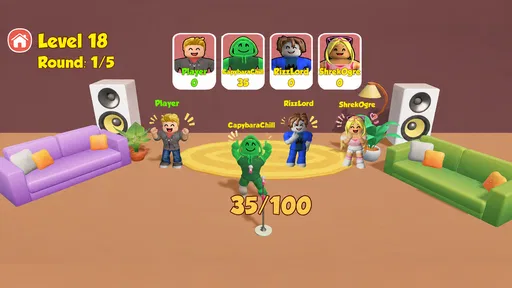
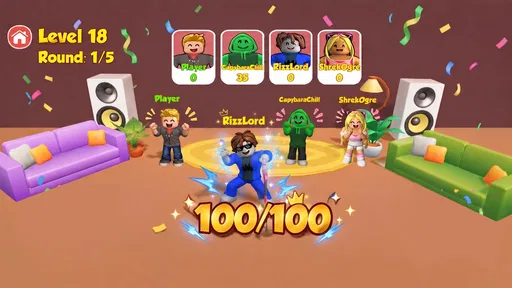
I like party games best when the rules take seconds to explain and the first round produces a laugh, even if nobody is especially good at it. MemeMix Challenge: Funny Party aims for that kind of quick, social fun: players imitate humorous sounds, then see how their attempts score. The idea is easy to grasp, but the appeal depends on whether your group enjoys performing as much as competing. I’d treat it as a playful activity to bring out with friends, not as a deep game to master alone.
What the sound challenge feels like
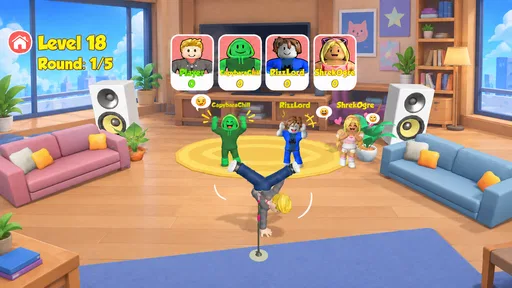
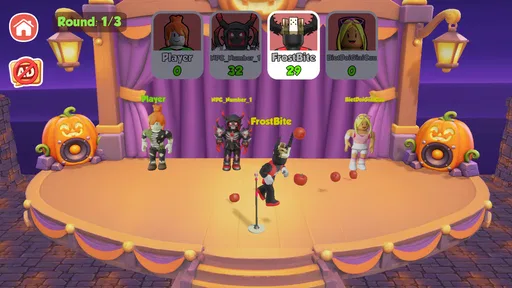
At its heart, this is a casual game built around listening, imitation, and comparison. Rather than asking you to learn a complicated control scheme, it puts the focus on how convincingly—or hilariously—you can reproduce a sound. That makes it a natural fit for a living room, a short break with friends, or a family gathering where people want something more active than taking turns scrolling through a phone.
The scoring gives each attempt a competitive edge, but the best result may not be the most technically accurate imitation. In a group, an exaggerated performance can be more entertaining than a careful one, especially when everyone is willing to be a little silly. My main advice is to agree on the mood before starting: if people are playing for laughs, a score is a conversation starter rather than a verdict on anyone’s talent.
The developer is Amobear VN Game Global. The game is free to download, with in-app purchases listed at $1.99 per item. Its Everyone age rating makes it suitable for a broad audience, although the most enjoyable setting is one where players are comfortable making noises in front of each other. This is not a quiet, private puzzle; its central activity works best when the people nearby are part of the fun.
Why the format works best in a group
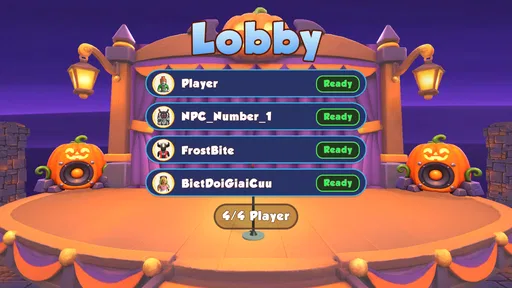
Many casual games keep each player focused on a screen, even when friends are sitting together. This one has a more outward-facing premise: a person performs, and everyone else can listen, react, and compare. That small shift matters. You can use it as a quick icebreaker with people who do not share the same gaming interests, because the basic task is understandable without a long explanation.
It also gives a group a simple way to create its own house rules. For example, you might let each person try a sound once, then allow one rematch after hearing another player’s approach. Or you can ignore who scores highest and vote for the attempt that made everyone laugh hardest. These are group choices rather than confirmed in-game settings, but they help keep the activity welcoming when skill levels or confidence differ.
A realistic use case is a few friends waiting for food to arrive. Instead of starting a long multiplayer session that may be interrupted, you can bring out the game, take a handful of turns, and stop when the conversation moves on. It suits that brief, informal window better than a game that requires teams, a lengthy setup, or sustained concentration.
Playing well without turning it into homework
If you want to improve your attempts, I would start by listening for the shape of a sound rather than trying to copy every detail immediately. Notice whether it rises or falls, whether it is sharp or breathy, and where the strongest beat lands. Then imitate that broad pattern before adding extra character. This is a practical way to make a performance more recognizable without treating a party game like a vocal exercise.
There is also a useful social trade-off: going first can set a relaxed tone, but it can make shy players feel put on the spot if the group is competitive. I would begin with someone who is happy to be goofy, then invite others rather than demanding a turn. If a player would rather watch, the game’s premise does not require you to make them perform. The activity is strongest when participation feels like an invitation.
For a fairer comparison, keep the conditions similar from one player to the next. Let people hear the sound clearly and avoid coaching one person while another is already taking a turn. That does not require special equipment or a formal tournament setup; it simply prevents the group from confusing a noisy room or an unclear prompt with a lack of ability. In a casual session, fairness is less about perfect rules than making sure everyone gets the same basic chance.
Where it sits among casual party games
Compared with trivia games, this is less about recalling facts and more about performing in the moment. Compared with drawing or word-guessing games, it does not ask players to build a long chain of clues. Its hook is immediate imitation, which can make it easier to start but also more dependent on the personalities in the room. If your friends enjoy impressions, sound effects, and friendly teasing, that is a strong match. If they prefer quiet strategy or questions with definite right answers, another kind of party game is likely a better pick.
It is also different from a conventional solo casual game. A puzzle or endless runner can fill a few spare minutes on a commute without involving anyone else. A sound imitation challenge is less suited to that private, silent use because its main payoff comes from hearing and reacting to other people’s attempts. You can still explore it on your own, but I would not choose it primarily as a solitary time-killer.
The game has an average rating of 4.3 from around 3,500 ratings, with 59 written reviews, and it has passed 5 million installs. Those figures suggest that the concept has reached a substantial audience, but they do not tell you whether your particular group will enjoy performing. For this title, that personal fit matters more than popularity: a few outgoing friends can make a simple round lively, while a reluctant group may find the same premise awkward.
Current state and what the version tells us
The current version is 0.0.9, and the game was released on September 18, 2026. That is a concrete snapshot of where the product stands, not proof of a particular roadmap or a promise that changes are coming. I would avoid reading a version number as evidence that a specific mode, feature, or improvement has been added. The grounded expectation is simply that this is an early-numbered release whose present appeal rests on the sound-and-score idea.
For someone already playing, the version information is useful as a reference point when deciding whether to revisit the game after an update. Compare the experience you actually have with what the app presents at the time you open it, rather than assuming that an update will solve a particular frustration. The release date likewise places the game in context, but by itself it does not reveal how frequently it changes or what its creators intend to build next.
At present, the most important test for an existing user is practical: does a new session still make the group want another turn? If it does, the straightforward premise may be enough. If the novelty wears off, the answer is not necessarily to keep chasing a higher score. You may get more life from changing the group’s approach—taking turns as a judge, inventing friendly challenges, or playing only for the funniest attempt—than from expecting the game to become a deeper competitive experience.
Limits to consider before inviting everyone
The scoring is both the source of tension and a possible weakness. A score can make a round feel purposeful, but it may also give a false impression of precision in an activity where imitation is subjective and people have different voices, confidence, and comfort levels. I would not use results to settle an argument about who is funniest or most talented. The game works better when the score adds a little suspense and the group supplies the real entertainment.
The other limitation is social. Making a sound on cue is not fun for everyone, and a noisy or self-conscious group may need a gentle introduction. If your guests would rather talk, watch a film, or play a low-pressure card game, this is probably not the right choice for that moment. Likewise, if you want a substantial single-player campaign or a game built around long-term progression, the central party premise is unlikely to satisfy you.
There is a modest purchase consideration as well. The game is free, but individual in-app purchases are listed at $1.99 each. I would start with the free experience and decide whether the core activity suits your group before spending anything. A purchase only makes sense if you understand what it offers in the app and genuinely want it; there is no reason to buy simply because the game is already open during a gathering.
On device compatibility, the minimum operating-system requirement is Android 7.1. Check that before installing on an older device, especially if you plan to use the game as the centerpiece of a get-together. A quick compatibility check is less frustrating than discovering at the table that the phone you intended to use cannot run it. The age rating is Everyone, but the social setting still deserves judgment: younger players may need a relaxed adult to keep competition friendly.
Who I would recommend it to
I would suggest MemeMix Challenge: Funny Party to people who want a lightweight group activity and are comfortable being a little theatrical. It is particularly promising for friends who already trade impressions or funny noises, and for families looking for a simple shared game that does not depend on specialist knowledge. It can also help break an awkward lull, provided one or two players are willing to go first and make the premise feel playful rather than demanding.
I would skip it if your priority is polished solo play, serious skill progression, or a strategy game where practice produces a clear competitive advantage. I would also choose something else for a gathering where guests do not know one another well and might feel embarrassed performing. In that situation, a cooperative word game or a trivia round can offer a gentler starting point because players can contribute without putting their voice on display.
My overall view is that this game’s value comes from the group more than from complexity. It offers a simple prompt for people to make something funny together, and the scoring gives the moment a small competitive hook. Keep expectations modest, make participation optional, and treat the results as part of the joke. If that sounds like your kind of evening, it is worth trying; if you want a game that entertains on its own, this is not the one I would reach for.
What I would watch in future sessions
When deciding whether to keep it installed, I would pay attention to whether different people are willing to take turns, whether the score encourages another attempt, and whether the group can enjoy a round without needing elaborate rules. Those are more useful measures for this particular game than expecting a specific feature roadmap. Its current version offers a clear starting point, while any future evolution should be judged by what actually changes in the experience rather than by assumptions about what a low version number might mean.
In short, I see it as a deliberately social casual game: best in short bursts, with friends who enjoy a bit of performance and do not take the scoreboard too seriously. The format is easy to introduce and gives a group something immediate to react to, but it cannot manufacture enthusiasm if nobody wants to participate. Try it with the right people, keep the mood kind, and let the funniest moment—not the highest score—decide whether the session was a success.
What we like
- Quick rounds make it easy to play during short breaks.
- Simple controls are approachable for casual players.
- The party format encourages lively group participation.
- Humorous prompts can spark creative responses.
- Its lighthearted theme suits a range of social gatherings.
What could be better
- The fun depends heavily on having an engaged group.
- Repeated prompts may make longer sessions feel predictable.
- Humor can vary widely between players.
- Some challenges may not suit every age group.
- Playing alone may feel less entertaining than playing with friends.