 Analysis byWeUseApps
What caught my attention in MONOPOLY GO! is how quickly it turns the familiar board-game look into a brisk mobile routine. A roll moves the action along, but the appeal is less about recreating a long table session than about checking in, making a few decisions, and watching a compact board come to life. I find it easy to pick up for a short break, though its automated pace and purchase prompts mean it is not a perfect fit for every kind of player.
A familiar board with a lighter touch
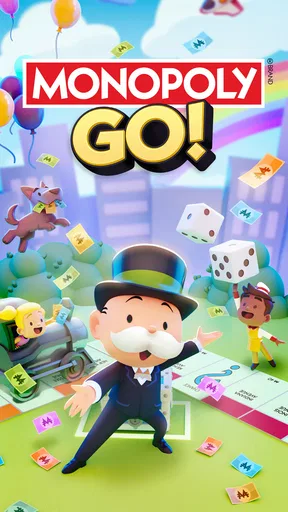
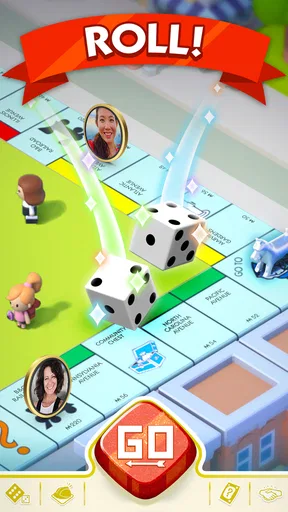
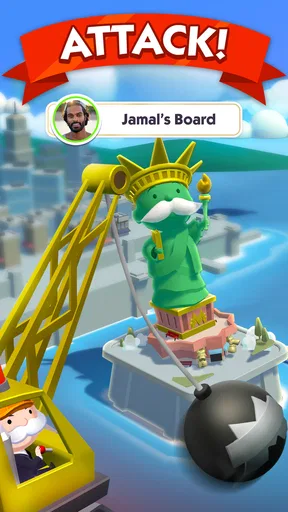
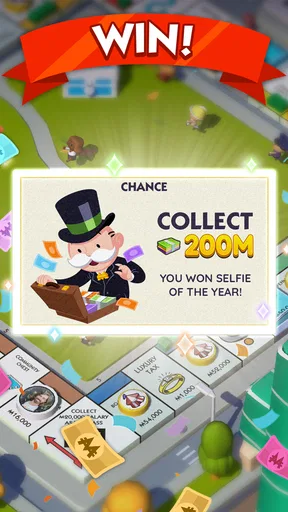
Scopely’s board game is free to download and sits in the casual end of the genre: it keeps the recognizable spirit of Monopoly while shaping play for a phone. The board is the visual anchor, with colorful spaces and animated movement that make each turn feel lively rather than like a static digital board. The presentation is approachable even if you have not played the tabletop original recently.
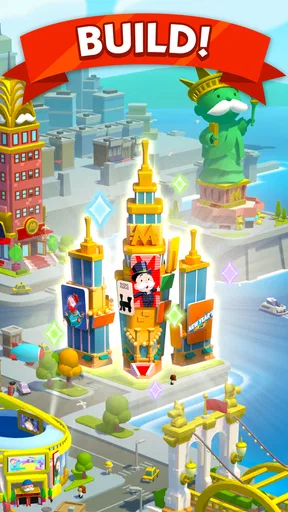
The art direction does useful work beyond decoration. Clear colors and readable board spaces help me follow the action at a glance, which matters when I’m playing in a bright room or only half-focused during a break. The playful scale and movement also make small outcomes feel noticeable. It aims for an upbeat, toy-like mood rather than the weight of a serious strategy game.
That lighter presentation comes with a trade-off: this is not a close substitute for sitting around a table and negotiating a long game. The digital format moves quickly and keeps the focus on individual turns and progress. If what you enjoy most about classic Monopoly is bargaining face-to-face, managing a full match, and reacting to other people’s choices in real time, you may prefer a tabletop session or a more direct digital adaptation.
How the mood holds together
The sound and animation give rolls a little ceremony, helping routine actions feel less bare. I like that the game’s cheerful presentation makes it easy to return to without needing to relearn a complicated interface. At the same time, the pacing is deliberately stop-and-start: a burst of activity can be followed by a natural pause before you feel like continuing. That suits quick visits, but it may frustrate anyone expecting a continuous, self-contained match.
One practical tip is to treat a session as a small check-in rather than a commitment to play until a particular milestone. The game’s short-turn structure makes it convenient to open between other tasks, but chasing every bit of progress can turn that convenience into a habit of repeatedly checking in. I get more enjoyment when I decide in advance that I’m playing for a few minutes and then put the phone away.
The social framing makes the game feel warmer than a solo board app, especially when friends or family are part of the experience. Still, I would not choose it primarily as a way to host a full, uninterrupted group game. It works better for casual shared interest and brief interactions than for recreating the table talk and long-form competition of the physical game.
Where the mechanics meet the presentation
The central loop is easy to understand: roll, move around the board, and respond to what happens on the spaces you reach. That simplicity is a strength on a small screen. I can make sense of the immediate action without studying a dense rulebook, and the visual feedback helps explain why a turn matters. The game is best for people who enjoy seeing incremental progress, not for players who want every decision to reshape a deep tactical contest.
A useful way to approach each session is to separate the pleasure of the roll from the urge to optimize every outcome. The dice introduce uncertainty, so not every turn will deliver the result you hoped for. I find that the board’s lively feedback softens those uneven moments, but it cannot remove the underlying luck. If you prefer games where careful planning consistently outweighs chance, a chess-style board game or a deeper strategy title will probably feel more satisfying.
Another trade-off is the way a free-to-play game can place optional spending alongside progression. The app is free, while in-app purchases range from $0.99 to $199.99 per item. That broad range is worth noticing before handing the phone to a child or anyone who might tap through purchase screens without thinking. I recommend setting device-level purchase safeguards if spending needs to remain controlled, and treating purchases as optional rather than necessary for deciding whether the basic loop suits you.
The game’s broad audience is reflected in its Everyone age rating, but that label does not make every household choice automatic. Parents should still consider how a child responds to repeated reward cues and optional purchases. For adults, the more relevant question is whether the pacing and spending prompts feel comfortable. I would skip it if I wanted a completely uninterrupted experience with no temptation to speed up progress through spending.
Everyday use and who will enjoy it
A realistic use case is opening the game while waiting for a ride or winding down after dinner, taking a few turns, then returning to something else. That is where its quick, colorful presentation works best. It asks for less attention than a long strategy match, and its familiar board language makes it easy to resume after a pause. If you play with family or friends, it can also give you a light shared activity without requiring everyone to sit together at the same time.
For comparison, traditional Monopoly offers richer face-to-face negotiation and a more continuous match, while many digital board games put more emphasis on tactical choices or a complete session. This one lands between those expectations: it borrows the recognizable board-game identity but prioritizes short mobile visits and a polished, animated feel. That makes it a stronger choice for casual progress than for players who want a faithful tabletop simulation.
Its popularity is substantial, with an average rating of 4.6 from around 3.2 million ratings, more than 318,000 written reviews, and over 100 million installs. Those figures suggest that its accessible loop has found a broad audience, though popularity alone cannot tell you whether the pace will suit your habits. My own recommendation depends less on the numbers than on whether you enjoy chance-driven turns and bite-sized sessions.
What to expect before installing
The game was released on April 11, 2023, and version 1.79.2 is the current version. It requires Android 7.1 or later. If you are choosing a game for a device, checking that requirement before downloading is a simple way to avoid an unnecessary install attempt. The free entry point makes trying it straightforward, but the available purchases are a reason to decide on spending boundaries early.
For the best experience, I would play when I can enjoy the small visual payoffs without expecting a long narrative or a substantial strategic challenge. It is also a better match for someone who likes familiar themes delivered with contemporary mobile pacing than for a purist seeking a board game that reproduces every social detail of the original. The game’s mood is coherent: bright art, lively feedback, and brief turns all point toward casual entertainment.
A cheerful fit, with clear limits
MONOPOLY GO! works when I want an easygoing board-themed game that can fill a short pause and make simple turns feel animated. Scopely has shaped the recognizable setting into something more immediately accessible than a full-length tabletop match, and the visual style helps the experience feel inviting. I would recommend it to casual players and fans of the Monopoly theme who are comfortable with luck-led progress and optional purchases.
I would look elsewhere if I wanted deep planning, a self-contained match with a clear finish, or the negotiation that makes the physical game memorable. Its strongest quality is also its defining limit: it is built around quick mobile play, not a complete replacement for the board-game night. Go in for the lively atmosphere and small bursts of play, keep spending in check, and it is much easier to enjoy on its own terms.
What we like
- Quick rounds make it easy to play in short breaks.
- Dice rolls and board events add variety to each session.
- Sticker albums give players a clear collection goal.
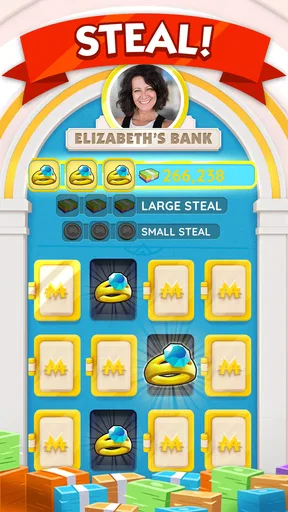
- Friends can send stickers and join heists.
- Free dice links can provide extra rolls.
What could be better
- Dice run out quickly without waiting or spending.
- Progress depends heavily on random rolls.
- Completing sticker albums can require rare trades.
- Frequent events may make the game feel demanding.
- Purchases can become costly for players seeking faster progress.