 Analysis byWeUseApps
I can see why Block Blast! catches on quickly: the basic pleasure is immediate, but deciding where each piece belongs takes more thought than the bright, simple presentation suggests. It is a free puzzle game from HungryStudio, and its appeal is easy to understand if you want something you can pick up for a short break without needing a complicated setup. The question that matters after the first few sessions is whether that simple loop still feels worthwhile. In my view, it can earn a regular place on your phone, provided you enjoy spatial puzzles and do not expect a story or a steady stream of new mechanics.
Why the first sessions feel so approachable
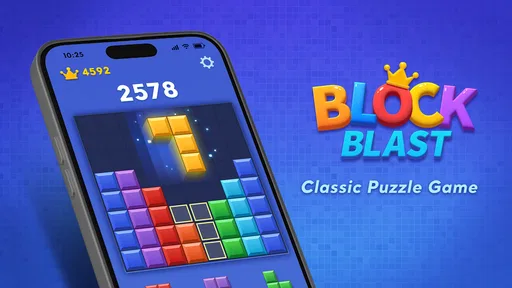
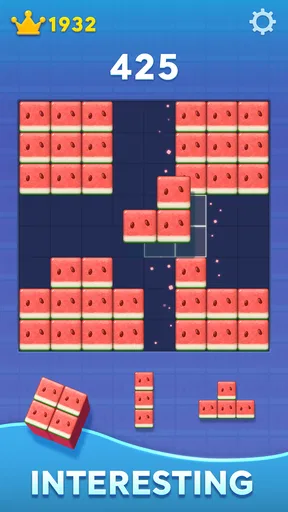
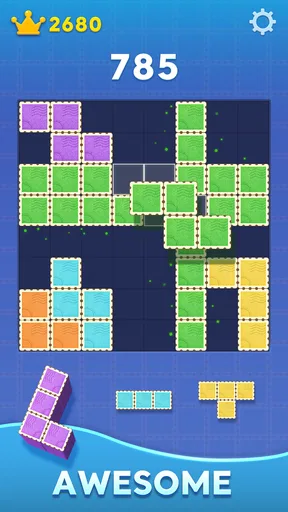
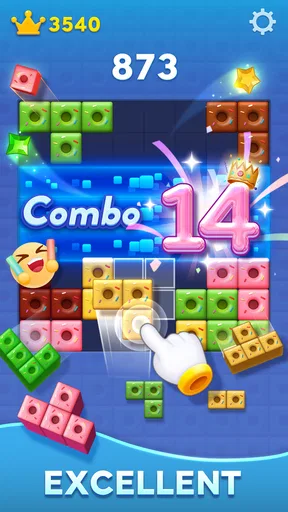
The game’s central task is familiar: fit block shapes into open space and keep the board manageable. There is very little to learn before you can start making meaningful choices. That low barrier is a strength when you have a spare moment, but it does not make every move trivial. A piece that seems convenient now may leave awkward gaps that limit your next options, so even a quick round can turn into a small exercise in planning.
I find that the most satisfying early habit is to pause briefly before placing a shape rather than dropping it into the first space that looks suitable. Look at the available pieces together, notice which gaps are becoming hard to use, and consider whether a placement can clear more than one line or area. That little inspection changes the game from casual tapping into a puzzle you can actively reason through.
The format works particularly well in ordinary, interrupted moments: waiting for a friend, sitting on a commute, or taking a short break between chores. You can focus on the board without needing to remember a plot or manage a long chain of tasks. It is also a reasonable choice for someone who likes puzzle games but finds timers and rapid reactions stressful. The challenge comes from placement decisions, not from needing lightning-fast hands.
Block Blast! is rated for Everyone, which fits its straightforward puzzle premise. That does not mean every player will find it equally relaxing. If you dislike being asked to make repeated decisions from a limited set of shapes, the board can feel tense once space gets tight. I would describe it as approachable rather than effortless: the rules are easy to grasp, while good play depends on thinking a few moves ahead.
A useful way to play when time is short
For a quick session, I recommend treating each placement as a choice about the board you want next, not only the space you need right now. Keep flexible areas open where possible; filling every neat-looking gap can leave a shape with nowhere sensible to go later. This is a small but practical distinction. The game rewards preserving options, so a move that looks less tidy may be better if it leaves room for several different pieces.
That approach also helps make the game feel less random or frustrating. You cannot control which shapes are presented, but you can avoid making the board unnecessarily rigid. When I catch myself placing pieces automatically, I slow down and scan for the move that keeps the most usable space. It gives each round a clearer purpose, even when I only have a few minutes.
What keeps it useful after the novelty
Block Blast! belongs to the puzzle category, but it occupies a different mood from a conventional level-based game. Instead of moving through a narrative or unlocking a sequence of increasingly elaborate stages, its lasting draw is the repeated problem of managing the board. That makes it easy to return to, because there is no story thread to lose. It also means the experience depends heavily on whether you enjoy repeating the same fundamental kind of decision.
For me, that repeatability is the main source of month-to-month value. I can play for a little while, put the phone down, and come back later without needing a refresher. The game is also described as playable offline, which is useful when a connection is unreliable or when I simply want a puzzle that does not depend on being online. I would still treat offline access as a convenience for the core experience, not a promise that every surrounding app function behaves the same way without a connection.
The game has a 4.8 average from around 5.8 million ratings, and it has passed a billion installs. Those figures suggest that its accessible format has reached a very broad audience, though popularity alone cannot tell you whether its style suits you. I see the appeal most clearly for people who want a repeatable mental break, not for players seeking an intricate puzzle campaign. Its wide reach makes sense: the basic idea is easy to demonstrate, and the decision-making is immediately legible.
Compared with word puzzles, Block Blast! asks less of your vocabulary and more of your visual planning. Compared with match-three games, its pleasure is less about spotting colour combinations and more about how shapes occupy space. And beside Sudoku, it is looser and more tactile, with a board that changes through placement rather than a fixed grid of number constraints. If you want strict logic with a clear solution, Sudoku may be more satisfying; if you want a flexible spatial challenge that is easy to dip into, this is the better fit.
When it becomes a habit rather than a novelty
A good test is whether you still enjoy thinking about the board when you are not chasing a personal target. If the fun is only in seeing a number climb, repeated rounds may lose their appeal. If you like the process of rescuing a crowded layout or finding a placement that opens up the board, the same simple rules can remain engaging. I would use it as a small daily puzzle, not as a game that needs a long session to justify opening.
One practical routine is to stop after a round where you made a deliberate choice you liked, rather than continuing simply because the next round is available. That gives the game a natural endpoint and keeps a short break from turning into aimless scrolling. It is also a useful way to judge whether the game is adding something to your downtime or just occupying it. The puzzle is at its best when I am paying attention, even briefly.
The app is free to download, with in-app purchases listed from $4.99 to $49.99 per item. That is worth keeping in mind if you are comfortable with free games but prefer not to spend inside them. I would decide in advance whether purchases are something you want to consider, rather than treating them as part of the basic reason to play. The core appeal is the board puzzle itself, so you can assess whether it suits you before spending anything.
How much upkeep it asks of you
One reason I would keep this installed is that it does not ask me to maintain a complicated routine. There is no elaborate cast of characters to track or a long sequence of objectives I need to remember between sessions. I can return after several days and understand what I am doing almost immediately. For people who uninstall games because they feel like another chore, that simplicity is a real advantage.
The current version is 10.8.9, and the minimum operating system listed is Android 7.1. Those details can help when checking whether an older Android device is compatible, though I would still use the app store’s compatibility information for the particular device in hand. The developer is HungryStudio. Knowing who makes the game is useful context, but my recommendation rests more on whether its repeatable puzzle loop matches your tastes than on the developer name alone.
Maintenance in this case is mostly about your own attention. Because the basic challenge is so accessible, it is easy to open the game out of habit without really wanting a puzzle. I get more from it when I choose a purpose for the session: keep the board open, try to make a cleaner placement, or simply unwind for a few minutes. That small intention prevents the experience from becoming background tapping.
If you are deciding whether to keep it installed, ask yourself what you would remove it for. If you already have several block-placement games that scratch the same itch, this may not add enough variety to deserve permanent space. If your usual puzzle apps require more concentration, a short, self-contained round here can serve as a lighter alternative. Its value is not that it replaces every other puzzle; it is that it offers a particularly low-friction option.
Where repetition can wear thin
The same simplicity that helps the game fit into a busy day is also its clearest limitation. Once the placement logic becomes familiar, the experience can feel like variations on one recurring problem rather than a journey that keeps changing shape. Players who need new rules, a story, or a growing collection of distinct puzzle types may find that the core loop has shown them most of what it offers sooner than they would like.
There is also a tension between relaxing and wanting to play well. A crowded board can make each incoming shape feel consequential, and that pressure may be enjoyable for someone who likes planning under constraints. For someone looking for a completely soothing screen with no chance of a frustrating run, it may not be the right choice. I would not call the game demanding in a reflex sense, but it can still hold your attention more tightly than a passive break.
Another trade-off is that a familiar format can make it tempting to play longer than intended. The short-session design makes starting easy, but easy starts do not automatically make a session restorative. I find it helps to set a simple limit before opening the game, especially if I am using it between tasks. That is not a special feature; it is just a sensible way to keep a repeatable puzzle from taking over the break it was meant to fill.
If you prefer puzzles with a single correct answer, a structured campaign, or a strong sense of progress through varied challenges, I would choose another style of game. Block Blast! is better for people who like open-ended placement decisions and are happy to repeat the same core activity. It is also less suitable if you want multiplayer competition or a social experience to be the main point of play; its appeal is in the quiet, individual puzzle session.
Who should keep it on their phone
I would recommend Block Blast! to a friend who wants an easy-to-start spatial puzzle for spare moments, especially if they enjoy making a crowded board work rather than solving a fixed puzzle in one exact way. It suits casual players, commuters, and anyone who appreciates being able to return without relearning a system. Its Everyone rating and free entry make trying it straightforward, while the listed purchases are a reason to be mindful if you prefer to keep app spending tightly controlled.
I would suggest skipping it if you are already tired of block-placement puzzles, if repetition quickly drains your interest, or if you want a game built around narrative and evolving mechanics. A number puzzle may be a better choice when you want precise deduction; a level-based puzzle may suit you better when you want clear milestones. Those alternatives are not necessarily better overall. They simply answer different moods than this game does.
In the end, I think Block Blast! earns lasting space for the right player because it is easy to revisit and does not demand much preparation. Its strongest long-term quality is not endless novelty, but convenience paired with a puzzle that still rewards a little forethought. I would keep it installed as a compact option for short breaks, while being honest about its limits: if the repeated placement loop stops being satisfying, there is no elaborate side activity here that will transform it into a different kind of game.
What we like
- Easy-to-learn rules make it welcoming for new players.
- No internet connection is needed for the core puzzle mode.
- Short rounds make it convenient to play during spare moments.
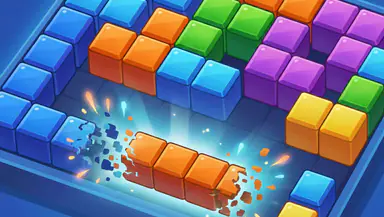
- Colorful block designs make the board easy to read.
- Planning placements adds a satisfying strategic element.
What could be better
- A misplaced block can quickly leave the board with no moves.
- The core gameplay can feel repetitive over longer sessions.
- There is no direct way to undo a placement.
- Ads may interrupt play between rounds.
- Progress can depend heavily on clearing lines efficiently.