 Analysis byWeUseApps
Gangster Miami RP: Grand City makes its appeal easy to understand: it puts open-world action at the center and invites you to spend time in a criminal-city setting rather than follow a narrowly defined role-playing routine. My take is that it is best approached as a casual, free-to-start diversion for players who enjoy roaming and setting their own pace. It is less suited to anyone looking for a deeply explained story or a carefully documented set of mechanics before they begin.
A city-first role-playing game
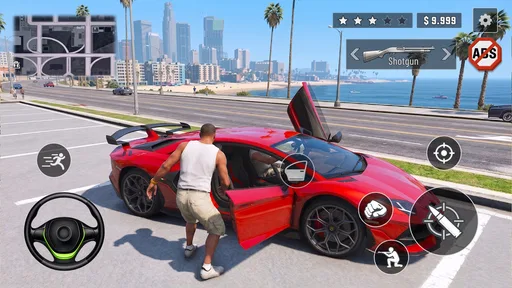
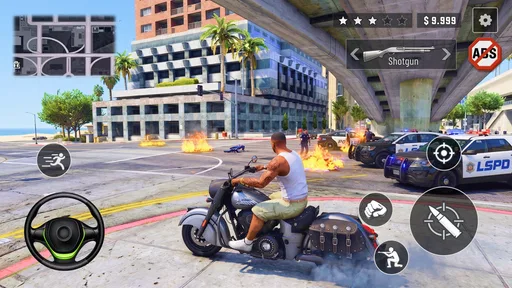
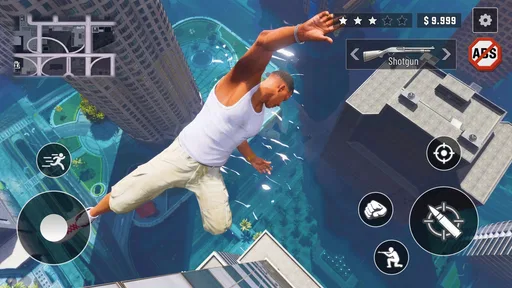
As an action-focused role-playing game, its strongest promise is freedom of mood: you can come to it for a quick stretch of city play, or stay longer if the open-world premise catches your attention. The name and setting point toward a gangster-themed take on Miami, but the useful question for a player is not whether that theme sounds familiar. It is whether exploring an action-oriented city is enough to hold your interest between clear objectives. I would treat that as the central test before investing much time.
The game is made by Universe Game Labs, and its framing is more direct than a sprawling fantasy RPG’s. You are not choosing it for a long party-building campaign or a tactical grid. You are choosing it because the city and action are the draw. That makes it an easy game to sample when you want something less structured, while also making the experience depend heavily on whether you enjoy the basic rhythm of moving through an open-world setting.
What the open-world pitch is good for
Open-world games can be enjoyable even when you only have a small window to play, but they work best when you give yourself a simple goal. I’d suggest starting with one deliberate aim for a session—such as getting a feel for the city or seeing whether the action suits you—instead of expecting the game to supply a compelling plan at every moment. That small change helps distinguish genuine freedom from aimless wandering, a common trade-off in games built around a broad setting.
It also gives you a fair way to judge the game without confusing the premise with the execution. Ask whether you like spending time in this particular criminal-city atmosphere, whether the action keeps you engaged, and whether you want to return after putting it down. Those are more revealing questions than simply asking whether the map feels large or whether the game has familiar genre ingredients.
For a realistic everyday use case, imagine having a short break and wanting a game you can open without settling in for a chapter of a complex story. This is the kind of RPG I would try in that moment if I wanted a city-based action mood. If I only had a few minutes and needed a clean, immediate objective, though, I would choose a more tightly structured game instead. Open-ended play can be freeing, but it does not automatically make short sessions satisfying.
How I would test it before settling in
My practical advice is to use the first session as a fit check rather than a commitment. Notice whether the city itself makes you curious, whether the action feels like a reason to keep playing, and whether you can decide what to do next without frustration. If those points click, the open-world format has room to become a relaxed routine. If you repeatedly find yourself waiting for a clearer purpose, that is a useful sign that a mission-led RPG may suit you better.
One non-obvious trade-off here is that a broad setting can make the game feel flexible while leaving the player responsible for creating momentum. That is not automatically a flaw: some people enjoy choosing their own direction. But if you rely on a strong quest chain, a detailed tutorial, or a steady sequence of rewards to stay engaged, you may find a city-first game less compelling than a conventional campaign. I would decide based on your preferred pace, not on the promise of an open world alone.
Another helpful approach is to separate the theme from the genre. The gangster setting may be the hook, but the experience still needs to work for you as a role-playing game with action. If the setting appeals but the actual moment-to-moment play does not, familiarity with crime games is unlikely to fix that mismatch. Likewise, players who enjoy experimenting in a city may appreciate the premise even if they are not usually drawn to long-form RPGs.
Where it may not meet every expectation
The main limitation I would keep in mind is the expectation gap that often comes with the words “open world.” Those words can suggest a richly reactive city, extensive character choices, or a long list of activities, but they do not by themselves guarantee any of those things. I would avoid buying into a highly specific picture of the game before playing. Let the actual feel of the city and action decide whether it earns your time.
There is also a genre trade-off: action-led role-playing can appeal to people who want atmosphere and movement, yet frustrate players who prefer careful strategy, detailed character management, or a story that steadily directs each session. If you want a game that clearly tells you what matters and why, this may not be your first choice. For a more guided experience, a mission-based action RPG is the safer alternative; for slower planning, a tactical RPG would be a better match.
Because the game is free, trying it is easier than committing to a paid title, but “free” does not mean every part of the experience is without cost. It includes in-app purchases at $8.99 per item. I would begin by playing without spending and only consider a purchase if you understand what it adds and know you are enjoying the game already. That is especially sensible in an open-world title, where the initial appeal can be stronger than your interest after several sessions.
A useful personal rule is to avoid buying anything during the first impression. Play long enough to know whether the core loop suits you, then decide whether an optional purchase would genuinely improve your own experience. If you are already unsure whether you want to return, spending is unlikely to solve that. This is a modest but important distinction for anyone browsing free games: the no-cost entry makes experimentation convenient, while the purchase model still deserves a deliberate choice.
Who should give it a try
I can see Gangster Miami RP: Grand City working best for players who like the idea of an urban crime setting and want action in an open-world role-playing format without starting with a paid game. It may also suit someone who enjoys trying a game in short bursts and deciding for themselves where to go next. The game has a 4.7 average from around 6,400 ratings, and more than 5 million installs, so it has found a broad audience; those figures are useful context, but they cannot tell you whether its particular pace fits your taste.
The audience signal is encouraging, but I would not read popularity as a guarantee of depth or polish. A rating gives you a broad impression of how players respond, while your own preference for guided objectives versus open-ended play matters more. If you usually enjoy city exploration and action, it is a reasonable free download to test. If you tend to abandon games when the next goal is not obvious, I would keep expectations measured and compare it with a more linear alternative.
It is rated Everyone, which makes its content classification broad, but that does not mean every player will find its theme or action appealing. Parents should still make their own judgment about whether a gangster-themed game is appropriate for a particular child. In my view, the age label is one consideration, not a replacement for looking at the game together and deciding whether its overall tone is a good fit.
The game is free, and it runs on Android starting with version 7.1. Its current release is 1.1.7. Those details make it easier to check basic compatibility before installing, but they do not answer the more personal question of whether it will feel comfortable on your device or suit the amount of time you want to spend gaming. I would check that the app is available for your specific device in the app store, then use the opening session to judge the controls and pace for yourself.
How it compares with familiar alternatives
Compared with a linear action game, this one’s open-world framing is the reason to choose it: you are looking for a city atmosphere and room to approach play at your own pace, rather than a tightly sequenced series of scenes. Compared with a traditional, systems-heavy RPG, the appeal is more immediate and action-oriented. That makes it easier to recommend to someone who wants to sample a genre mood, but harder to recommend to someone who expects deep build planning, a strong narrative arc, or extensive decision-making.
The right comparison is therefore less “which game has more content?” and more “which kind of structure keeps me playing?” If you want the game to constantly set your next task, a linear title is likely to serve you better. If you enjoy making your own short-term goals in a city, the open-world approach has a clear advantage. That distinction is the most practical way I can think of to choose between this and the usual alternatives in role-playing games.
Universe Game Labs has given the game a straightforward identity, but a strong premise only matters if the play itself holds up for you. Rather than judging it against the biggest open-world games on the market, I would compare it with other free mobile options you might actually play during spare time. The fair test is whether it gives you a satisfying reason to open it again, not whether it reproduces the scale or complexity of a premium console RPG.
My verdict
My recommendation is a cautious yes for fans of open-world action who want a free, gangster-themed RPG to try, and a pass for players who need a clear campaign structure or deep role-playing systems. The game’s appeal is its city-first identity and the freedom that comes with it; its risk is that freedom can feel directionless if you want the game to lead. Start without spending, set yourself a small goal, and see whether the action and atmosphere make you want another session.
With 36 written reviews alongside its larger rating pool, the public response includes both quick scores and more detailed opinions, but I would still treat your own first session as the deciding evidence. The title has reached a substantial audience, yet popularity cannot replace a good fit. If you like exploring an urban setting and are comfortable supplying some of your own momentum, it is worth a try. If you want a guided story or a more tactical RPG, your time is better spent elsewhere.
Overall, I see it as a low-commitment option rather than an automatic recommendation for every role-playing fan. Its free entry makes testing simple, while the in-app purchases are a reason to keep your wallet closed until you know you enjoy the game. Go in for the city and the action, not for assumptions about features that the premise alone cannot promise. That expectation is what makes this a fair, practical recommendation.
What we like
- Open-world city offers freedom to explore at your own pace.
- Role-play activities give the game goals beyond combat.
- Vehicle options make getting around the large city more engaging.
- Character progression adds motivation for longer play sessions.
- The urban setting suits fans of crime-themed games.
What could be better
- Crowded scenes may cause performance drops on older devices.
- Touch controls can feel awkward during precise driving.
- Frequent action may become repetitive over time.
- Online features can depend on a stable connection.
- In-game purchases may affect progression for some players.