 Analysis byWeUseApps
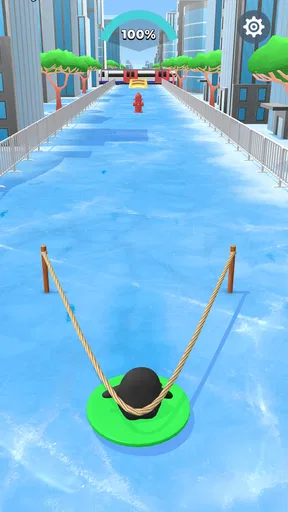
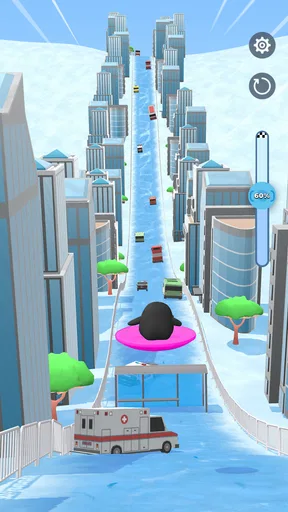
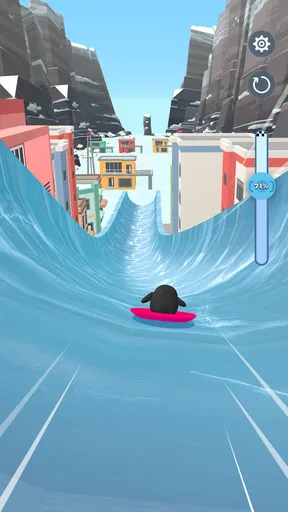
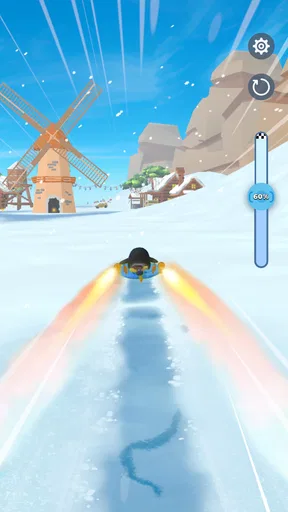
I like arcade games that make their appeal clear quickly, and Sled Surfers has a simple invitation: steer down a wintry slope, avoid what gets in your way, and try to make a clean run. It is an arcade game from CrazyLabs LTD, aimed at anyone who wants a quick, reflex-driven diversion rather than a lengthy campaign. My first advice to a new player is to treat the opening runs as practice, not as a test of skill. The useful goal is learning how the sled responds and spotting obstacles early enough to react.
What a run feels like
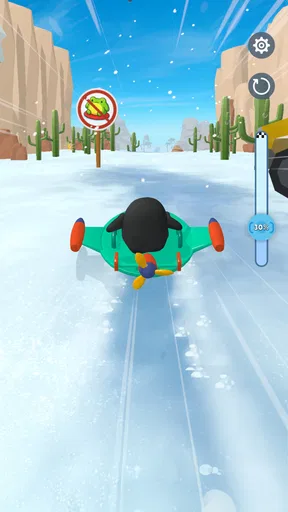
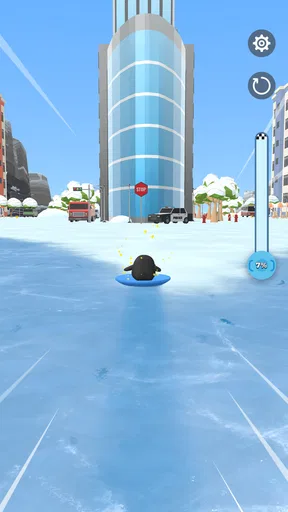
The central pleasure is the narrow window between moving confidently and reacting too late. Snow and ice give the setting a clear visual identity, while the downhill pace keeps attention on the route ahead. This is the kind of game I would open for a short break: it is easy to understand why a run went wrong, and that makes another attempt tempting.
That simplicity has a trade-off. Players looking for a story, a deep collection system, or a realistic winter-sports simulation should look elsewhere. Sled Surfers is best approached as a focused arcade challenge, where quick decisions matter more than long-term planning. Compared with endless runners that emphasize lane switching or games built around precision platforming, its sled-and-slope theme supplies the hook; the appeal still depends on whether you enjoy reading hazards and adjusting your path on the fly.
The game is free to download and is rated for Everyone, so it is approachable for a broad audience. Its current version is 1.13.2, and the minimum operating-system requirement is 7.1. Optional in-app purchases range from $0.99 to $99.99 per item. I would start by playing without spending: first decide whether the basic run-and-react loop is enjoyable for you, then consider purchases only if something offered genuinely improves your own experience.
Getting ready for the first run
Setup should be straightforward: install the game from your device’s app store, open it, and begin learning through play. I would choose a moment when I can give the screen my attention, rather than trying to learn the controls while distracted. The slope asks you to notice upcoming hazards, and a little focus makes the early attempts more informative.
Before chasing a personal best, use a run to test how movement feels. Make one deliberate adjustment at a time and watch how quickly the sled responds. That simple approach helps separate a control misunderstanding from a mistimed reaction. If you immediately make several hurried corrections, it is harder to tell which decision caused a collision.
A practical first-session routine is to play a few short attempts and pay attention to where trouble begins. Was the obstacle noticed too late? Did you react in the wrong direction? Were you already moving when you tried to correct course? Remembering the answer is more useful than treating every failed run as bad luck. Learning to read the slope before reacting is the first real skill to build.
Finding an early success
For a first satisfying run, aim for control rather than speed. Look farther ahead than the sled itself, identify the next obstruction, and make a measured adjustment before it becomes urgent. This is a small change in approach, but it turns the game from frantic swiping into a repeatable decision: see a problem, choose a route, then leave enough time for the sled to follow it.
After a collision, try changing just one thing on the next attempt. If you reacted too late, begin scanning earlier. If you moved too sharply, use a smaller correction. This one-variable method is especially helpful in a quick arcade game because each run gives immediate feedback, but only if you can remember what you were testing.
A realistic use case is a short wait before an appointment or a break between tasks. One or two attempts can provide a brief burst of concentration without requiring you to keep track of a complicated plot. If you have only a moment, it is still worth playing deliberately: a focused run teaches more than several distracted ones, even if the result is not a new best.
Where new players can get confused
The snowy setting can make a run look calmer than it feels. A broad, open-looking patch is not a reason to stop paying attention; the route is still moving, and the next obstacle can arrive while your focus drifts. I found it more useful to watch the path beyond the immediate foreground than to fix my eyes on the sled. That gives you a little more time to choose a response.
Another common mistake is assuming every collision means the game is unfair or the controls are unclear. Sometimes the problem is simply that a correction began too late. On the other hand, repeated misses in the same situation may mean you are making the same poor choice, so repeating the run without changing your approach is unlikely to help. Use the point of failure as a clue rather than just restarting on autopilot.
Players may also wonder whether the game is meant for long sessions. I would not choose it for a relaxed, extended experience if rapid reactions are not enjoyable to me. Its strongest fit is a compact arcade break. If you prefer careful construction, a sustained narrative, or a game where progress comes mainly from thoughtful planning, a slower genre will suit you better.
How to make the next attempts count
Once you can complete a more controlled run, work on consistency before chasing risky moves. Keep your attention on what is coming, make corrections with a clear purpose, and notice whether the same obstacle type repeatedly catches you out. The aim is not to play timidly forever; it is to build enough familiarity that you can take a chance intentionally rather than being forced into a last-second reaction.
It can also help to decide what counts as a good session before opening the game. Perhaps you want one clean run, or you want to understand why a particular section keeps ending badly. That gives a short play session a satisfying endpoint. Without a small goal, the immediate invitation to try again can turn a quick break into more time than you intended.
There is a difference between a game being easy to start and being right for everyone. The basic premise is accessible, but the fast obstacle-dodging loop rewards attention and repetition. Younger players may enjoy the clear wintry theme, while adults who like quick reflex challenges can use it as a casual palate cleanser. If speed and repeated retries frustrate you, the same qualities that make it engaging for arcade fans may make it a poor match.
Who should give it a try
Sled Surfers has an average rating of 4.4 from around 286,000 ratings, and it has been installed over 10 million times. Those figures suggest a sizable audience, but they do not tell me whether its particular rhythm will suit you. I would recommend trying it if you enjoy short runs, visible hazards, and the feeling that better anticipation can improve your next attempt.
It is less compelling for someone who wants a detailed tutorial, a realistic sledding model, or a broad set of activities. Its arcade identity is the point, and the snow-covered slopes provide the setting for that focused challenge rather than a promise of a full winter-sports package. Compared with a conventional endless runner, the theme feels more distinctive; compared with slower puzzle or simulation games, it asks for quicker attention and offers less room to pause and plan.
My best first-time-user advice is simple: install it, begin with a practice-minded run, and judge success by whether you understand one more thing about the slope than you did before. The game is free to try, though purchases are available, so there is no need to decide about spending before you know whether the core loop clicks. Released on April 29, 2025, it is an accessible arcade option for quick sessions, provided you enjoy learning through brisk retries.
Overall, I would suggest it to a friend who wants a compact reflex game with a snowy identity and an easy first step. I would also be honest that its appeal depends on enjoying repeated obstacle-dodging rather than expecting a larger adventure. Give the opening runs time to teach you how to read the route, make one adjustment at a time, and stop when the quick challenge stops feeling like a fun break.
What we like
- Simple controls make it easy to start playing.
- Quick runs suit short gaming sessions.
- Bright winter scenery gives the game a cheerful look.
- Collectibles add a goal to each run.
- The endless-run format encourages replaying for better scores.
What could be better
- Repeated obstacles can make runs feel familiar.
- Progress depends on avoiding hazards for as long as possible.
- Fast sections may be difficult for younger players.
- The game offers limited variety beyond its core runs.
- Ads may interrupt play depending on the version.