 Analysis byWeUseApps
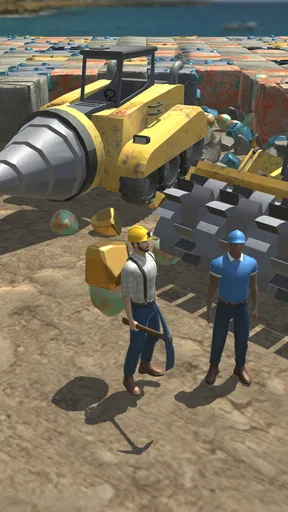
I like arcade games that turn a simple action into a satisfying little routine, and Bulldozer Master: Crush & Mine is built around that appeal. You take control of demolition work, break through material, and grow a gold-mining operation over time. It is easy to understand at a glance, but the real question is whether that loop stays enjoyable once the first novelty wears off. My view: it works best as a relaxed, pick-up-and-play game, not as a deep construction or strategy simulator.
How the demolition loop feels
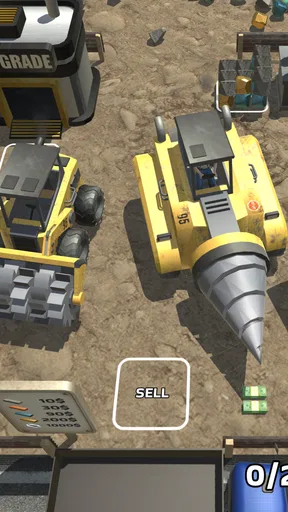
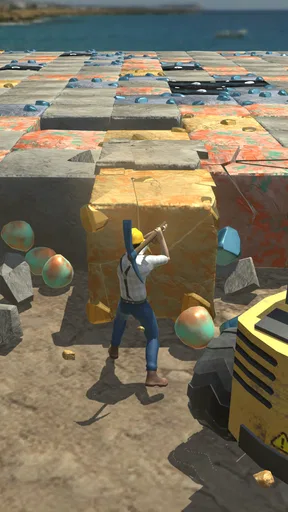
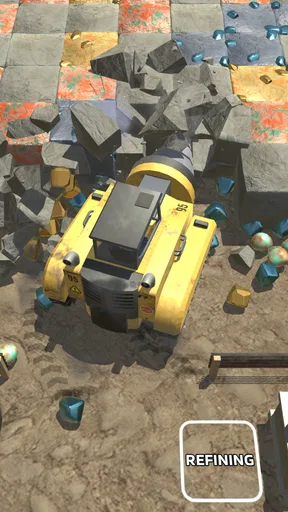
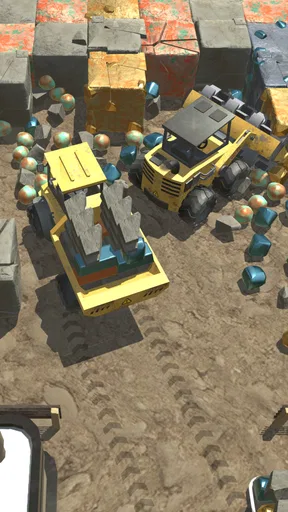
The game’s central pleasure is watching a bulldozer turn obstacles into progress. A short session can feel productive even when you only have time to make a few moves: clear what is in front of you, collect the reward, and put that progress toward building your operation. That direct connection between demolition and expansion gives the game a clearer purpose than an arcade title where each run simply ends and resets.
As an arcade game from Supercent, Inc., it favors immediate feedback over complicated planning. I found that makes it approachable when I want something light to do between other tasks. The mining-tycoon framing adds a longer-term reason to return, while the bulldozer keeps the moment-to-moment activity physical and easy to read. It is less about mastering a complicated control scheme and more about keeping a steady rhythm.
A useful baseline is to treat each visit as a small work cycle rather than expecting a long, story-driven session. Start by seeing what is currently available to demolish, make a bit of progress, then decide whether the next upgrade or task is worth your attention. That approach keeps the game from feeling like a checklist. It also makes it easier to stop when the active action starts to feel repetitive.
The idle element suits people who enjoy seeing a project advance between visits. The store summary describes offline empire-building, so the broader appeal is not limited to continuous play. Still, I would approach offline progress as a bonus to check on, not as a substitute for engaging with the game. The satisfying part is choosing what to do with the momentum when you return, rather than expecting every minute away to feel like active gameplay.
A practical routine for short sessions
For a commute, a waiting room, or a quick break, I would use a simple pattern: open the game, collect or review whatever progress is ready, focus on one clear demolition objective, and then leave. Keeping each visit focused helps the arcade action feel intentional instead of tapping around without a goal. If you have more time, you can extend the same routine rather than switching to a completely different style of play.
That pattern is also useful when progress feels slow. Instead of repeatedly checking the game in search of a dramatic change, make one decision that improves the next visit: push the current task forward, or use available progress to strengthen the operation. The precise best choice depends on what the game presents at that moment, but the general habit is transferable: decide what you want from the session before you start spending time or resources.
Settings and spending deserve a quick check
Before settling into a longer session, I recommend taking a moment to review the settings available on your device and in the game. That is ordinary good practice for any mobile title, especially if you plan to play in public or with sound on. I would not assume there is a special control scheme or secret automation option; the useful habit is simply to make sure the game feels comfortable to operate and does not distract you more than you want.
The game is free to download, but it includes optional in-app purchases priced from $0.49 to $99.99 per item. That is a wide range, so I would decide in advance whether you want to spend anything rather than letting a moment of impatience make the choice for you. The core appeal is the demolition-and-growth loop; if you are enjoying it, there is no need to treat a purchase as the only way to make the game worthwhile.
For younger players, the Everyone age rating makes it broadly accessible, but I would still use the usual family-device safeguards around purchases. That is especially sensible when a game is free to start and offers optional items at different price points. A quick conversation about asking before buying is more useful than assuming a child will distinguish every purchase prompt from ordinary progression.
One practical trade-off with idle games is that the promise of progress can encourage frequent checking. I prefer to keep it to deliberate visits: open the game when I have a few minutes, make a choice, and close it when I am done. That keeps the game in the role of a small diversion instead of turning it into another notification-driven routine.
Repeatable habits that make progress feel better
Experienced play here is less about hidden shortcuts and more about consistency. I would avoid changing direction every time a new option catches my eye. Pick the next useful step, finish it, and then reassess. This reduces the feeling of scattered progress and makes the relationship between clearing material and developing the mining operation easier to follow.
A second helpful habit is to separate active play from idle expectations. When you are present, use that time to make a deliberate move rather than merely waiting. When you are away, let the game’s idle structure do what it can. That division gives each kind of progress a purpose and makes returns feel less frustrating if the game has not advanced as much as you hoped.
Third, use natural stopping points. After a demolition objective or an upgrade decision, pause and ask whether you still want to play or whether the loop is beginning to blur together. Arcade games often feel best in compact bursts, and this one’s straightforward action makes that especially easy. Stopping at a satisfying point can help preserve the appeal for your next session.
Finally, be selective about what you pay attention to. The title combines crushing and mining, but the important question during any visit is simple: what action will make the next return more satisfying? Keeping that question in mind is more useful than trying to optimize every screen or chase every available prompt. It is a low-pressure game, and forcing a high-pressure strategy onto it can make the experience less fun.
Where it differs from other arcade choices
Compared with a conventional arcade game built around timed rounds, high scores, or repeated attempts, this one gives progress a longer horizon. You are not only looking for a better run; you are also building toward a larger operation. That can be appealing if you like visible accumulation and a reason to return after a break. On the other hand, players who want precise challenge, demanding levels, or a strong competitive target may prefer a more skill-focused arcade game.
It also differs from a full management simulator. The tycoon theme suggests growth, but the bulldozer action remains the main attraction. I would not choose it expecting intricate workforce planning or a realistic mining model. Its strength is the approachable link between doing demolition work and seeing an enterprise develop, not the depth of a desktop-style business sim.
The balance between active and idle play is the main deciding factor. If you enjoy a game that gives you something to do now and a little progress to revisit later, the mix can be a good fit. If you dislike waiting, repetitive actions, or progression that is designed to unfold over multiple visits, a self-contained arcade game may be more satisfying. Neither preference is wrong; they simply point to different kinds of downtime.
Limits to keep in mind
The same simplicity that makes the game easy to pick up can become its main limitation. Demolition is an immediately readable activity, but repeating a basic action is not enough for everyone. If you need a stream of new mechanics or constant tactical decisions, the loop may start to feel thin. I would sample it in short sessions first and see whether the growth layer gives the action enough staying power for you.
There is also a difference between enjoying a tycoon theme and wanting a deep tycoon game. Here, the mine provides a reason to care about progress, but the experience is still framed as casual arcade play. Players who want extensive control over how a business is run should look elsewhere. People who prefer simple interaction with a longer-term payoff are more likely to appreciate the design.
The audience numbers suggest that it has found a substantial mobile audience: it has a 4.4 average from around 152,000 ratings and over 5 million installs. Those figures can be reassuring when deciding whether to try a free game, but they cannot tell you whether its pace suits your habits. I would weigh your own tolerance for repetition more heavily than popularity.
On Android, the game requires version 6.0 or later, and the current version is 11.2.0. That makes checking device compatibility a straightforward first step if you are installing it on an older phone. It is also worth remembering that a smooth fit depends on your own device and play environment, so I would try a short session before deciding whether it belongs in your regular rotation.
Who should try it, and who should pass
I would recommend it to someone who likes the tactile satisfaction of clearing obstacles and enjoys watching a small operation grow across separate visits. It fits casual players who want an uncomplicated game for a break, as well as people who appreciate idle progression without needing to manage a complex simulation. Its free entry point also makes it easy to test whether the rhythm clicks before deciding how much time to give it.
I would steer away from it if you are looking for a demanding arcade challenge, a deep economic sandbox, or a game whose sessions are built around tightly timed competition. It is also not the best pick if repeated actions quickly bore you or if optional purchases make free-to-play games uncomfortable. In those cases, a round-based arcade title or a more substantial management game may be a better match.
My verdict is that Bulldozer Master is most enjoyable when treated as a modest, repeatable demolition break. I like the clear connection between operating the bulldozer and growing the mine, and the idle framing gives short visits a reason to add up. Its limits are just as clear: the action is simple, and the long-term appeal depends on whether you enjoy repeating it. If that sounds relaxing rather than tedious, it is worth a try; if you want depth or challenge first, I would choose a different kind of arcade game.
What we like
- Easy-to-learn controls make it approachable for casual players.
- Short rounds suit quick play sessions.
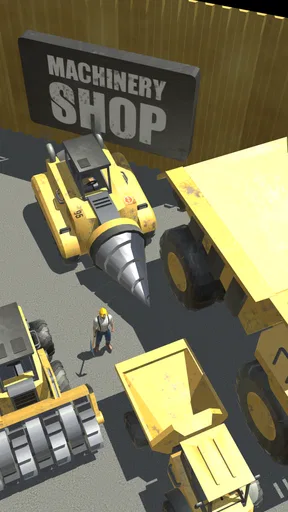
- Unlockable machines give players goals to work toward.
- Crushing objects provides satisfying visual feedback.
- Offline play may be convenient when a connection is unavailable.
What could be better
- Gameplay may feel repetitive after several rounds.
- Progress can require substantial grinding.
- Ads may interrupt the play experience.
- Machine upgrades may offer limited strategic depth.
- Performance can vary on older devices.