 Analysis byWeUseApps
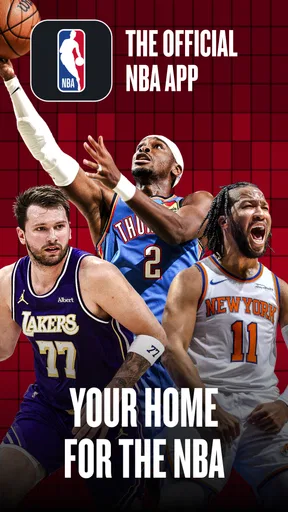
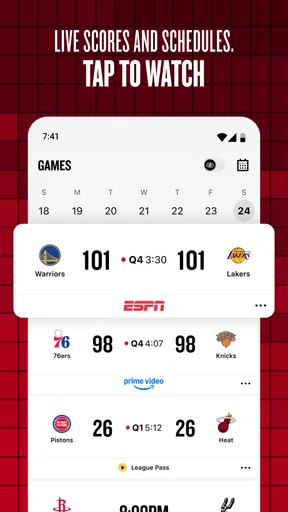
I turn to the NBA App when I want to follow basketball without relying on a stream or a string of social-media updates. Its appeal is the mix of live scores, team and player information, highlight clips, and studio coverage in one place. That makes it useful both during a game and when I have only a few minutes to catch up. It is not a substitute for every broadcast, but it can be a practical companion for keeping track of the league.
Following the league from one screen
The app is a free sports product from NBA Properties, Inc., and its focus is unmistakably the NBA rather than sports in general. I find that specialization helpful: the main reason to open it is clear, whether I am checking a score, looking for a key play, or trying to understand what happened in a game I missed. Its audience is broad, with an Everyone age rating, though the amount of basketball coverage may be more than a casual viewer wants.
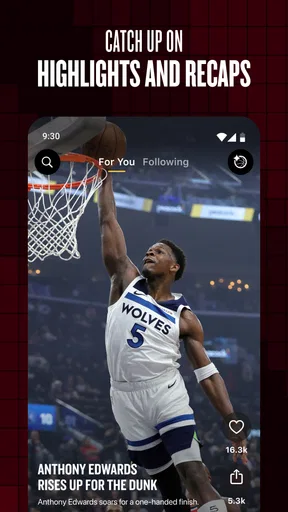
In ordinary use, the most valuable part is the way the app can serve different levels of attention. If I am watching a game elsewhere, I can use it as a quick reference for scores and stats. If I missed the action, highlights and studio coverage offer a faster route into the story of the night. And if I follow several teams, having league-wide coverage in the same app is more convenient than piecing together updates from unrelated sources.
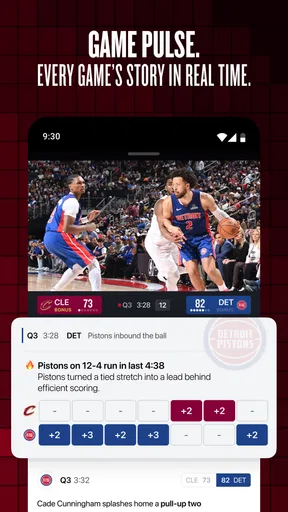
The NBA is a busy league, so a useful app needs to help me answer more than “Who won?” A box score can show how a game unfolded, while a clip can give the moment context that a final score alone lacks. I would use those together: check the result first, scan the numbers that interest me, then watch a highlight if I want to see how a decisive play actually looked.
A useful routine on game night
Imagine I am commuting home and cannot watch a full game. I can open the app to check whether a matchup is close, then return later for the result and a few clips. That is a better fit than trying to follow a live broadcast in fragments, especially when attention and connection are uneven. The app can keep me informed, but I would not treat a highlight package as equivalent to watching the complete game: it naturally gives priority to memorable moments rather than every possession.
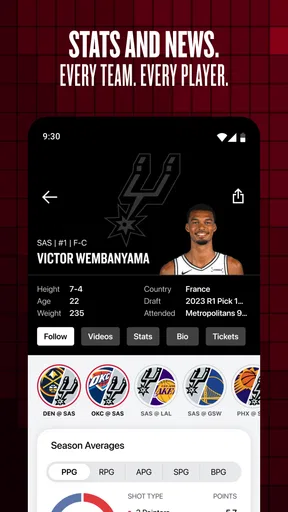
For a fantasy player or someone following a particular athlete, stats can make a quick check more informative than a score alert alone. I can look at a player’s contribution and decide whether I want to dig further into the game. The trade-off is that numbers need context. A box score tells me what happened statistically, but not every detail of a player’s role, defensive work, or the rhythm of the contest. When that nuance matters, watching more of the game is the better choice.
How it compares with other ways to follow basketball
Compared with a general sports-score app, the NBA App has a narrower remit but a more direct relationship to the league’s own coverage. A broad scores app may be preferable if I want one place for basketball, football, and other competitions, or if I mostly need compact alerts. Here, the advantage is having NBA highlights, stats, and studio programming together instead of treating the league as one tile among many.
Compared with social media, the app is a more focused destination for checking a result or finding official league coverage. Social feeds can surface reactions and fan debate quickly, but they can also bury the actual game information in commentary. I would use social platforms for conversation and the NBA App for a more organized check-in. Neither is a complete replacement for a live telecast: viewers who want every possession, commentary, and the atmosphere of a full game should choose a broadcast option that provides that experience.
What the app’s track record says
The app has been available since October 27, 2020, and it has grown into a widely used way to follow the league. It has more than 50 million installs, an average rating of 4.6 from around 251,000 ratings, and roughly 8,200 written reviews. Those figures suggest that it serves a large audience, though popularity does not guarantee that every part of the experience will suit an individual fan.
One useful point of context is that the app is free to download, while in-app purchases are offered at prices ranging from $0.99 to $399.99 per item. I would check the purchase details in the app before paying for anything and distinguish optional paid content from the basic decision to install it. The free entry point makes it easy to try as a score-and-highlights companion, but anyone considering a purchase should judge the specific item on its own merits rather than assuming all coverage is included.
The confirmed timeline and audience figures tell me that this is an established product, not a brand-new experiment. They do not, by themselves, reveal which screens have changed recently or what a future update will add. I would judge its current value by how well it handles the tasks I actually care about: checking a game, finding useful clips, and getting enough statistical context to follow the league without spending the whole evening in the app.
Where the experience can fall short
The biggest limitation is also part of the product’s identity: it is built around the NBA. If I want scores and coverage across many sports, a general sports app is likely to be more efficient. Even a devoted basketball fan may prefer a dedicated broadcast service when the priority is watching full games, because clips and studio coverage cannot reproduce the continuous experience of a live matchup.
There is also a difference between being informed and being immersed. Stats are efficient, but they can encourage quick judgments about a player or team without the full context of the game. Highlights are convenient, but they select the most watchable moments. I recommend using them as a shortcut to catch up, not as evidence that I have seen the whole story. If I am following a close game closely, I would keep a proper live viewing option available.
Another practical trade-off is attention. A league-focused app can be rewarding for someone who enjoys checking several games and storylines, but that same volume can feel like clutter to a casual viewer who only wants one final score. I would keep my routine simple: open the app when I have a question, use the score and stats to orient myself, and move to a clip or studio segment only when I want more detail. That avoids turning a quick check into an unplanned browsing session.
Who should install it—and who may not need it
I would recommend it to NBA fans who want a convenient league-centered reference, especially people who follow games away from a television or like to catch up in short bursts. It is also a sensible companion for someone who already watches games elsewhere and wants scores, stats, and highlights close at hand. If I follow one team casually, I can still use it for a fast result check without needing to explore every section.
I would skip it if my main need is a single all-sports scoreboard, if I rarely follow the NBA, or if I expect the app to replace a full live broadcast. A fan who values independent discussion more than league-produced coverage may also prefer to pair a scoreboard with community sources. The best fit is someone who wants official NBA-focused material and is comfortable choosing when to go deeper.
What I would keep an eye on
For an existing user, the practical question is not simply whether the app has been around for years; it is whether its current mix of scores, stats, clips, and studio coverage remains useful for the way that person follows basketball. I would pay attention to whether the paths between those pieces feel clear and whether the app helps me move from a result to meaningful context without unnecessary effort. Those are the details that shape everyday value more than a long feature list.
I would also watch how optional purchases fit into the experience. Since the app is free to install but includes paid items, it is worth checking what is being offered before committing money, particularly if I only want basic game information. That is a sensible habit for any app with in-app purchases, and it keeps the decision tied to my own viewing needs.
Overall, I see the NBA App as a convenient league companion rather than a complete replacement for watching basketball. I like that I can use it for a quick score check, then choose whether a stat line, highlight, or studio segment is enough to answer the question I had. Its narrow NBA focus is a strength for committed fans and a limitation for everyone else. If you want a focused way to keep up with the league between games or while you are away from a screen, I think it is worth trying; if you want every sport or every minute of a game, another option will fit better.
What we like
- Live scores and game updates make it easy to follow NBA action.
- The schedule helps you find upcoming games quickly.
- Team pages provide a convenient way to track favorite franchises.
- Standings offer a quick view of the playoff picture.
- Personalized alerts can notify you about important game moments.
What could be better
- Some features may require an NBA account or subscription.
- Notifications can become frequent during busy game nights.
- Live updates may lag behind the actual broadcast.
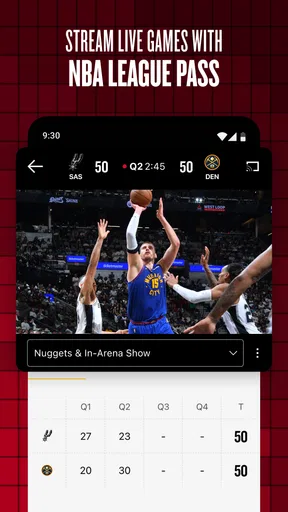
- Video availability can vary by location and subscription status.
- The app may use significant mobile data when streaming video.