
 Analysis byWeUseApps
MANGA Plus by SHUEISHA makes the most sense if you want to follow manga as it comes out, rather than build a library of complete series. I like that focus: it gives the app a clear purpose and makes it easy to dip into current chapters. The trade-off is that readers who want to browse a deep back catalogue or keep every chapter available may find it less satisfying than a subscription service built around an extensive archive.
Made for keeping up with current manga
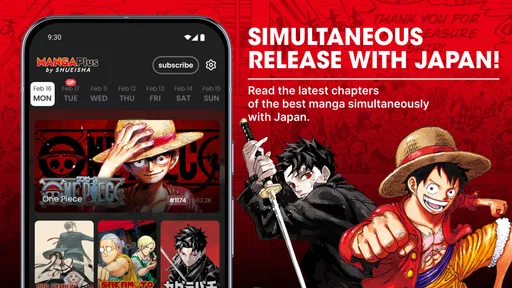
This is a comics app from 株式会社 集英社, and its central appeal is timely reading: new chapters are released alongside their Japanese publication. That can make the app a useful companion for readers who already follow ongoing series and want a straightforward way to keep pace, rather than waiting for a later collected volume or searching across several services.
In everyday use, that release rhythm changes how I would approach it. Instead of opening the app only when I want to start a long series from chapter one, I’d check in on the titles I’m following, read the newest installment, and leave the app until the next update. It suits short reading windows well: a commute, a lunch break, or a quiet few minutes at home can be enough to catch up.
The simultaneous timing is also meaningful for readers who care about being current. It reduces the gap between a chapter’s Japanese release and its availability in the app, which is a practical advantage over waiting for a print edition or relying on informal sources. The experience is at its best when the story you want is part of the current lineup and you are comfortable reading one chapter at a time.
MANGA Plus is free to download, so trying that routine does not require an upfront purchase. The app is rated Teen, a useful consideration for families and younger readers, though that age guidance should not be treated as a guarantee that every series will suit every teen. I would still check the individual manga and its themes before recommending a particular title to a young reader.
Why the release model is its strongest feature
Many manga readers face a choice between services that emphasize a large archive and those that prioritize new installments. MANGA Plus leans toward the latter. If your main question is “Can I read the latest chapter as it comes out?”, that focus is more valuable than a sprawling catalogue you rarely explore. For a reader following several ongoing stories, having a single place to check for new chapters can also make the habit feel less scattered.
That convenience depends on what you read. A service with a broad backlist may be the better pick if you are starting a long-running series from the beginning, searching for older or less prominent titles, or hoping to reread an entire story in sequence. MANGA Plus is easier to recommend as a current-chapter reader than as a complete manga library. I’d treat it as a way to stay connected to ongoing series, not assume it replaces every other manga source.
There is a useful reading strategy here: decide whether you want to follow new chapters or discover a finished series before you settle into the app. If you are mainly interested in current releases, the app’s format aligns with your goal. If your plan is to binge dozens of older chapters, check whether the series you care about offers the reading access you expect before making it your primary destination. That simple check can prevent a frustrating mismatch between the app’s strengths and your own habits.
What to expect from the experience
The app’s core task is specific—finding manga and reading chapters—so it works best when you arrive with an intention. I’d use the available browsing to identify a few series, then return to those rather than expecting the app to serve as a general entertainment feed. This makes it easier to build a manageable reading routine and avoid opening it without knowing what you want to read.
One small but practical workflow is to keep track of the series you are actively following outside the moment of reading: a short note on your phone or a personal list can help if you rotate between several stories. That is not a special feature claim; it is simply a way to make a release-led app easier to use when your reading interests are spread across titles. It also helps distinguish “I want the newest chapter” from “I want to start this series from the beginning,” which are different needs.
Another useful tip is to treat each chapter as a natural stopping point. Because the app is oriented around ongoing manga, it can fit into a short break without demanding a long session. If you prefer to read a story in large uninterrupted stretches, though, a printed volume or a service that gives you access to more of a completed run may be more comfortable. The release model rewards regular check-ins; it is less suited to readers who want to finish an arc in one sitting.
On the practical side, the app is free, but it includes in-app purchases priced from $1.99 to $4.99 per item. I would look at those as optional spending rather than assume every reader needs to buy something. If you are trying to keep manga costs predictable, start with the free reading experience and only consider a purchase when you understand what it unlocks and how often you would use it. Paying for an item makes more sense for a reader who has a specific reason than for someone still deciding whether the app fits their routine.
Where the compromises matter
The biggest limitation is the tension between timely chapters and a dependable archive. A latest-release focus is excellent for following stories in motion, but it does not automatically answer the needs of someone who wants to revisit older installments, catch up on a long gap, or keep a whole series readily available. If rereading and uninterrupted access are central to your enjoyment, compare the available options for your chosen manga before committing to this as your only reading app.
The free model also calls for realistic expectations. Free access is appealing, but the presence of individual in-app purchases means the experience may not feel like a simple, all-inclusive subscription. I’d avoid assuming that “free” means every possible reading need is covered without limits or extra spending. Check the purchase details in context, especially if you are choosing the app for a child or trying to manage a household’s app spending.
There is also a difference between a current chapter being available and a reader being ready to enjoy it. Someone new to a series may have little context, while someone who has missed earlier installments could feel lost. In that case, I’d first look for a legitimate way to catch up, then use MANGA Plus for ongoing reading if its release schedule suits me. For a newcomer who wants a complete story from the opening page, a collected edition or an archive-first service is often the more natural starting point.
The app has an average rating of 3.6 from around 92,000 ratings, alongside about 1,900 written reviews, so reader reactions are mixed rather than uniformly enthusiastic. I wouldn’t use a rating alone to decide whether it is right for me: the app’s specific release-first approach is likely to delight one reader and disappoint another. It has been installed more than 10 million times, which shows broad reach, but popularity does not remove the need to check whether its reading model matches your expectations.
Who will get the most from it
I’d recommend it first to readers who already follow ongoing manga and care about reading new chapters promptly. It is also a sensible option for someone who wants to try a free comics app before spending money, provided they understand that individual purchases are available. If you usually read in short bursts and are happy to return regularly for updates, the format can feel convenient rather than restrictive.
It is less compelling for collectors who want a stable digital shelf, readers who prefer completed stories, and anyone whose first priority is a deep catalogue of older chapters. Those readers should compare it with archive-focused manga services or print collections. I would also steer away from choosing it solely because a friend follows one particular title: make sure the app works for the way you read, not just for the title that brought you to it.
For families, the Teen rating gives a broad age signal, but I would still look at the content of the individual series. The app’s category and rating cannot substitute for a parent’s judgment about a particular story’s subject matter. That is especially worth remembering when several readers share a device or when a younger fan is discovering manga independently.
A clear recommendation, with the right expectations
Released in 2019, the app is now at version 2.7.0 and requires Android 8.0 or later. Those details matter if you are checking compatibility on an older Android device; they do not change the main decision, which is whether you want current chapters more than a comprehensive back catalogue. On iOS, as on Android, I would make that reading preference the deciding factor rather than expecting the same experience as a full digital bookstore.
My verdict is positive but specific: MANGA Plus is a worthwhile choice for keeping up with manga as it is released, especially if you want a no-cost starting point and can accept a more focused reading model. Its strongest quality is the connection to current chapters; its main drawback is that readers seeking a complete, permanent-feeling library may need another option. If you know which kind of reader you are, the choice is straightforward: use it to follow ongoing stories, and look elsewhere when your goal is to collect, binge, or revisit a full run.
What we like
- Read selected chapters from popular Shueisha manga for free.
- Official translations make titles accessible in multiple languages.
- New chapters can appear on the same day as their Japanese release.
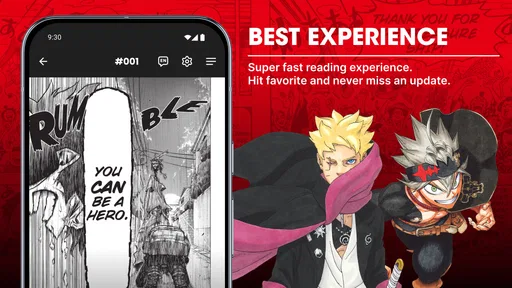
- A favorites list helps track series you follow.
- Available on both Android and iOS.
What could be better
- Free access may be limited to one reading per chapter.
- Some series are available only in selected regions.
- The catalog focuses mainly on Shueisha titles.
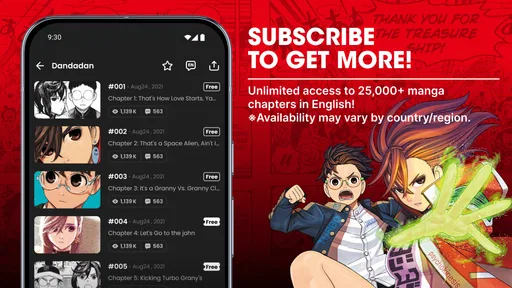
- Older chapters may require a paid subscription.
- Some manga are incomplete or have limited chapter availability.