 Analysis byWeUseApps
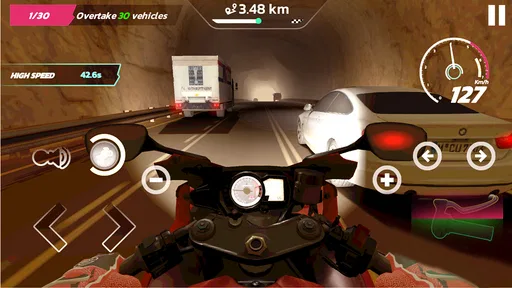
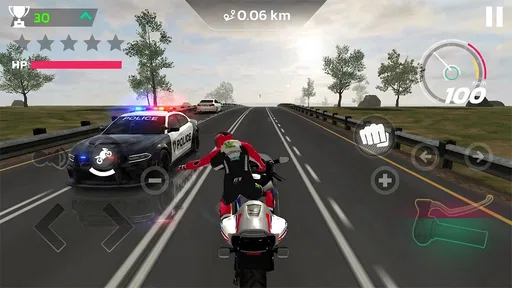
I can see why Go Speed: Street Rider would appeal to someone looking for a quick racing game to dip into between other things. Its premise is easy to grasp, and the street-racing theme gives it an immediate identity without asking me to learn a complicated simulation first. My first impression is that it is best approached as a casual pick-up-and-play racer, not as a deep driving game with a long learning curve or a big career to manage.
How the first sessions land
The game’s short pitch is all about speed and street racing, and that sets a clear expectation: the fun should come from getting into the action quickly. For a first session, that kind of direct appeal matters. I don’t need to plan a long evening around it; it is the sort of game I would try when I have a few spare minutes and want something more active than a puzzle.
That accessibility also shapes its limits. A simple invitation to race is not the same as evidence of elaborate handling, vehicle tuning, a story campaign, or a large set of modes. I would go in ready to judge what is actually enjoyable in the moment rather than expecting the layered progression of a premium console racer. If you mainly want a quick burst of racing, that is a reasonable trade-off.
SoftAIO is the developer, and the game is free to download. That makes it easy to test whether its pace and presentation suit you before deciding whether it merits a regular place on your phone. The current release is version 1.0.8, so it is worth checking that your device can run it before installing: it requires Android 7.0 or later.
My practical advice for the first run is to treat it as a trial, not a commitment. Pay attention to whether the controls feel comfortable on your own device, whether a race feels satisfying when you have only a little time, and whether the game gives you a clear reason to return. Those checks tell you more about its fit than the street-racing theme alone.
What the early appeal can—and cannot—promise
A racing game can win me over quickly with a strong sense of speed, but that first rush only matters if it remains enjoyable after the novelty wears off. Since the store’s short description is simply “Go Speed,” I would not read that as a promise of a particular control scheme or feature set. The useful question is whether the actual play feels rewarding to you, not whether the slogan sounds exciting.
For a casual player, the most important early test is friction. Can you start playing without a lot of setup? Do you understand what the game expects from you? Does a short session feel complete rather than like an interruption in the middle of a longer task? I would use those questions during the first few sessions, especially if you are choosing a game for commutes, waiting rooms, or brief breaks at home.
Go Speed: Street Rider has an Everyone 10+ content rating. That can help families narrow down whether it is appropriate to consider, but I would still check the in-game experience with the intended player rather than treating an age label as a substitute for personal judgment. It is also a sensible choice to review purchase prompts together before handing over a device.
Whether it earns a place in your routine
The game has a 3.9 average from 549 ratings, alongside 20 written reviews. I see that as a middling-to-positive signal, not a guarantee that every player will enjoy it. The broader rating can help set expectations, while written reviews may reveal which kinds of players are happiest or most frustrated. For a decision this personal, I would look for comments that describe the same things you care about—such as short-session enjoyment or control comfort—rather than relying on the score alone.
It has passed one million installs, which suggests that plenty of people have at least tried it. Installs do not tell me how many players keep returning, though, and that distinction is central to whether it deserves long-term storage. A game can attract curiosity with a straightforward racing concept and still lose its place if its sessions begin to feel repetitive.
To judge month-to-month value, I would try a simple routine: play briefly on a few separate days, then notice whether you open it by choice or only because it happens to be installed. That is more useful than forcing yourself through long sessions. If you keep finding a reason to return, even when you are no longer exploring the game for the first time, it may be doing enough for you.
One non-obvious trade-off is that a very accessible racer can fit more moments in your day but may offer less depth for each hour you spend with it. That is not automatically a flaw. If I want a quick diversion, low commitment is a real benefit; if I want a game to master over weeks, I would need stronger evidence of lasting progression before making it my main racing choice.
What to watch for before spending
The game is free, with in-app purchases ranging from $0.99 to $19.99 per item. I would start with the free experience and decide whether I enjoy the core loop before considering anything optional. That approach is especially useful in a mobile game: it separates “I like playing this” from “I feel nudged to pay so the experience becomes more comfortable.”
Before buying, I would check the exact item and ask what problem it solves. Is it something you genuinely want, or are you reacting to a moment of impatience? If the free version already gives you satisfying short sessions, there may be no reason to spend. If a purchase seems necessary just to make ordinary play tolerable, I would pause and compare the game with other free racers rather than paying on impulse.
That advice matters for families, too. A free download is not the same as a game with no possible spending. If a younger player will use the device, I would review purchase controls and agree on expectations beforehand. The age rating and the purchase range answer different questions: one concerns content suitability, while the other concerns how optional spending may enter the experience.
Keeping the game installed without turning it into a chore
Maintenance burden is not only about updates or storage; it is also about how much attention a game demands. I would keep Go Speed: Street Rider only if it remains easy to open, play for a short spell, and put aside again. A mobile racer loses some of its appeal if I feel obliged to check in, grind, or spend simply to avoid falling behind, so I would watch for that feeling rather than assuming a daily habit is required.
For an everyday scenario, imagine you have ten minutes before an appointment. A lightweight racing game can be a good fit if you can enjoy a complete-feeling session in that window and stop without anxiety about missing a reward or leaving something unfinished. If you find yourself postponing the game because you expect a long commitment, it may not be serving the quick-break role you wanted.
I would also be selective about keeping it installed alongside other racers. Phone storage and attention are both limited. If another game gives you a more satisfying sense of progress or better suits your preferred controls, there is no virtue in keeping this one just because it was free to try. Reinstalling later is a perfectly reasonable choice if you only want an occasional street-racing diversion.
Where repetition may set in
The main fatigue risk is the one I would expect from any direct, speed-focused mobile racer: the initial excitement may not be enough once the basic experience becomes familiar. Without assuming particular modes or unlock systems, I would look for variety in the play itself and for a reason to improve beyond simply repeating the same sort of session. If you stop noticing what feels different from one play to the next, that is a clear sign the novelty may be fading.
Another possible source of friction is the mismatch between what you want and what a casual racer is built to provide. Players who enjoy careful car setup, realistic driving behavior, long championships, or a substantial single-player journey may be happier with a more simulation-minded or feature-rich alternative. Go Speed: Street Rider is easier to recommend to someone who values quick access over a detailed racing career.
Control comfort is worth judging personally rather than guessing from the game’s theme. What feels intuitive to one player can feel imprecise to another, particularly on a small screen. I would test it in a calm setting before deciding whether it works for quick play, and I would not spend money to compensate for controls that simply do not suit my hands.
Who should keep it—and who should move on
I would recommend giving it a try if you want a free racing game with an uncomplicated street-speed identity and you are happy to evaluate it on short sessions. It makes the most sense for someone who wants a convenient diversion, is comfortable deciding for themselves whether the experience stays fresh, and does not need a deep simulation to enjoy racing on a phone.
I would skip it, or at least avoid treating it as your main racer, if you need detailed career structure, extensive customization, realistic vehicle behavior, or a strong long-term progression system. Those are specific expectations, and the game’s brief pitch does not establish that it is designed to satisfy them. A more substantial racing title is the better bet if depth and variety are the point of your search.
For someone comparing it with familiar mobile racing alternatives, I would frame the choice around session style. Pick Go Speed: Street Rider if the appeal is getting into a street-racing mood without first committing to a long play period. Choose a more complex racer if you want to spend your time learning systems, building a collection, or pursuing a longer-term competitive goal. Neither approach is universally better; the right one depends on how you actually use your phone.
My long-term verdict
Go Speed: Street Rider has a clear chance to earn space as an occasional, low-commitment racer, but I would not assume that its first burst of speed guarantees lasting value. Its free entry makes a personal trial straightforward, while optional purchases give me a reason to set spending boundaries before playing. The rating and install figures suggest real interest, yet they cannot answer the question that matters most: whether you still enjoy opening it after the first few sessions.
My recommendation is to try it in the kind of short break when you would genuinely use it, then revisit that choice after the novelty settles. If it remains a pleasant way to fill a few minutes, keep it without turning it into a daily obligation. If the sessions start feeling alike or you want more control over your racing experience, uninstalling it and choosing a deeper alternative is a sensible outcome. Its lasting value depends less on the promise of speed than on whether the quick sessions keep feeling worth your time.
What we like
- Quick races make it easy to play in short sessions.
- Simple controls are approachable for casual players.
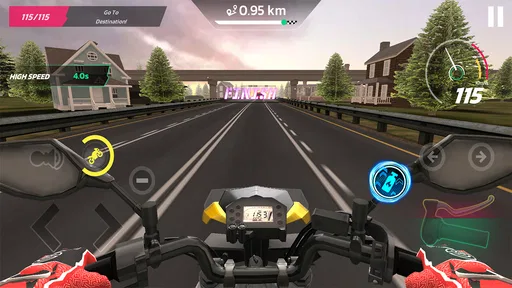
- Street settings give the races a clear sense of place.
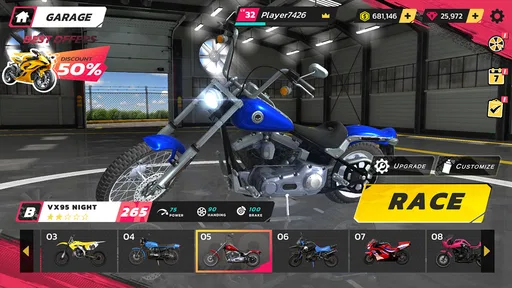
- Unlockable bikes add goals beyond finishing each race.
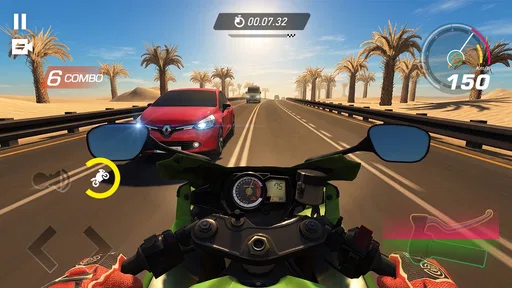
- The arcade style keeps the focus on immediate action.
What could be better
- Repeated routes can make longer play sessions feel familiar.
- Arcade handling may not satisfy players seeking realistic riding.
- Progress can depend on replaying earlier races.
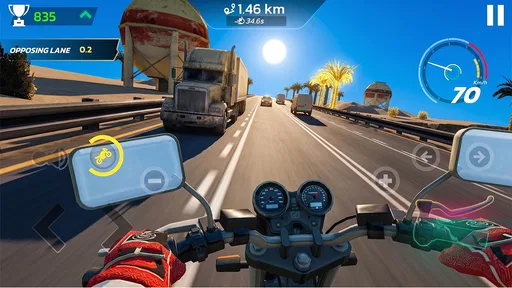
- Crowded roads can make avoiding traffic feel unpredictable.
- The game may offer limited depth for experienced racing fans.