 Analysis byWeUseApps
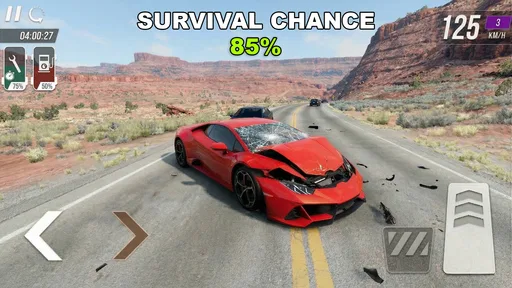
I like driving games most when the road itself gives me a reason to pay attention. In Car Crash Simulator: Mountain, the appeal is the combination of narrow, steep mountain routes and the possibility of cars buckling in a crash. It is a racing game, but it is not really about polished wheel-to-wheel competition; the draw is seeing how a vehicle handles awkward terrain and how badly things can go when a climb, descent, or impact is mistimed.
That focus makes Car Crash Simulator: Mountain an easy game to understand, though not necessarily one that will suit every racing fan. I would recommend it to someone who enjoys experimenting with driving and crashes more than chasing realistic racing rules or a deep career. It is free to start, with optional purchases, and its Everyone age rating makes the subject matter broadly accessible. The developer is Moon Star Games Yazilim.
What gives the mountain roads their appeal
The mountain setting matters because steep roads change the rhythm of driving. On a wide, level track, it is often possible to recover from a small steering error without thinking much about it. A slope makes that mistake feel more consequential: speed, direction, and the shape of the road all matter at once. The result is a simple but effective source of tension, especially if you enjoy trying to keep a car composed rather than merely holding the accelerator.
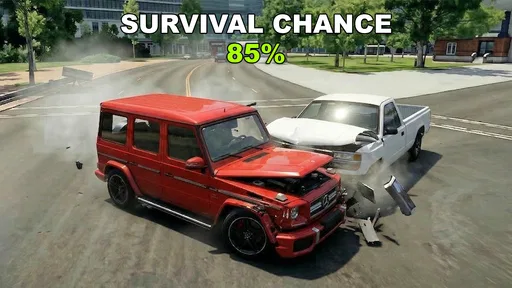
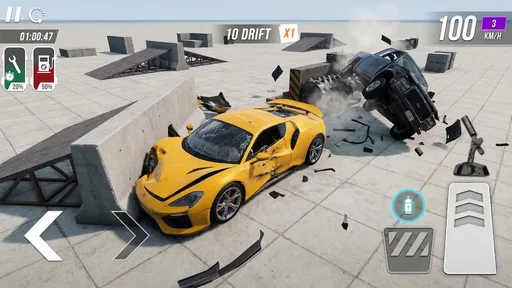
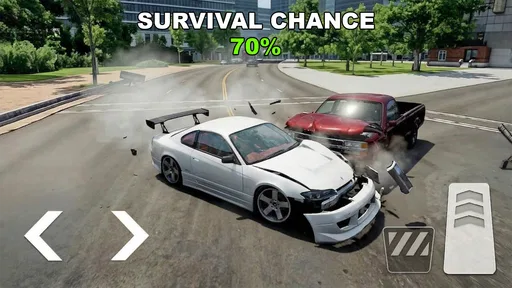
The other half of the concept is crash behavior. Soft-body damage gives collisions a more physical character than a game in which a car simply bounces away or resets without visible consequence. That makes the drive itself part of the entertainment, even when a run ends badly. I find that a useful distinction: this is better approached as a driving-and-crash sandbox than as a conventional racer where every contact is an interruption to a clean lap.
That emphasis also sets expectations. If you want carefully staged races, a long narrative, or a realistic motorsport career, this is probably not the right pick. Its central fantasy is more direct: take on difficult mountain driving and see what happens when control slips. For players who enjoy that compact loop, the premise is clear from the first session.
Early goals: learn the road before pushing it
At the beginning, I would treat each drive as a chance to learn how the mountain layout responds to speed and steering. Rather than trying to go as fast as possible immediately, take a moment to notice where the road rises sharply, narrows, or changes direction. That small adjustment makes the game feel less like random crashing and more like a test of judgment. A clean passage through a difficult stretch can be satisfying even if there is no elaborate race narrative around it.
A useful first-session routine is to make one cautious attempt, then repeat the same kind of run with a little more speed. The comparison helps reveal whether a failure came from entering a slope too quickly, turning too late, or simply overcorrecting. This is not a guaranteed shortcut to success; it is a way to make the driving more legible and to avoid treating every wreck as meaningless. When the road is challenging, deliberate experimentation gives the game a goal even before you know how far you want to push.
The crash side of the game provides a second kind of motivation. If a run goes wrong, the damage can still be the point rather than a reason to quit immediately. I would alternate between trying to keep the car under control and deliberately testing how a risky approach ends. Keeping those intentions separate is surprisingly helpful: it makes a careful run feel like a driving challenge and a reckless one feel like an experiment, rather than blurring both into an unplanned pileup.
Progress signals without a career-shaped promise
Not every racing game needs a ladder of championships to make progress feel worthwhile. Here, the clearest personal signal is whether I can handle a section more confidently than before. Remembering where I lost control, changing my approach, and then making it farther gives a modest but satisfying sense of improvement. It is a hands-on kind of progress, based on learning the road rather than assuming that every session must unlock a new tier of competition.
That approach has a trade-off. Players who want clearly signposted milestones, a growing collection of objectives, or a strong sense of long-term advancement may find the experience less motivating. The game’s central idea can sustain short sessions, but the pleasure depends heavily on whether you enjoy refining your own driving and exploring crash outcomes. I would not recommend starting it expecting a full career mode; the stronger reason to play is the immediate challenge of the mountain and the physical spectacle of a bad impact.
For a more useful progress check, I suggest choosing one personal target per session: make it through a tricky stretch with fewer corrections, keep a descent controlled, or test one risky line and observe the result. These are not in-game missions; they are ways to create structure for yourself. They work particularly well when you have a short break and want a clear reason to retry without turning the game into a chore.
Difficulty rises through judgment, not just speed
Steep terrain naturally makes a small mistake feel larger, so the challenge is less about driving flat out and more about deciding when to ease off. If I approach every slope as a straight sprint, I lose the chance to respond to the road. A measured entry can be more rewarding than a fast one, while a reckless run may be worthwhile if the goal is to see how the car reacts in a crash. The best choice depends on what I want from that attempt.
This also creates a gentle self-directed difficulty curve. I can begin cautiously, then take more risks once I understand a route. That is a useful fit for players who like learning through repetition, but it may frustrate anyone who expects the game to explain every challenge with explicit instructions or a carefully staged tutorial. In a physics-focused driving game, some learning comes from noticing consequences and adjusting. If that kind of trial and error feels satisfying to you, the mountain roads can hold attention; if it feels like guesswork, the same design may become tiring.
One practical tip is to avoid changing several things at once. If a run ends in a crash, decide whether the next attempt will use less speed, a gentler steering input, or a different moment to turn. Altering one choice makes it easier to understand what helped. It is a small method, but it turns repeated failures into useful feedback and helps separate the game’s driving challenge from the simple novelty of seeing a wreck.
Short sessions, purchases, and the pressure to return
I see this as a game that can work in short bursts: open it, focus on a route or a crash experiment, and stop when the repetition no longer feels productive. That is a better fit than expecting a long evening of structured competition. Its appeal is immediate, but lasting interest depends on whether the core activity—handling steep roads and testing collisions—continues to feel entertaining after the initial novelty.
There are in-app purchases priced at $2.49 per item. Since the game is free to download, I would try the driving loop first and decide whether I genuinely want to spend anything later. The sensible question is not whether a purchase exists, but whether the current experience already gives you the kind of play you wanted. If you are only curious about the mountain driving and crash-focused premise, there is no need to treat spending as part of the basic decision.
The game has an average rating of 3.5 from around 4,000 ratings, with 176 written reviews. It has been installed over a million times, so it has reached a substantial audience, but those figures do not tell me whether its particular style will click with you. I would use them as context, not as a substitute for matching your expectations to the game: people looking for instant crash spectacle may be happier than players hoping for a tightly structured racing campaign.
How it compares with other racing choices
Compared with a typical circuit racer, this game puts less emphasis on clean laps, rival drivers, and race strategy. Its mountain roads and soft-body collisions give it a more physical, experimental character. Compared with a pure crash game, the driving challenge adds a reason to manage the car before impact. That middle ground is the most distinctive part of the experience: the approach to a crash can matter as much as the crash itself.
If you want a polished competitive racer with clear event progression, I would choose a game built around races instead. If you want a broad open-world driving game with many different activities, this focused mountain setup may feel limited. But if your preference is a direct test of control on difficult terrain, with collisions as part of the appeal rather than an occasional failure state, this is a more suitable alternative to either of those styles.
For a casual everyday scenario, imagine having ten minutes between other tasks. I would use that time to attempt one careful climb or descent, then make a second run with a single deliberate change. That gives the session a beginning, a small experiment, and a natural stopping point. It is more satisfying than repeatedly driving without a purpose, and it does not require the commitment of a long race or campaign.
Who should install it—and who should pass
Car Crash Simulator: Mountain is aimed at players who like challenging roads, vehicle damage, and learning by trying again. It is also a reasonable choice for someone who wants a free racing game to sample before deciding whether its particular style is worth more time. The current version is 3.0.45t, and the minimum operating system requirement is Android 10, so check that your device meets that requirement before installing.
I would skip it if your main priority is a realistic motorsport ladder, extensive race variety, or a strong sense of progression spelled out through goals and rewards. I would also be cautious if you dislike retries: mountain driving can make errors part of the experience, and the crash focus will not replace that with a conventional racing structure. The Everyone rating is a helpful sign for general accessibility, but the right choice still depends on whether you enjoy this specific mix of difficult roads and impact-driven play.
My verdict is that the game’s strongest feature is the way its setting and crash concept reinforce one another. The slopes make control feel meaningful, while the soft-body damage gives mistakes a visual payoff. Its progression is best understood as personal improvement and experimentation, not a promise of a deep career. If that sounds like the kind of small, repeatable driving challenge you want, I think it is worth trying. If you need a steady stream of formal goals, a different racing game will likely keep you engaged longer.
What we like
- Mountain roads make each crash test feel varied.
- Vehicle damage adds visual impact to collisions.
- Simple controls are easy to learn.
- Short sessions suit casual play.
- The mountain setting stands out from typical city tracks.
What could be better
- Repeated crash tests can become predictable.
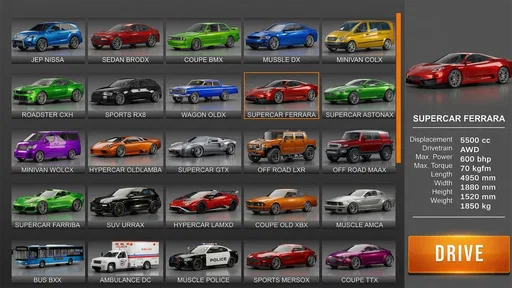
- Some vehicles may feel similar to drive.
- Steering can be difficult on narrow roads.
- The scenery may feel sparse between crashes.
- Progression may offer limited long-term goals.