 Analysis byWeUseApps
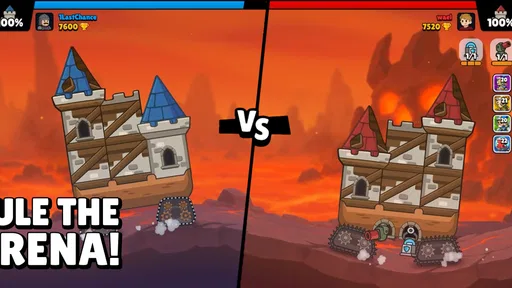
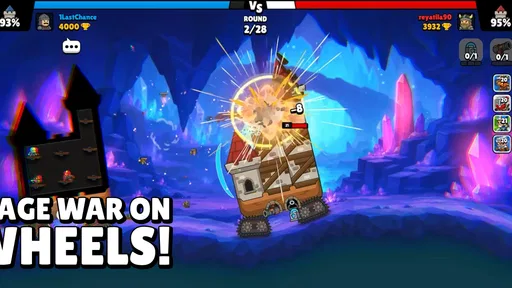
Castle Busters is an action game built around one-on-one player-versus-player matches, where the central appeal is making tactical choices while trying to break through an opponent’s castle. I like that this premise promises more than a reflex test: the fun should come from assembling a crew, judging where to apply pressure, and adapting to another person rather than simply repeating a fixed sequence. It is a focused idea, and that focus makes the game easy to understand even if mastering its decisions takes longer.
How the head-to-head format feels
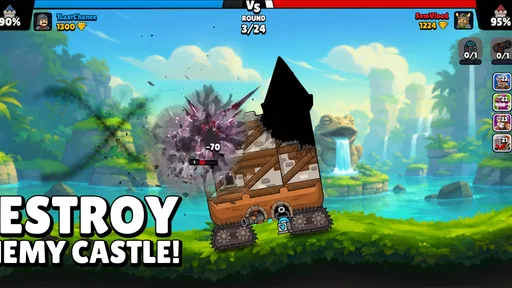
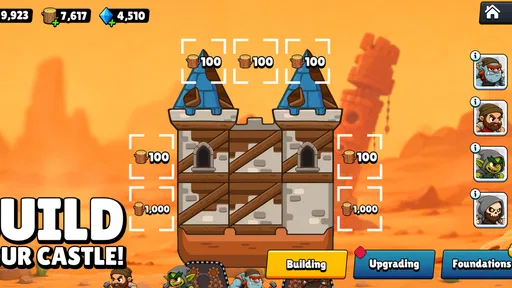
VOODOO’s free-to-play game puts direct competition at the center. Instead of presenting itself as a broad action adventure, Castle Busters is about compact clashes between two players. That makes it appealing when I want a game with a clear purpose: enter a contest, make a plan, and see whether it holds up against a real opponent. The castle-smashing theme gives each match an obvious objective, while the crew-building angle suggests that preparation matters as well as moment-to-moment aggression.
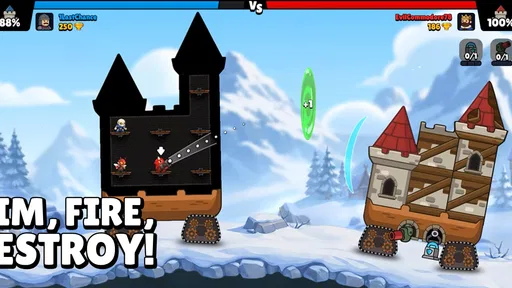
The strongest reason to try it is this blend of strategy and action. In a purely reflex-driven brawler, a quick reaction can decide nearly everything. Here, the promise of choosing a crew adds another layer: a player can think about how their lineup might approach a rival’s defenses before the action gets going. I would expect the most satisfying matches to be the ones where a small adjustment changes the shape of the fight, rather than those decided by simply tapping faster.
That format also has a natural limitation. One-on-one competition can feel intense, but there is less room for the chaos and social coordination of a team-based battle. If you prefer sprawling maps, a story campaign, or cooperative play with friends, this is not the same kind of action game. Its appeal is narrower and more immediate: a duel, a tactical choice, and a contest over whose plan breaks through.
Making better use of a crew
A useful way to approach crew-building is to avoid changing every choice at once. When a lineup loses, it is tempting to replace everything and hope for a dramatic improvement. I would instead make one deliberate adjustment at a time and pay attention to whether the next match feels easier to control. That simple habit helps separate a weak plan from a bad moment, and it makes the strategy side more satisfying even when the outcome is a loss.
It is also worth treating the opponent’s castle as something to read, not just a target to rush. A fast attack may feel exciting, but an all-out approach can leave little room to react if the other player’s setup disrupts it. I would try to notice where a push stalls and whether the problem comes from the crew choice or from committing too quickly. The game’s central loop rewards that kind of reflection more than mindless repetition.
For a realistic everyday use, imagine having a short break between errands or during a commute where you have a stable connection and a few minutes to focus. A self-contained duel can suit that gap better than a long campaign with a complicated plot to remember. On the other hand, if you only have a moment and cannot give a match your attention, a competitive encounter may be a poor fit. The format asks me to care about the result, not merely leave the game running in the background.
Where it sits among action games
Compared with the usual action-game alternatives, Castle Busters appears less about exploring a large space and more about making a small number of meaningful decisions in a direct matchup. That can be a welcome change if you are tired of games that fill every session with lengthy progression chores. It also means players seeking the variety of a big single-player campaign may find the core loop repetitive sooner than fans of quick competitive battles.
The versus focus is a particular strength for people who enjoy learning from opponents. A rival can expose a weakness in a lineup more clearly than a predictable stage can. At the same time, this dependence on head-to-head play means that the experience is less attractive to anyone who would rather practice privately or advance through a story at their own pace. I would choose it for competition and tactical experimentation, not as a substitute for a narrative action game.
Its audience numbers show that it has found a substantial mobile audience: it has more than ten million installs, and its average rating is 3.8 from around 219,000 ratings. Those figures suggest broad interest alongside mixed reactions, which is a sensible reason to approach it with curiosity rather than assume it will suit everyone. The game is rated Teen, so it is better for players comfortable with that age classification than for families looking for a game explicitly aimed at younger children.
Current state and what the version tells us
The current release is version 1.20.2, following a release on July 18, 2025. That is useful context for someone joining now: this is a maintained versioned product rather than an unidentified early build. Still, a version number alone does not tell me what changed, how often the game receives updates, or whether a particular mechanic has been redesigned. I would not treat it as proof of a major overhaul; it is a snapshot of the current build, not a full history.
For someone already playing, the practical takeaway is to keep the game updated before judging a match or comparing notes with a friend. Version differences can affect what two players see, and playing the same current build is the simplest way to avoid that uncertainty. For a new player, the current version is the best place to begin forming an opinion; older impressions may describe a different moment in the game’s life, but the version label alone cannot explain exactly how it differs.
The game comes from VOODOO and is free to download, with in-app purchases priced from $0.99 to $99.99 per item. That range makes it worth deciding in advance how you want to engage with optional spending. I would start without buying anything and first see whether the match loop, crew decisions, and competitive pace are enjoyable on their own. In a game built around repeated duels, paying before you know whether you like the core routine is an easy way to spend on an experience that may not become a habit.
For players who do choose to spend, I would keep purchases tied to a specific reason rather than treating them as a shortcut to enjoyment. Ask whether an item solves a real frustration or simply looks appealing in the moment. A free entry point is helpful, but it does not automatically make every purchase good value for a particular player. If you prefer games with no optional spending at all, or you find purchase prompts distracting, that is a fair reason to choose a different action title.
Who is likely to enjoy it—and who may not
I would recommend trying it if you like competitive mobile games, enjoy adjusting a strategy after a loss, and want matches with a clear opponent and objective. It may also suit players who like thinking about how a roster works as a whole, rather than picking a single character and relying entirely on execution. The crew-building premise gives the game a planning hook that can make each encounter feel like a test of decisions, not just speed.
I would skip it if you want a substantial solo campaign, a relaxed game with no pressure to respond to another player, or a session that can be interrupted without consequence. The one-on-one structure is part of its identity, so it is not a flaw that it lacks the feel of a sprawling adventure; it is simply a meaningful trade-off. Players who are easily frustrated by competitive losses should also consider whether they enjoy learning through setbacks. A duel can make improvement rewarding, but it can make a bad run feel personal.
It requires Android 8.0 or later, which gives prospective players a straightforward compatibility check before installing. If the device meets that requirement, I would still think about the kind of session the game demands: action and strategy are most enjoyable when I can pay attention to the contest. The best use is a focused break, not a game I open while juggling several other tasks.
What I would watch as the game evolves
The most important thing I would watch in future versions is whether the competitive choices stay interesting over time. Crew-building works best when different plans feel worth considering, and repeated matches should encourage adaptation instead of settling into one obvious approach. That is a point to evaluate as you play, not a feature I can assume from a version number. If the tactical decisions remain meaningful, the compact duel format has room to keep its appeal.
I would also pay attention to how well the game serves both newcomers and returning players. A competitive game is easier to recommend when a new player can understand why a match was won or lost, while experienced players still have reasons to refine their choices. The 7,900 reviews alongside its large rating count show that plenty of players have had enough experience to leave feedback, but the count itself cannot tell an individual what their own matches will feel like. I would use early sessions to decide whether the learning curve feels motivating or merely frustrating.
One practical tip is to judge the game across several focused sessions rather than after a single loss or win. A lucky result can make an untested plan look stronger than it is, while a frustrating matchup can make a promising game seem worse than it is. Change one crew decision at a time, notice where your attack loses momentum, and then decide whether the game is giving you enough room to improve. That approach makes the strategic side more legible and helps you decide whether its competitive rhythm suits you.
Overall, I see Castle Busters as a good fit for players who want a compact, direct action strategy game rather than a large-scale adventure. Its duels and crew choices give it a clear identity, and its free download makes a cautious trial easy. The main trade-offs are the narrow focus on one-on-one competition and the presence of optional purchases, with individual appeal depending on whether you enjoy learning through repeated matchups. If that sounds like your kind of break, I would give it a try; if you want story, co-op, or a low-pressure solo experience, another game will probably serve you better.
What we like
- Quick battles make it easy to play in short sessions.
- Distinct heroes add variety to the combat style.
- Bright cartoon visuals give the game a playful look.
- Simple controls are approachable for younger players.
- Unlockable characters give players goals to work toward.
What could be better
- Progress can slow down without frequent upgrades.
- Repeated battles may feel monotonous over time.
- Some stages rely heavily on upgrading character stats.
- Small screen effects can make busy fights harder to follow.
- The game may require an internet connection for some features.